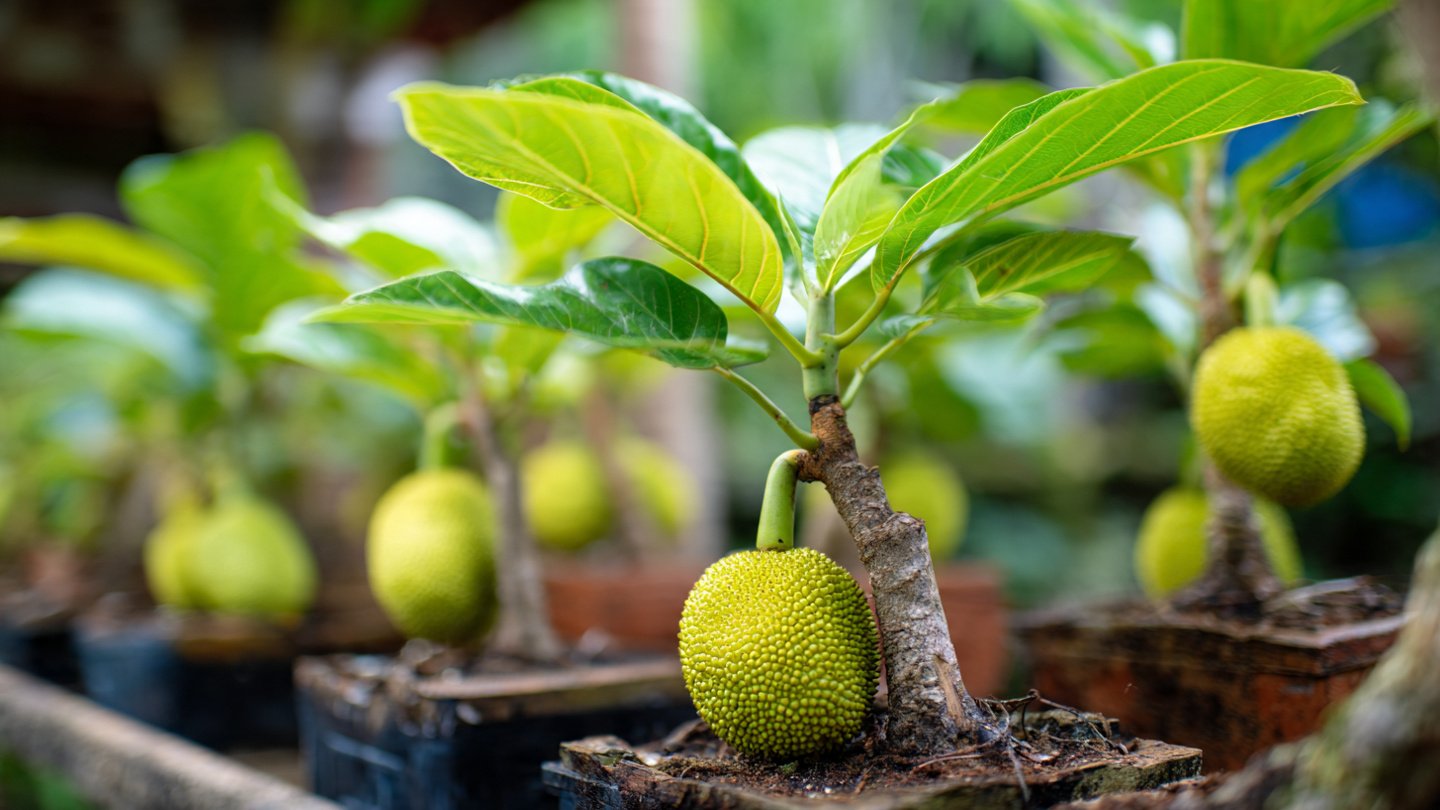
Jackfruit, known as the world’s largest tree-borne fruit, is celebrated for its sweet, tropical flavor and nutritional benefits. Native to South and Southeast Asia, it has become a favorite for gardeners and commercial growers alike. Growing jackfruit trees from seeds is rewarding but slow, often taking several years before fruit production begins. Grafting offers a revolutionary solution, allowing trees to grow faster, become stronger, and produce high yields much earlier than traditional methods. This guide explores smart grafting techniques, practical ideas, and best practices for maximizing jackfruit growth and productivity.
Understanding Jackfruit Grafting
Grafting is the horticultural practice of joining two plant parts—a rootstock and a scion—so that they grow as a single tree. The rootstock provides a strong, resilient root system, while the scion contributes desired fruit qualities, such as sweetness, size, and productivity.
Jackfruit grafting accelerates growth and fruiting because the scion is already mature tissue from a proven tree. Unlike seed-grown trees, grafted jackfruit can bear fruit in 3 to 5 years instead of 8 to 10 years. Grafting also ensures uniform fruit quality and disease resistance, making it the preferred method for commercial and home growers who want faster results.
Selecting the Right Rootstock
The success of jackfruit grafting largely depends on choosing a healthy rootstock. Ideal rootstocks are vigorous, disease-resistant, and well-adapted to the local climate. Commonly, seedlings grown from seeds are used as rootstock, preferably 6 to 12 months old and about 1 to 2 feet tall.
Healthy rootstocks should have strong roots, a straight trunk, and no signs of disease or pest damage. A robust root system provides stability and nutrients for the scion, ensuring faster growth and better fruit production.
Choosing the Best Scion
Selecting a scion is equally important. The scion should come from a mature jackfruit tree with desirable fruit characteristics, such as large size, sweetness, low fiber, or high yield. Choose 6 to 12-month-old scion branches that are healthy, disease-free, and about the thickness of a pencil.
Proper scion selection ensures that the grafted tree inherits the best qualities of the parent tree. By using a proven scion, growers can maintain fruit consistency and superior taste, even when planting multiple trees in the same orchard or garden.
Grafting Techniques for Jackfruit
There are several effective grafting techniques for jackfruit, each with unique advantages. Selecting the right technique depends on available materials, experience, and the age of the rootstock and scion.
1. Cleft Grafting
Cleft grafting is suitable for rootstocks thicker than the scion. A V-shaped cut is made in the top of the rootstock, and the scion is shaped into a wedge and inserted into the cut. The union is secured with grafting tape or plastic wrap to hold the scion firmly.
Advantages:
- Strong union for large rootstocks
- Ideal for high-yield scion varieties
2. Side Veneer Grafting
Side veneer grafting works well with younger rootstocks. A slanted cut is made on the side of the rootstock, and the scion is inserted, matching the cambium layers carefully. This method is popular for jackfruit due to its high success rate and suitability for moderate-sized seedlings.
Advantages:
- Faster healing and growth
- Less stress on young rootstocks
3. Approach Grafting
In approach grafting, both the scion and rootstock remain rooted until the union is fully established. This method reduces the risk of failure since both parts continue to receive nutrients during the healing process.
Advantages:
- Very high success rate
- Ideal for delicate or high-value scion varieties
4. Whip-and-Tongue Grafting
This advanced method involves making matching slanted cuts with tongues on both the scion and rootstock for maximum cambium contact. It is most effective for rootstocks and scions of similar thickness and results in a strong, durable union.
Advantages:
- Strongest graft union
- Faster integration and early fruiting
Preparing Rootstock and Scion
Before grafting, prepare both parts carefully:
- Rootstock: Trim the top to remove any damaged tissue and make a clean, smooth cut. Wipe the surface to remove dirt or sap residue.
- Scion: Select healthy shoots, remove leaves except for the top one or two, and cut at an angle for proper cambium contact.
- Tools: Sterilize knives, pruning shears, and grafting tools with alcohol to prevent infection.
Proper preparation ensures better grafting success and promotes faster healing.
Securing and Caring for Grafted Trees
After grafting, securing the scion to the rootstock is crucial. Use grafting tape, parafilm, or plastic strips to hold the union firmly. Seal the cut area with grafting wax or tree sealant to prevent moisture loss and infection.
Place the grafted tree in a shaded location for 2 to 3 weeks, protecting it from direct sunlight, wind, and pests. Water regularly but avoid waterlogging. Once the union shows growth and leaves sprout from the scion, gradually acclimate the tree to full sunlight.
Encouraging Faster Growth
Grafted jackfruit trees respond well to proper care:
- Fertilization: Use a balanced fertilizer rich in nitrogen, phosphorus, and potassium to support vegetative growth and root development.
- Mulching: Apply organic mulch around the base to retain soil moisture, suppress weeds, and maintain temperature.
- Pruning: Remove weak or competing shoots to direct energy toward the main scion and encourage strong canopy formation.
- Support: Stake young trees to prevent bending or damage during high winds.
These practices accelerate growth and prepare the tree for high-yield fruit production.
Maximizing Yield
Grafting ensures that trees inherit the best fruit qualities, but maximizing yield requires additional strategies:
- Optimal Spacing: Plant trees 25 to 30 feet apart to allow sufficient sunlight and airflow.
- Pollination: While jackfruit is self-pollinating, attracting pollinators like bees can increase fruit set.
- Irrigation: Maintain consistent moisture, especially during flowering and fruiting stages.
- Nutrient Management: Provide potassium and phosphorus-rich fertilizers to promote flowering and fruit development.
- Regular Monitoring: Watch for pests and diseases, and treat promptly to avoid yield loss.
Combining grafting with these management practices ensures strong, productive jackfruit trees that consistently produce large, flavorful fruits.
Common Mistakes to Avoid
Even with grafting, mistakes can reduce success:
- Poor scion selection: Using unhealthy or weak scions can fail to graft properly.
- Incorrect cambium alignment: Failing to match cambium layers reduces success rate.
- Overexposure to sunlight: Young grafts are sensitive; direct sun can desiccate the scion.
- Neglecting water: Both overwatering and underwatering can harm grafted trees.
- Skipping sterilization: Unsterilized tools increase the risk of infection.
Avoiding these mistakes increases grafting success and promotes healthy, fast-growing trees.
Advantages of Grafted Jackfruit Trees
Grafting jackfruit trees provides several revolutionary benefits:
- Faster Fruit Production: Trees can bear fruit in 3–5 years instead of 8–10 years.
- Uniform Fruit Quality: Grafted trees produce consistent flavor, size, and texture.
- Stronger Trees: Rootstocks provide resilience against environmental stress and pests.
- Higher Yield: Optimized scion varieties deliver abundant fruits.
- Disease Resistance: Healthy rootstocks reduce the risk of soil-borne diseases.
These advantages make grafting an essential technique for serious gardeners and commercial growers.
Conclusion
Revolutionary grafting techniques transform jackfruit cultivation, enabling faster growth, stronger trees, and high-yield fruit production. By carefully selecting rootstock and scion, choosing the appropriate grafting method, and providing proper care, gardeners can significantly reduce the time to harvest and enjoy uniform, delicious jackfruit.
Smart practices, such as shading young grafts, fertilizing appropriately, supporting vines, and managing pests, further enhance tree health and productivity. Grafting ensures that every tree carries the best qualities of its parent, guaranteeing superior fruit while reducing the challenges associated with seed-grown plants.
For home gardeners and commercial growers alike, mastering jackfruit grafting is a game-changer. With patience, precision, and these proven techniques, it is possible to cultivate fast-growing, robust jackfruit trees that produce abundant, high-quality fruits for years to come. Grafting truly unlocks the potential of jackfruit, turning slow-growing tropical trees into reliable, high-yield sources of one of the world’s most iconic fruits.