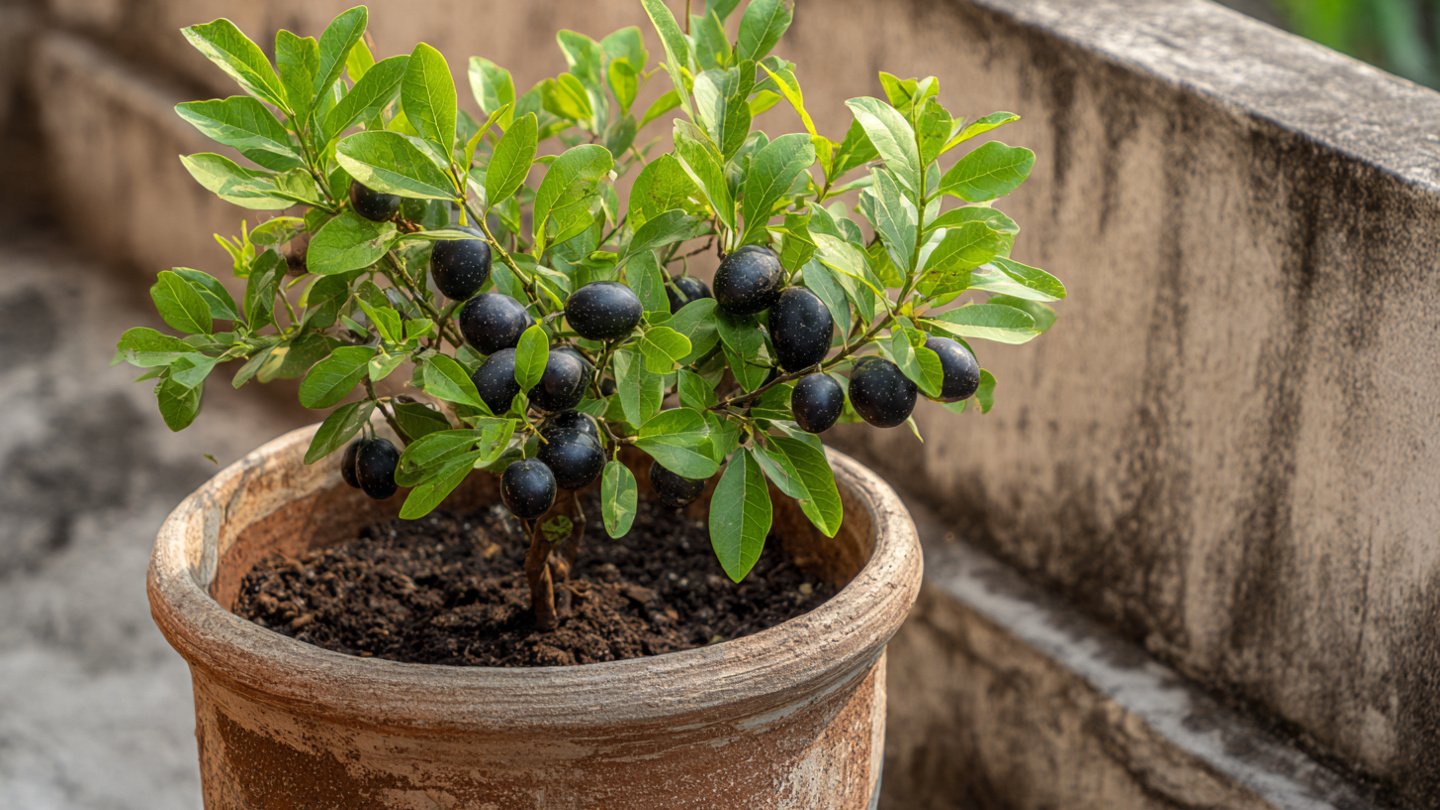
Growing a fruit tree in a small space may seem challenging, but with the right approach, it is entirely possible. The jamun tree, known for its deep purple fruits and medicinal value, can be successfully grown from seed in a pot and maintained in compact form for balconies, terraces, and small home gardens. With patience and proper care, a jamun tree can thrive in containers and become a long-term, productive addition to an urban garden. This guide explains each step in detail, from seed selection to long-term maintenance, helping you grow a healthy jamun tree even with limited space.
Jamun is a slow-growing evergreen tree that naturally grows large in open ground, but when grown in a pot, its size can be controlled through pruning and root management. Starting from seed allows gardeners to experience the full growth journey of the plant while adapting it to container life. Although seed-grown jamun trees take longer to fruit than grafted ones, they are hardy, resilient, and well-suited for home cultivation.
The first step in growing a jamun tree in a pot is selecting fresh, viable seeds. Jamun seeds lose their germination ability quickly if allowed to dry out, so it is important to use seeds from freshly harvested fruits. After consuming the fruit, clean the seed thoroughly to remove all pulp, as leftover flesh can cause fungal issues during germination. Avoid storing the seeds for long periods, as fresh seeds germinate faster and more reliably.
Before planting, soak the cleaned seed in water for twenty-four hours. This softens the seed coat and improves germination speed. While soaking is optional, it significantly increases the success rate, especially for beginners. Once soaked, the seed is ready for planting.
Choosing the right pot is essential for healthy growth. Start with a medium-sized pot that is at least twelve inches deep and wide. As the plant grows, it can be gradually shifted to larger containers. The pot must have adequate drainage holes to prevent waterlogging, which can cause root rot. Clay or thick plastic pots work well, as they provide stability and insulation for the roots.
Soil quality plays a major role in the success of a potted jamun tree. Use a well-draining, nutrient-rich soil mix. A good combination includes garden soil, compost or well-rotted manure, and sand or perlite for drainage. The soil should retain moisture without becoming compacted. Jamun trees prefer slightly acidic to neutral soil, and adding organic matter improves soil structure and microbial activity.
Plant the seed about one inch deep in the soil with the pointed end facing sideways or upward. Cover lightly with soil and water gently to settle the soil around the seed. Place the pot in a warm location with indirect sunlight. Germination typically occurs within two to four weeks, depending on temperature and seed freshness. During this stage, keep the soil consistently moist but not soggy.
Once the seedling emerges, gradually introduce it to brighter light. Jamun plants require plenty of sunlight for healthy growth, ideally six to eight hours per day. For small spaces such as balconies or terraces, place the pot where it receives morning sunlight and some protection from harsh afternoon heat. Adequate sunlight encourages strong stems, healthy leaves, and steady growth.
Watering must be done carefully when growing jamun in a pot. Young seedlings need regular watering, but overwatering should be avoided. Allow the top layer of soil to dry slightly between watering sessions. As the plant matures, it becomes more drought-tolerant, but container-grown trees still need consistent moisture. During hot weather, watering frequency may increase, while in cooler seasons, it should be reduced.
Fertilization supports steady growth, especially in containers where nutrients are limited. During the first few months, the seedling does not require heavy feeding if the soil is rich in compost. After three to four months, apply organic fertilizer such as vermicompost or compost every four to six weeks. As the plant grows older, balanced liquid fertilizers can be applied occasionally to support leaf and root development. Avoid excessive nitrogen, as it can cause excessive leaf growth at the expense of overall plant balance.
Pruning is one of the most important practices when growing a jamun tree in a pot. Without pruning, the plant may grow tall and leggy, which is unsuitable for small spaces. Begin light pruning once the plant reaches one to two feet in height. Pinch the growing tip to encourage branching. Over time, shape the plant into a compact form with multiple strong branches. Regular pruning helps control height, improves air circulation, and promotes a healthy structure.
Root management is equally important for container-grown jamun trees. Every two to three years, the plant may become root-bound. Signs include reduced growth, quick drying of soil, and roots emerging from drainage holes. At this stage, either shift the plant to a slightly larger pot or perform root pruning. Carefully remove the plant, trim a small portion of the outer roots, refresh the soil, and replant it in the same pot. This practice keeps the tree healthy and size-controlled.
Pest and disease issues are generally minimal for jamun trees, but container plants should still be monitored regularly. Common pests include aphids and mealybugs, which can be controlled using neem oil or mild soap solutions. Avoid chemical pesticides, especially in small spaces. Good airflow, proper watering, and clean surroundings reduce the risk of fungal diseases.
Seasonal care is important for long-term success. Jamun trees thrive in warm climates and can tolerate heat well. In cooler regions, protect the pot from extreme cold by moving it to a sheltered location during winter. Reduce watering during cold months, as growth slows and excess moisture can harm the roots. In warmer months, ensure adequate water and mulch the soil surface to retain moisture and regulate temperature.
Growing jamun from seed requires patience, as fruiting can take several years, often six to eight years or more. However, the goal in small-space gardening is not only fruit production but also enjoying the beauty and satisfaction of nurturing a tree. The glossy green leaves, strong trunk, and long lifespan make the jamun tree a rewarding plant even before it bears fruit.
For those focused on eventual fruiting, consistent care over the years is key. Maintaining proper nutrition, regular pruning, and adequate sunlight increases the likelihood of flowering and fruiting once the tree matures. Even if fruit production is limited due to container size, the tree remains a valuable and attractive addition to the garden.
One of the greatest advantages of growing a jamun tree in a pot is flexibility. The plant can be moved to optimize sunlight, protected from extreme weather, and maintained at a manageable size. This makes it ideal for urban gardeners who want to grow fruit trees without large land areas.
In conclusion, growing a healthy jamun tree from seed in a pot is entirely achievable, even in small spaces. By selecting fresh seeds, using the right soil and container, providing adequate sunlight and water, and practicing regular pruning and root care, gardeners can successfully cultivate a strong and beautiful jamun tree. While patience is required, the long-term rewards of growing this hardy and meaningful tree make the effort worthwhile. With consistent care and attention, a potted jamun tree can thrive for many years, proving that limited space does not limit the joy of growing trees at home.