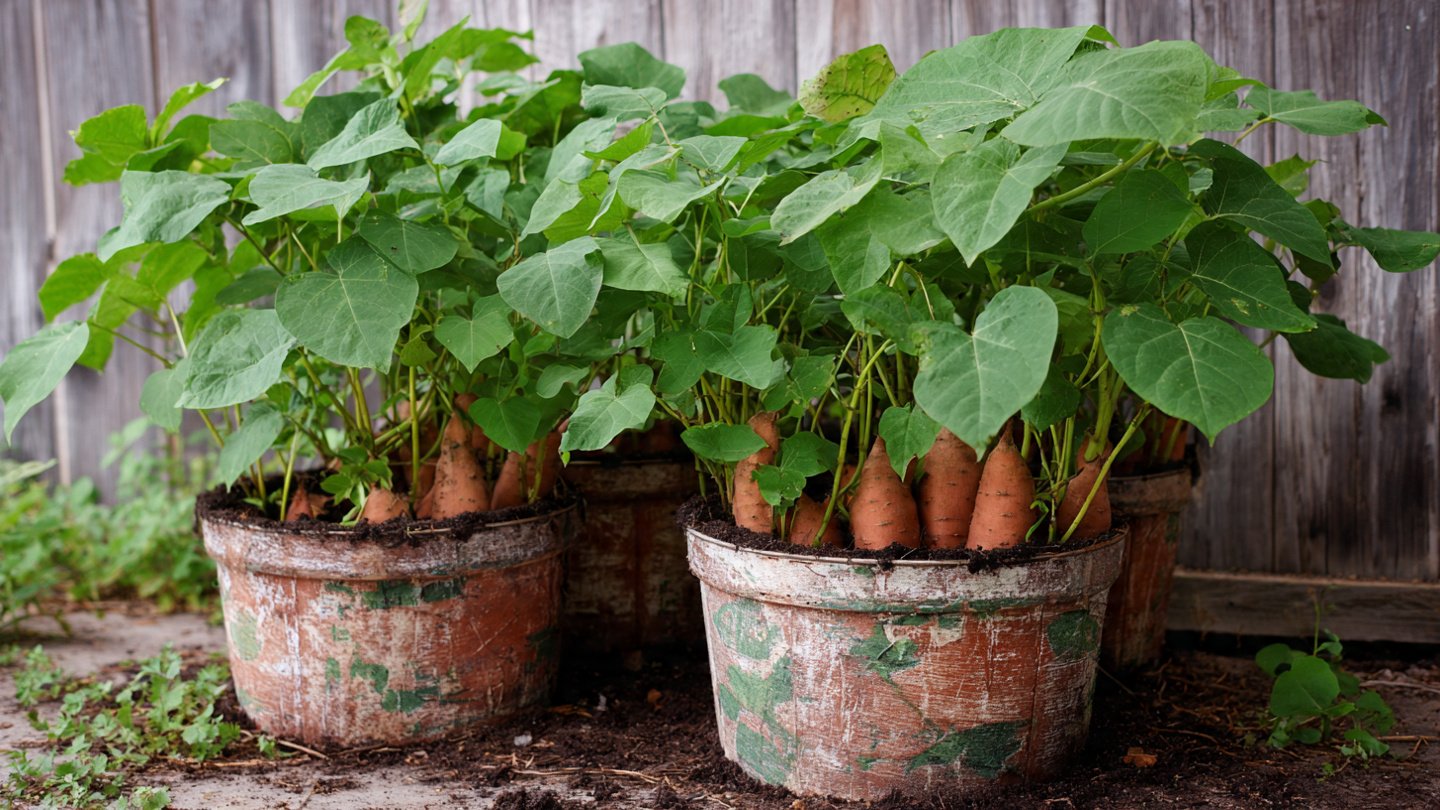
Growing your own food does not require a large backyard or traditional garden beds. Sweet potatoes are one of the most adaptable and rewarding crops for small-space gardeners, and they thrive surprisingly well in plastic tubs. With the right setup, even balconies, rooftops, patios, and small courtyards can be transformed into productive food gardens. Sweet potatoes are nutritious, resilient, and visually attractive, making them ideal for container gardening. This guide explains how to successfully grow sweet potatoes in plastic tubs, allowing anyone to enjoy a generous harvest without needing a yard.
Why Sweet Potatoes Are Ideal for Container Gardening
Sweet potatoes are vigorous growers with sprawling vines and underground tubers that adapt well to confined growing environments. Unlike regular potatoes, sweet potatoes require loose soil and warm temperatures rather than deep ground space. Plastic tubs provide excellent control over soil quality, moisture, and temperature, which are critical factors for tuber development.
Another advantage of growing sweet potatoes in containers is reduced pest pressure. Many soil-borne pests and diseases are easier to manage in tubs than in open ground. Container gardening also makes harvesting simpler, cleaner, and less labor-intensive, especially for gardeners with limited mobility or space.
Choosing the Right Plastic Tub
Selecting the correct container is essential for success. Plastic tubs should be large, sturdy, and deep enough to support root growth. A tub with a minimum depth of 15 to 18 inches and a width of at least 18 inches works well for sweet potatoes. Larger tubs allow for better tuber development and higher yields.
Ensure the tub is food-safe and free from harmful chemicals. Drill several drainage holes at the bottom to prevent waterlogging, which can cause root rot and poor tuber formation. Light-colored tubs help reflect heat in very hot climates, while darker tubs retain warmth in cooler environments.
Preparing the Ideal Soil Mix
Sweet potatoes require loose, well-draining soil to form healthy tubers. Garden soil alone is usually too compact for container growing, so a custom soil mix is necessary. A good blend includes equal parts compost, coco peat or peat moss, and coarse sand or perlite. This combination provides nutrients, moisture retention, and excellent drainage.
Avoid heavy clay soil or soil with high nitrogen content, as excessive nitrogen promotes vine growth at the expense of tuber development. Mixing in well-rotted compost ensures steady nutrition without overwhelming the plant. The soil should feel light and crumbly when handled.
Starting Sweet Potato Slips
Sweet potatoes are grown from slips, which are young shoots sprouted from mature sweet potatoes. To produce slips, place a healthy sweet potato halfway into water or bury it partially in moist soil. Keep it in a warm, bright location. Within a few weeks, shoots will emerge from the potato.
Once the slips reach six to eight inches in length, gently twist them off and place them in water until roots form. Rooted slips are ready to plant directly into plastic tubs. Using slips rather than whole potatoes ensures healthier plants and better yields.
Planting Slips in Plastic Tubs
Fill the plastic tub with prepared soil, leaving two to three inches of space from the top. Plant slips about four to six inches deep, burying the lower portion of the stem while keeping the leaves above the soil surface. Space slips eight to twelve inches apart, depending on the tub size.
After planting, water thoroughly to settle the soil and remove air pockets. Place the tub in a warm, sunny location immediately to encourage rapid establishment. Sweet potatoes need warmth to thrive, especially during the early growth stage.
Sunlight and Placement
Sweet potatoes require at least six to eight hours of direct sunlight daily. Place tubs on balconies, terraces, rooftops, or patios where they receive maximum sun exposure. Insufficient sunlight results in weak vines and reduced tuber formation.
Good airflow is also important, especially in small spaces. Avoid overcrowding containers and allow vines to trail freely or guide them along railings or trellises to improve air circulation and reduce disease risk.
Watering Practices for Container-Grown Sweet Potatoes
Consistent moisture is important, especially during the first few weeks after planting. Water deeply whenever the top layer of soil feels dry. Plastic tubs retain moisture better than clay pots, so avoid overwatering.
As plants mature, reduce watering slightly to encourage tuber development. Excessive moisture late in the growing season can cause cracked or poorly formed tubers. Always ensure excess water drains freely from the tub.
Fertilization and Nutrient Balance
Sweet potatoes are light feeders compared to other vegetables. Too much fertilizer, especially nitrogen, leads to lush vines but poor tuber production. Use a balanced organic fertilizer or compost tea once every three to four weeks during early growth.
As vines spread and tubers begin forming, reduce feeding frequency. Potassium-rich nutrients support tuber development, while excessive nitrogen should be avoided. Slow, steady nutrition produces better-quality sweet potatoes in containers.
Managing Vine Growth in Small Spaces
Sweet potato vines grow quickly and can spread extensively. In small spaces, guide vines along walls, railings, or trellises to keep them organized. Avoid burying vines repeatedly, as this can cause the plant to produce smaller tubers at multiple points.
Occasional light pruning of excessive vine growth helps redirect energy toward tuber development. Removing a few vine tips improves airflow and prevents overcrowding without harming the plant.
Pest and Disease Prevention
Container-grown sweet potatoes experience fewer pest problems, but occasional issues may arise. Aphids, spider mites, and whiteflies can attack vines, especially in hot, dry conditions. Regular inspection helps catch infestations early.
Rinsing leaves with water or using mild organic sprays effectively controls pests. Well-drained soil, proper sunlight, and good airflow prevent most fungal diseases. Avoid waterlogged soil, which encourages rot and disease development.
Harvesting Sweet Potatoes from Plastic Tubs
Sweet potatoes are typically ready for harvest 90 to 120 days after planting, depending on the variety and growing conditions. Yellowing leaves and slowing vine growth indicate maturity.
To harvest, gently tip the plastic tub onto a tarp or open surface and sift through the soil by hand. This method prevents damage to tubers and makes harvesting clean and easy. Container harvesting is far less strenuous than digging in the ground.
Handle freshly harvested sweet potatoes carefully, as their skins are delicate. Avoid washing them immediately, as this can shorten storage life.
Curing and Storing Sweet Potatoes
Curing improves sweetness and extends shelf life. Place harvested sweet potatoes in a warm, humid location for seven to ten days. After curing, store them in a cool, dry, well-ventilated area away from direct sunlight.
Proper curing allows starches to convert into sugars, enhancing flavor. Well-cured sweet potatoes can be stored for several months under ideal conditions.
Benefits of Growing Sweet Potatoes in Plastic Tubs
Growing sweet potatoes in plastic tubs offers flexibility, accessibility, and efficiency. It allows gardeners to control soil quality, moisture, and nutrients more precisely than traditional garden beds. This method is ideal for renters, apartment dwellers, and anyone with limited outdoor space.
Plastic tubs are affordable, reusable, and easy to move, making them perfect for adapting to changing sunlight or weather conditions. Container gardening also reduces weed pressure and simplifies pest management.
Turning Small Spaces into Food Gardens
Sweet potatoes prove that productive food gardens are possible even in the smallest spaces. A single plastic tub can yield a surprising amount of nutritious food while adding greenery and beauty to urban environments. Growing food at home increases self-sufficiency, reduces grocery costs, and provides unmatched freshness.
With thoughtful planning and basic care, balconies, rooftops, and patios can become vibrant food-producing spaces. Sweet potatoes are a perfect crop to begin this transformation.
Conclusion
Growing sweet potatoes in plastic tubs is a practical, space-saving solution that allows anyone to enjoy homegrown food without a yard. By choosing the right container, preparing loose soil, providing adequate sunlight, and maintaining balanced care, gardeners can achieve impressive yields in small spaces.
This method combines simplicity with productivity, making sweet potatoes an excellent choice for beginner and experienced gardeners alike. With minimal investment and effort, plastic tubs can be transformed into thriving food gardens, proving that limited space is no barrier to growing nutritious, delicious crops at home