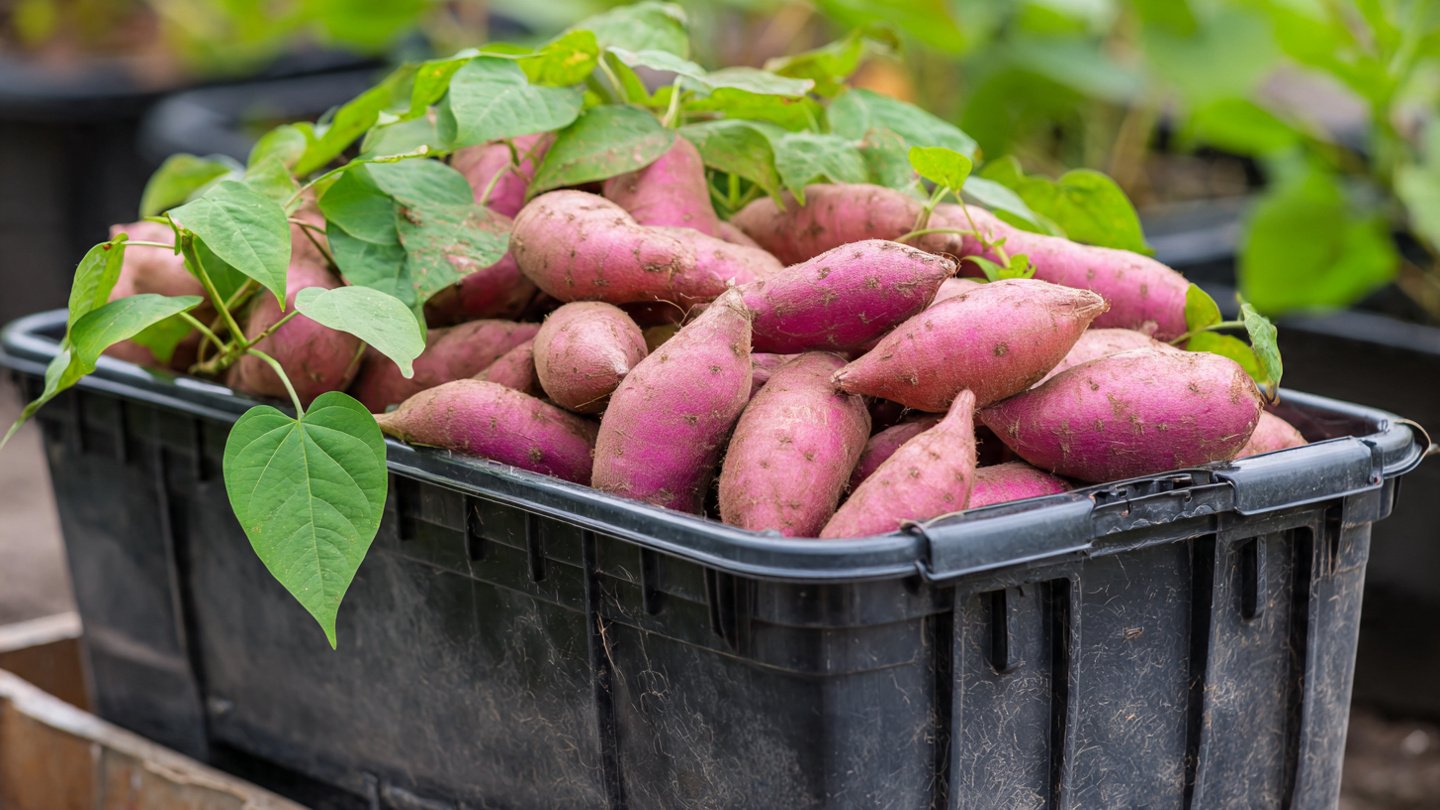
Growing sweet potatoes does not require a traditional garden or large outdoor space. With a simple plastic tub, the right soil, and proper care, you can harvest an impressive yield of sweet, nutritious roots at home. This method is ideal for balconies, patios, rooftops, and small yards, making sweet potato cultivation accessible to anyone. Plastic tubs provide control over soil quality, moisture, and growing conditions, which often results in healthier plants and larger harvests than ground planting.
Sweet potatoes are warm season crops that thrive in sunlight and loose soil. They grow from slips, which are young shoots produced from mature sweet potatoes. These slips develop vines above ground and storage roots below. The key to growing large, plentiful roots is giving the plant enough space underground while keeping the growing environment stable and stress free. Plastic tubs are perfect for this purpose because they are affordable, lightweight, and easy to manage.
The first step is selecting the right plastic tub. Size matters more than appearance. A tub should be at least twelve to eighteen inches deep and wide to allow roots to expand freely. Larger tubs generally produce better yields. Make sure the tub is sturdy and has multiple drainage holes at the bottom. Proper drainage is essential because sweet potatoes are highly sensitive to waterlogged soil. Excess moisture can lead to rot and poor root development.
Once the container is ready, focus on creating the ideal soil mix. Sweet potatoes need loose, well draining soil that allows roots to grow without restriction. Heavy or compacted soil leads to long thin roots or very small harvests. A good mix includes garden soil combined with compost and sand, coco peat, or perlite. Compost adds nutrients, while sand or coco peat improves drainage and aeration. The soil should feel light and crumbly when squeezed in your hand.
Before planting, prepare sweet potato slips. You can purchase slips or grow your own by sprouting a healthy sweet potato. Place the sweet potato in a warm, bright location with part of it submerged in water or buried in soil. In a few weeks, shoots will appear. When these shoots reach several inches in length, gently twist them off and place them in water until roots form. These rooted slips are ready for planting.
Planting slips correctly sets the foundation for a successful harvest. Fill the plastic tub with soil, leaving a few inches of space at the top. Make small holes and plant each slip so that the roots and lower portion of the stem are buried, while the leaves remain above the soil surface. Space slips evenly to avoid overcrowding. Press the soil gently around each slip and water thoroughly to settle the soil.
Sunlight is one of the most important factors for growing sweet potatoes in tubs. These plants need at least six to eight hours of direct sunlight daily. Place tubs in the sunniest location available. Insufficient sunlight leads to excessive vine growth with poor root formation. Full sun encourages the plant to direct energy toward developing large, healthy storage roots.
Watering must be consistent but controlled. Sweet potatoes prefer evenly moist soil, especially during the early growth stage. Water whenever the top layer of soil feels dry, but never allow the tub to sit in standing water. Overwatering causes roots to rot and reduces yields. As the plants mature, they become more drought tolerant, but consistent moisture still supports better root development.
Feeding sweet potatoes correctly is essential for harvesting big roots. Unlike leafy vegetables, sweet potatoes do not need excessive nitrogen. Too much nitrogen promotes vine growth at the expense of roots. Use compost or a balanced organic fertilizer at planting time. As the plants grow, occasional feeding with a low nitrogen, high potassium fertilizer helps improve root size and quality. Feeding lightly and consistently produces the best results.
As vines grow, they may trail over the sides of the tub. This is normal and does not harm the plant. Avoid lifting or moving vines unnecessarily, as this can disturb root formation. Some gardeners gently guide vines around the container to keep the area tidy, but it is best to let them grow naturally. The focus should remain on undisturbed soil below the surface.
One advantage of growing sweet potatoes in plastic tubs is temperature control. The soil in containers warms up faster than ground soil, which encourages faster growth. In cooler climates, tubs can be moved to warmer locations or placed against sun facing walls to increase heat retention. This extra warmth can significantly improve yields and shorten the growing season.
Pests and diseases are generally less problematic in container grown sweet potatoes. However, regular inspection is still important. Look for signs of leaf damage or insects and address problems early. Healthy plants grown in good soil with proper watering are naturally more resistant to pests. Avoid overcrowding and maintain good airflow around the plants to reduce disease risk.
One important technique for maximizing harvest size is soil mounding. As vines grow, you can add more loose soil or compost to the tub, covering the lower stems slightly. This encourages additional root development along the buried stems. Be careful not to bury the leaves completely. This simple step can significantly increase the number and size of sweet potatoes produced.
Sweet potatoes typically take three to four months to mature, depending on the variety and growing conditions. As harvest time approaches, the leaves may begin to yellow slightly. This is a natural sign that the roots are nearing maturity. Stop watering about one to two weeks before harvest to allow the soil to dry slightly. This improves storage quality and makes harvesting easier.
Harvesting sweet potatoes from plastic tubs is one of the most satisfying parts of the process. Turn the tub on its side or gently remove soil by hand to expose the roots. Be careful not to damage the skins, as fresh sweet potatoes bruise easily. Container harvesting is easier than digging in the ground and often reveals surprisingly large, clean roots.
After harvesting, sweet potatoes need curing to develop sweetness and improve shelf life. Place them in a warm, well ventilated area for about one to two weeks. During curing, starches convert to sugars, enhancing flavor. After curing, store sweet potatoes in a cool, dry place away from direct sunlight.
Growing sweet potatoes in plastic tubs also allows for easy soil management between seasons. Old soil can be refreshed with compost and reused, making the process sustainable and cost effective. Containers can be cleaned and stored or replanted quickly for the next growing cycle.
Another benefit of this method is accessibility. People with limited mobility or space can still enjoy growing a productive crop. Tubs can be raised on platforms or positioned at convenient heights, reducing strain and making maintenance easier.
Beyond the harvest, sweet potato vines are attractive plants with lush foliage that adds beauty to any space. They can function as both ornamental and edible plants, providing visual appeal while producing nutritious food.
With the right container, loose soil, proper sunlight, and mindful watering, sweet potatoes thrive in plastic tubs. This simple method proves that a lack of traditional garden space does not limit productivity. By using containers and smart growing practices, anyone can harvest big, plentiful sweet potatoes at home and enjoy the satisfaction of growing their own food without a garden.