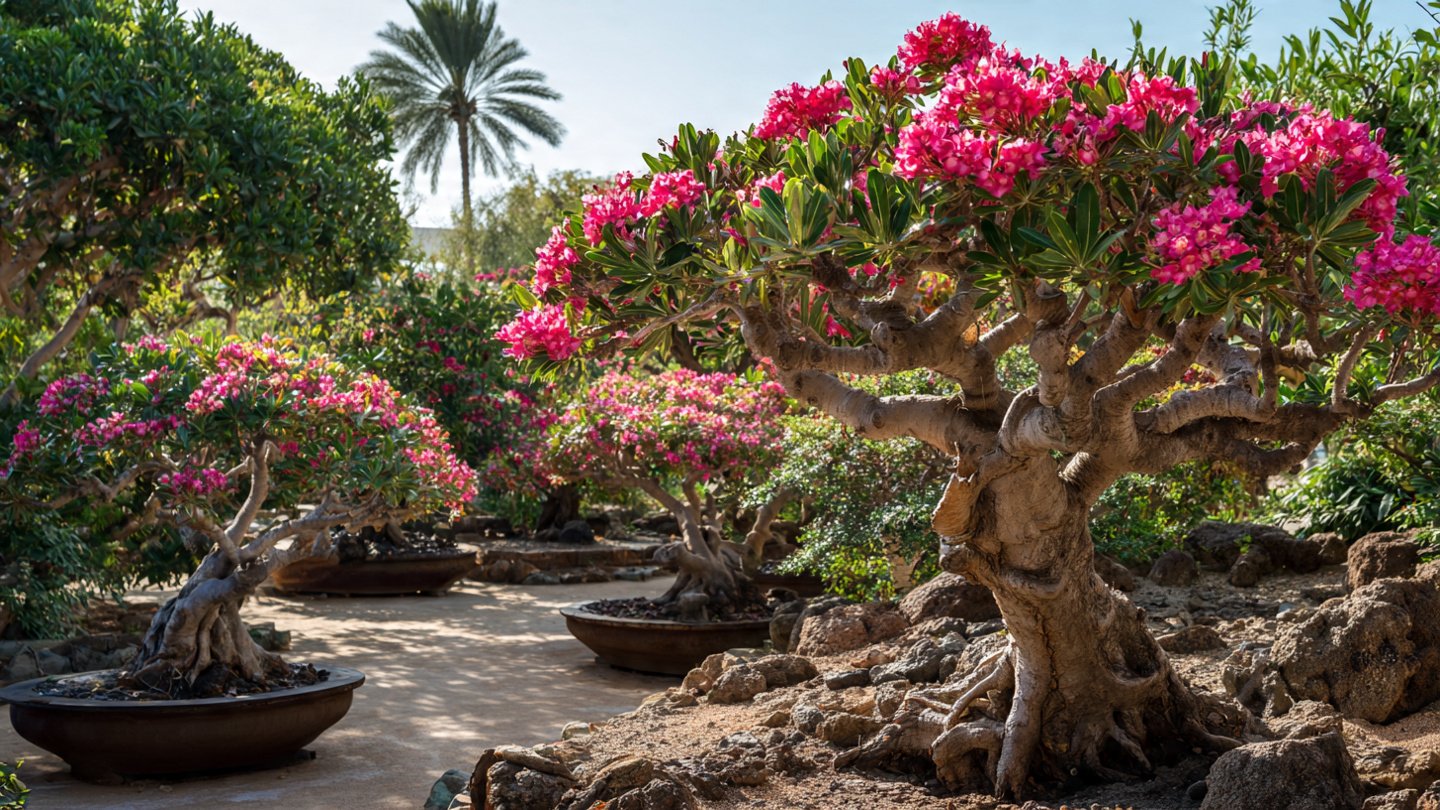
Adenium, often referred to as the desert rose, is a striking plant renowned for its thick, swollen caudex, elegant branching structure, and vibrant flowers. While it is celebrated for its ornamental blooms, Adenium’s unique form and sculptural qualities make it a compelling choice for gardeners and landscape designers looking to add artistic elements to outdoor spaces. With its naturally sculptural silhouette, the plant can transform a simple garden into a visually engaging landscape, blending nature’s beauty with artistic expression. This guide explores the artistic potential of Adenium and how to incorporate it as a living sculpture in your garden.
Adenium’s appeal goes beyond its flowers. The swollen trunk, or caudex, often resembles an abstract sculpture, offering visual interest even when the plant is not in bloom. This thickened base stores water, allowing the plant to survive in arid conditions, while creating a natural architectural form. The tapering branches and gracefully arranged stems contribute to a sense of balance and proportion, making Adenium an ideal subject for gardeners seeking living art pieces.
Choosing the right variety of Adenium is the first step in creating a sculptural element. There are several species and hybrids, each with distinctive growth habits, caudex shapes, and flower colors. Adenium obesum is the most common species, featuring a robust caudex and vibrant flowers ranging from pink to red. Miniature varieties offer compact forms suitable for small gardens or container displays, while larger varieties can dominate garden beds as bold focal points. Selecting a variety that complements your garden’s scale and style is essential for aesthetic harmony.
Container cultivation enhances Adenium’s sculptural potential. Growing Adenium in pots allows gardeners to control shape, size, and placement within the landscape. Containers of varying shapes and heights, from shallow bonsai-style pots to taller planters, provide additional design opportunities. A carefully chosen pot can frame the caudex and accentuate the plant’s form, creating a visually striking contrast between the organic curves of the trunk and the clean lines of the container.
Proper soil preparation is key to maintaining healthy growth and artistic structure. Adenium thrives in well-draining soil, as excessive moisture can cause root rot and deformities. A mix of sandy soil, perlite, and organic compost ensures aeration, prevents waterlogging, and supports root health. Soil quality also influences caudex development, with nutrient-rich yet free-draining mediums promoting thicker, more pronounced bases. Mulching with small stones or coarse sand adds to the sculptural aesthetic while improving drainage.
Sunlight is critical for both aesthetic and biological reasons. Adenium requires full sun to develop its signature thick trunk and compact branches. Adequate sunlight encourages flowering, enhances leaf color, and strengthens stems. Insufficient light leads to leggy growth and elongated branches, reducing the plant’s sculptural appeal. Position the plant in a sunny garden bed, terrace, or balcony where it receives at least six hours of direct sunlight daily. For container-grown Adenium, rotating the pot ensures balanced light exposure and even growth on all sides.
Shaping and pruning are essential techniques for transforming Adenium into an artistic element. The plant’s natural form can be enhanced by selective pruning, which encourages branching and symmetry. Pruning removes weak or uneven branches, allowing the stronger, more visually appealing ones to dominate the composition. Over time, repeated pruning can create intricate forms resembling bonsai or abstract sculptures. The timing of pruning is important: perform major cuts during the plant’s active growing season to ensure rapid recovery and healthy regrowth.
Adenium responds well to training techniques such as wiring or staking. Gardeners can manipulate the angle and curvature of branches to achieve desired shapes. This controlled growth enhances the plant’s artistic presence, allowing it to serve as a focal point in garden beds, patios, or entryways. Combining pruning and training creates dynamic forms, making each Adenium specimen a unique piece of living art.
Flowering contributes to Adenium’s artistic potential. Vibrant blooms in shades of pink, red, white, and even bi-colored varieties provide seasonal highlights and contrast beautifully with the gray-green caudex and glossy leaves. Flower placement can accentuate branch patterns, drawing attention to the plant’s structural form. Although flowering is seasonal, even leafless or dormant Adenium displays strong sculptural characteristics, making it valuable as a year-round garden element.
Container arrangement and placement play a major role in emphasizing Adenium’s sculptural qualities. Placing a single, well-shaped Adenium in a minimalist container creates a striking focal point. Grouping multiple plants of varying heights and forms in a rock garden or raised bed adds depth and complexity, evoking a sense of natural artistry. Combining Adenium with complementary elements such as pebbles, driftwood, or bonsai stones enhances the visual composition and creates a harmonious landscape tableau.
Watering and care must be tailored to preserve both health and form. Adenium is drought-tolerant but responds positively to regular watering during its active growth phase. Allow the soil to dry between watering to encourage thick caudex development. Overwatering or stagnant soil can compromise trunk shape and lead to fungal infections. Container-grown plants benefit from thorough watering that allows excess to drain freely, maintaining root and caudex health while supporting artistic structure.
Fertilization supports sustained growth and flower production, enhancing the plant’s visual appeal. Use balanced, slow-release fertilizers during the growing season to encourage strong stems and vibrant leaves. Organic fertilizers, such as compost or liquid seaweed extract, nourish the plant gently, preventing excessive, uncontrolled growth that can disrupt sculptural form. Proper nutrition enhances the caudex and branches, reinforcing the plant’s artistic potential.
Adenium’s sculptural value can be amplified through seasonal care and protection. In colder regions, it is best to move container-grown plants indoors or to sheltered areas during frost. Dormancy periods allow the caudex to thicken and strengthen, contributing to a more dramatic form in the following season. Pruning and minor reshaping during dormancy set the stage for aesthetically pleasing growth when the plant resumes active development.
Integrating Adenium into a garden landscape requires careful consideration of scale and perspective. Larger plants can anchor a garden bed or serve as a dramatic centerpiece. Medium-sized specimens work well alongside flowering shrubs or succulents, creating contrast and layering. Smaller varieties can accent pathways, patios, or bonsai arrangements. The plant’s natural sculptural form lends itself to both formal and informal designs, making it versatile in various landscape styles.
Beyond visual impact, Adenium also contributes ecological and sensory benefits. Its flowers attract pollinators, including bees and butterflies, while its aromatic foliage adds a subtle sensory element to the garden. The plant’s structural form provides shelter and interest for smaller garden fauna, integrating seamlessly into a balanced garden ecosystem. Using Adenium as a sculptural element merges aesthetic beauty with ecological function.
One of the most compelling aspects of Adenium is its ability to evoke artistic expression through nature. Gardeners can shape, prune, and arrange these plants as living sculptures, experimenting with form, texture, and placement. Each plant becomes a unique creation, reflecting personal style and creativity. Whether used as a solitary focal point, part of a rock garden, or in container compositions, Adenium elevates ordinary garden spaces into galleries of natural art.
In conclusion, Adenium offers unparalleled artistic potential as a sculptural element in garden landscapes. Its thick caudex, elegant branching, and vibrant flowers create dynamic forms that capture attention and enhance visual interest. By selecting suitable varieties, providing proper soil, sunlight, and water, and employing techniques such as pruning, training, and container placement, gardeners can transform Adenium into living sculptures that anchor, accentuate, and enrich any outdoor space. With thoughtful care and creative vision, this remarkable plant allows gardeners to combine horticulture and artistry, turning their landscapes into expressions of living art that are admired year-round.