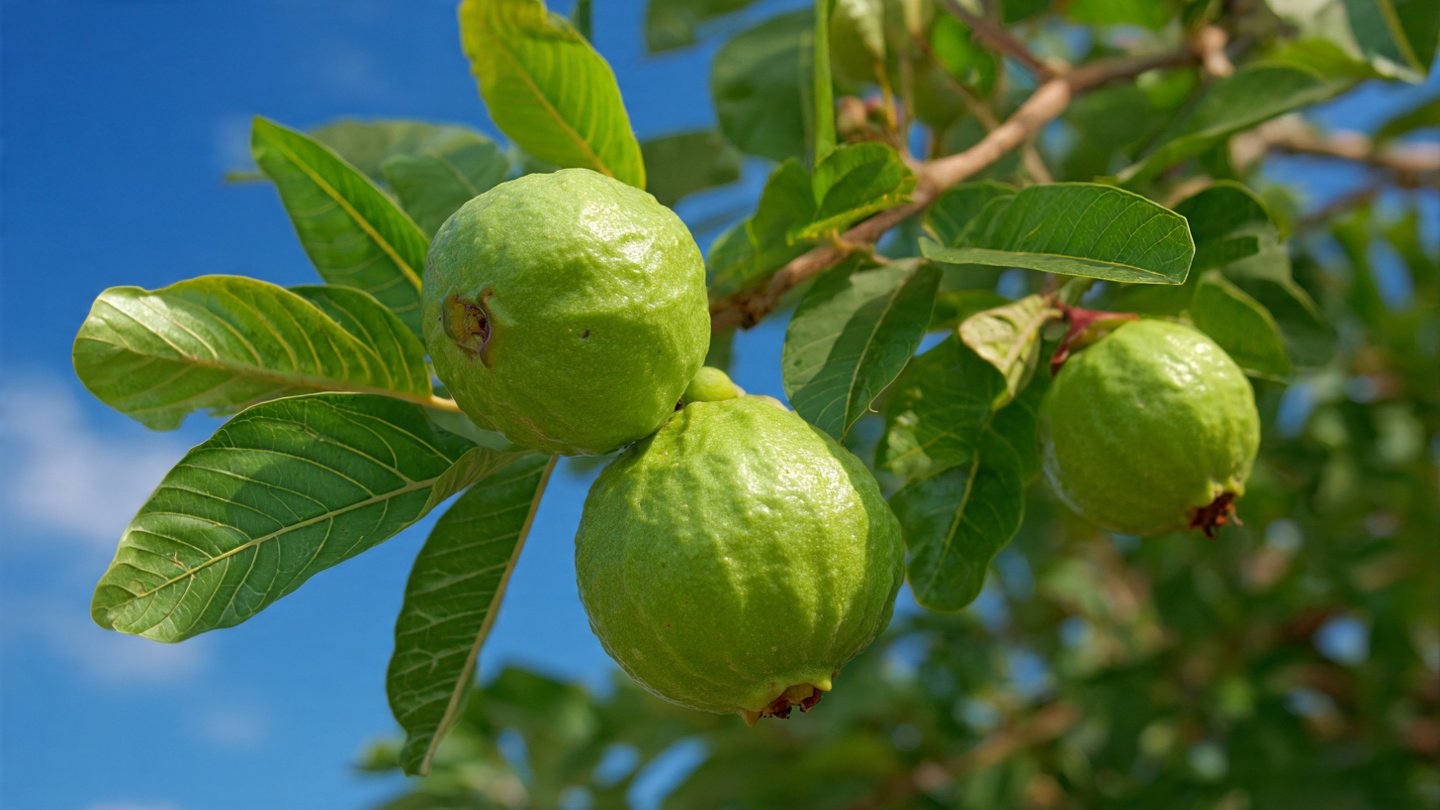
Guava trees are prized for their delicious, nutrient-rich fruits and their ability to thrive in a variety of climates. As global demand for guavas continues to rise, farmers and horticulturists are exploring ways to increase yield, accelerate growth, and produce trees with desirable traits. One of the most effective methods for achieving these goals is grafting—a horticultural technique that joins the tissues of two plants so they grow as one. While traditional grafting methods have been practiced for centuries, recent advances and refined approaches have revolutionized the way guava trees are propagated, offering faster growth, higher productivity, and improved fruit quality.
Grafting is a process that relies on the natural ability of plants to unite when their vascular tissues are aligned. In guavas, grafting allows growers to combine the hardiness and root system of one plant, called the rootstock, with the desirable fruiting characteristics of another, called the scion. By selecting rootstocks that are disease resistant, drought tolerant, or capable of vigorous growth, and pairing them with high-yielding, flavorful scions, growers can produce superior guava trees in less time compared to growing from seed. This combination not only accelerates fruit production but also enhances the overall health and longevity of the tree.
One of the revolutionary techniques gaining popularity is the cleft grafting method. Cleft grafting involves making a vertical cut in the rootstock and inserting a wedge-shaped scion into the slit. This method ensures close contact between the vascular tissues of both plants, promoting rapid union and strong growth. Modern refinements of cleft grafting include the use of grafting wax or parafilm to seal the union and reduce water loss, as well as precise timing during the active growth phase to maximize success rates. Growers report that cleft grafted guava trees can begin producing fruit within two to three years, significantly faster than seed-grown trees, which may take five to eight years.
Another innovative approach is side veneer grafting, which is particularly effective for guava trees with thicker stems. In this method, a slanted cut is made along the side of the rootstock, and the scion is carefully inserted to match the cambium layers. This technique allows for a larger contact area between scion and rootstock, increasing the likelihood of successful grafting. Side veneer grafting is advantageous in commercial nurseries because it enables the propagation of multiple scions on a single rootstock, maximizing space efficiency and plant production.
Whip-and-tongue grafting is also gaining attention for its effectiveness in guava propagation. This technique involves making matching diagonal cuts on both the rootstock and scion, followed by interlocking the pieces like a tongue-and-groove joint. The interlocking nature of the graft provides stability and increases the surface area for cambium contact, promoting faster healing and stronger unions. Whip-and-tongue grafting is ideal for young guava seedlings and produces robust trees capable of early flowering and fruiting.
In addition to refining traditional methods, scientists are experimenting with innovative grafting materials and techniques to improve success rates. For instance, biodegradable grafting tapes infused with nutrients and hormones help stimulate callus formation, accelerate tissue fusion, and reduce the risk of infection. Grafting under controlled environmental conditions, such as in greenhouses or mist chambers, allows growers to maintain optimal humidity, temperature, and light, further improving the success of new grafts. These controlled methods ensure that even delicate scions can establish quickly and grow into healthy, productive trees.
Selecting the right rootstock is critical to the success of any grafting method. Modern horticultural research has identified guava rootstocks that provide exceptional benefits. Some rootstocks enhance drought tolerance, allowing trees to withstand water scarcity while maintaining fruit quality. Others confer resistance to soil-borne diseases or nematodes, reducing the need for chemical interventions. By matching the scion with an appropriate rootstock, growers can tailor guava trees to specific climates, soil types, and cultivation systems, resulting in better yield and more resilient orchards.
Hormonal treatments are also part of the new wave of grafting innovations. Auxins and cytokinins, naturally occurring plant hormones, can be applied to the graft junction to stimulate cell division and callus formation. This accelerates the union between rootstock and scion and promotes faster vegetative growth. In addition, some growers dip scion tips in rooting powders or hormone solutions before grafting, further enhancing the likelihood of success. These small but significant adjustments in technique reflect a growing emphasis on science-based propagation methods in modern guava cultivation.
Timing is another crucial factor for successful grafting. Recent studies show that performing grafts during periods of active growth, typically early in the rainy season, significantly improves survival rates. During this time, sap flow is vigorous, promoting rapid tissue healing and nutrient transport. Conversely, grafting during dormant periods or extreme temperatures often results in poor success and delayed growth. By carefully planning grafting schedules, growers can maximize efficiency and reduce the need for repeated attempts.
Micro-grafting, a newer technique adapted from high-value fruit crops, is showing promising results in guava propagation. In micro-grafting, small scion segments are grafted onto young rootstock seedlings under highly controlled conditions. This method allows for rapid multiplication of elite guava varieties while maintaining genetic fidelity. Micro-grafted guava trees not only reach maturity faster but also exhibit uniform growth and fruiting characteristics, making them highly suitable for commercial orchards and nursery operations.
Beyond speed and yield, grafting improves fruit quality. Grafted guava trees often produce larger, sweeter, and more uniform fruits compared to seed-grown counterparts. Rootstocks influence nutrient uptake and water efficiency, which translates into better fruit color, texture, and taste. Additionally, grafted trees tend to flower earlier and more consistently, providing a steady harvest that benefits both home gardeners and commercial producers.
Another advancement in grafting is the combination of interstocks, where a third intermediate plant is used between rootstock and scion. This technique can confer additional benefits such as dwarfing, improved disease resistance, or enhanced vigor. Interstocks allow growers to fine-tune tree characteristics, tailoring guava plants to specific orchard layouts, climate conditions, and market requirements. Although more complex, interstock grafting represents a frontier in precision horticulture for guava cultivation.
Practical implementation of these new techniques requires attention to detail. Tools must be clean and sharp to prevent infections, cuts should align precisely with the cambium layer, and grafts must be secured properly. Protective coverings, such as grafting tapes or waxes, maintain moisture and prevent contamination during the critical healing period. Post-grafting care, including adequate watering, shading, and pest monitoring, ensures that young grafted guava trees establish quickly and thrive.
Modern nurseries are increasingly adopting these techniques to meet the growing demand for high-quality guava plants. With faster growth, grafted guava trees reach marketable size sooner, reducing production time and costs. Farmers benefit from uniform orchards with predictable yield and fruit quality, while consumers enjoy better tasting and visually appealing guavas. The combination of science-driven propagation and practical horticultural techniques is transforming guava production worldwide.
In conclusion, grafting is a revolutionary tool in guava cultivation that combines traditional horticultural knowledge with modern innovations. Techniques such as cleft grafting, side veneer grafting, whip-and-tongue grafting, micro-grafting, and interstock grafting offer faster growth, improved fruit quality, and higher yields. The careful selection of rootstocks, application of plant hormones, and use of controlled environments further enhance success rates. By adopting these methods, growers can produce resilient, high-performing guava trees that thrive under diverse conditions. Grafting not only accelerates the growth cycle but also ensures that desirable traits are preserved and amplified, providing a sustainable pathway to a productive, profitable, and thriving guava orchard.