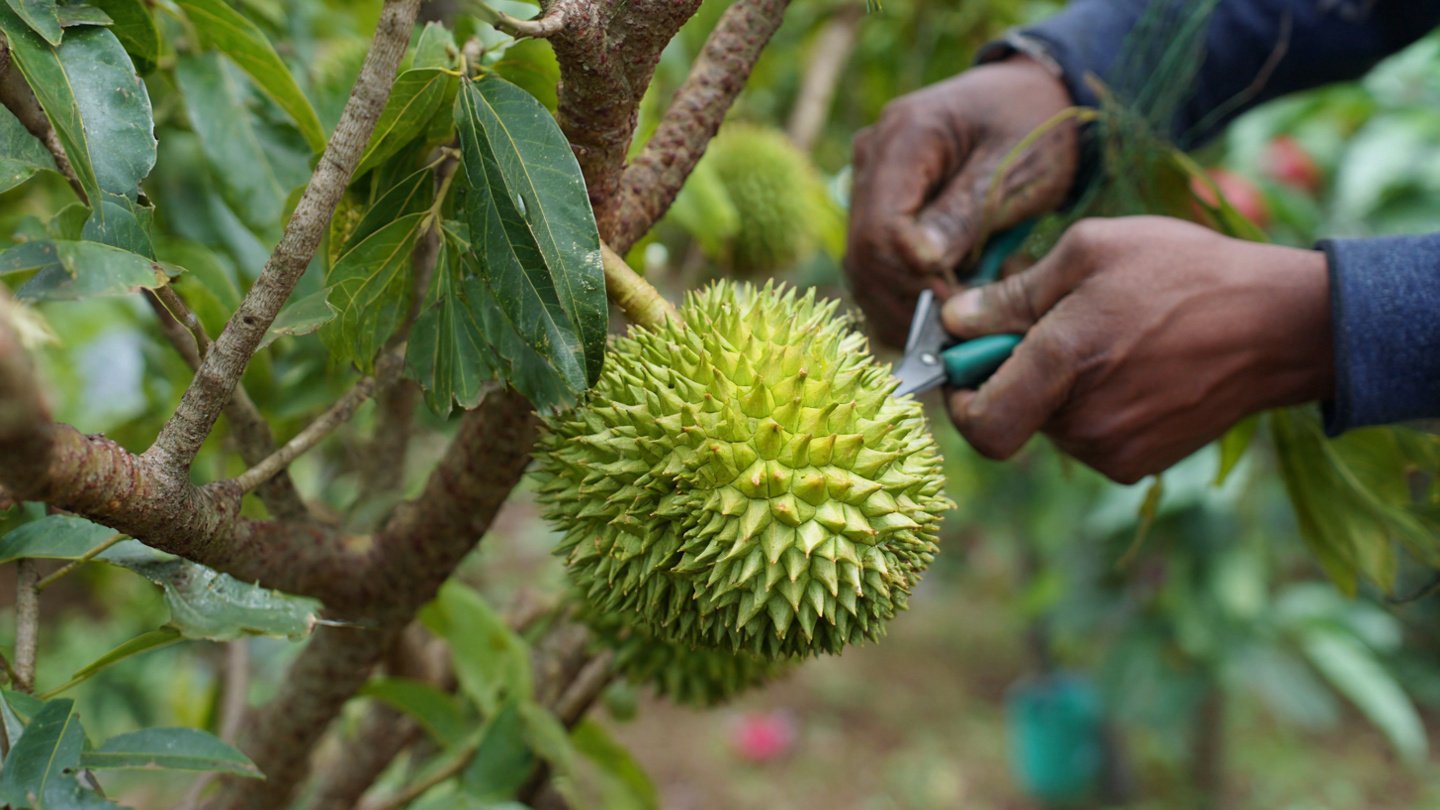
Durian (Durio spp.) is often called the “king of fruits” for good reason. Its large size, rich flavor, and high market value make it a prized crop in tropical regions. For growers, achieving strong, healthy, and productive durian trees is the ultimate goal. One of the most effective ways to achieve this is through grafting, particularly fast cleft grafting, which promotes rapid establishment, strong growth, and early fruiting. This article will provide a comprehensive guide to the durian grafting method, focusing on the cleft grafting technique to ensure durable, productive trees.
Why Grafting Durian Is Important
Durian seedlings grown from seed have variable traits. While some may inherit desirable characteristics, others may be slow to fruit, produce inferior quality, or be more susceptible to pests and diseases. Grafting offers several advantages:
- Uniformity: Grafted trees maintain the quality of the parent plant, producing consistent fruit size, flavor, and aroma.
- Faster Fruiting: Seedlings may take 8–12 years to bear fruit, while grafted trees can produce within 3–5 years.
- Disease Resistance: Selecting scions from healthy, high-performing trees can reduce vulnerability to diseases.
- Controlled Growth: Grafting allows growers to manage tree size, shape, and canopy development, facilitating easier harvesting.
Among grafting methods, cleft grafting is widely favored for durian due to its simplicity, high success rate, and ability to handle scions from older, productive trees.
What Is Fast Cleft Grafting?
Cleft grafting is a method where a scion, typically a small branch or shoot from a mature tree, is inserted into a split or “cleft” in the rootstock. The cambium layers of the scion and rootstock must align to allow the flow of nutrients and successful union.
Fast cleft grafting emphasizes quick handling, proper timing, and preparation, reducing the recovery period and promoting faster growth. This approach minimizes stress to the rootstock and scion, improves success rates, and accelerates the time to flowering and fruiting.
Materials Needed for Durian Cleft Grafting
Before starting the grafting process, gather all necessary materials:
- Healthy durian rootstock (preferably 1–2 years old)
- Scion from a high-yielding, disease-free durian tree
- Sharp grafting knife or scalpel
- Grafting tape or parafilm
- Grafting wax or sealant to prevent drying and infection
- Clean water and a disinfectant for tools
- Shade net or protected area for the grafted plant
Proper preparation of materials ensures smooth execution, higher success rates, and healthy graft union development.
Selecting the Right Scion and Rootstock
The quality of both the scion and rootstock is critical to successful grafting.
Scion Selection:
- Choose young shoots with 2–4 buds, healthy bark, and no signs of disease or pests.
- Select scions from high-yielding, early-bearing trees for faster productivity.
- Avoid shoots that are too soft or overly woody; medium maturity provides the best results.
Rootstock Selection:
- Use vigorous, disease-free seedlings that are well-established and at least 1–2 years old.
- The rootstock should have a straight, strong stem to support the scion.
- Rootstocks grown from seeds of proven varieties often produce the best compatibility with scions.
Selecting the right combination of scion and rootstock increases the likelihood of graft success and ensures that the resulting tree is robust and productive.
Step-by-Step Guide to Fast Cleft Grafting
Fast cleft grafting is performed systematically to ensure proper cambium contact and prevent infection. Follow these steps carefully:
1. Prepare the Rootstock
- Cut the rootstock at a height of 30–50 cm above the soil.
- Make a clean, vertical split in the stem using a sharp knife, approximately 3–5 cm deep, depending on the thickness of the rootstock.
- Ensure the edges of the split are smooth to allow tight scion insertion.
2. Prepare the Scion
- Trim the scion into a wedge shape at the bottom, forming two sloping cuts that will fit into the cleft of the rootstock.
- Ensure the cut surfaces are smooth and free from damage.
- Keep the scion moist and shaded until ready for insertion to prevent desiccation.
3. Insert the Scion
- Carefully insert the scion into the cleft of the rootstock, aligning the cambium layers on at least one side. Proper cambium contact is essential for nutrient flow and graft union.
- Make sure the scion sits firmly in place, with buds facing upwards.
4. Secure the Graft
- Wrap the graft union tightly with grafting tape or parafilm to hold the scion in place and prevent air exposure.
- Apply grafting wax or sealant over the union to prevent drying, reduce infection risk, and promote healing.
5. Provide Proper Care After Grafting
- Place the grafted plant in a shaded, protected area for 2–4 weeks to reduce stress from sunlight and wind.
- Keep the soil consistently moist but not waterlogged to support rootstock and scion growth.
- Remove any shoots emerging from the rootstock below the graft union to direct energy into the scion.
Tips for Increasing Graft Success
- Timing: Graft during active growth periods, usually in spring or early rainy season, when sap flow is strong.
- Hygiene: Disinfect tools before cutting to prevent infection.
- Compatibility: Use scions and rootstocks from compatible varieties for better union.
- Monitoring: Check the graft weekly for signs of wilting, pests, or disease. Prompt action improves success rates.
- Gradual Acclimatization: After 3–4 weeks, slowly expose the grafted plant to sunlight to strengthen growth.
Following these tips ensures a higher survival rate and stronger growth of the grafted durian tree.
Advantages of Fast Cleft Grafting
Fast cleft grafting offers several distinct advantages over other propagation methods:
- Rapid Growth: Accelerates the establishment of the scion on the rootstock.
- High Success Rate: Proper alignment and handling improve survival and healing.
- Early Fruit Production: Reduces the waiting period compared to seed-grown trees.
- Stronger Trees: Combines the vigor of the rootstock with the productivity of the scion.
- Cost-Effective: Reduces the need to plant multiple seedlings to achieve high-yield trees.
These advantages make cleft grafting the preferred method for commercial durian production and backyard growers alike.
Common Challenges and Solutions
Even with careful grafting, some challenges may arise:
- Scion Drying: Keep scions shaded and moist until grafting. Seal the graft union effectively.
- Poor Cambium Contact: Ensure at least one side of cambium layers aligns properly.
- Rootstock Sprouts: Remove shoots below the graft to prevent competition.
- Pests or Diseases: Regularly inspect grafts and use organic or approved treatments as needed.
Addressing these issues promptly ensures that the grafted durian develops into a healthy, productive tree.
Long-Term Care of Grafted Durian Trees
Once the graft has taken and the tree is established, ongoing care is essential for long-term productivity:
- Watering: Maintain consistent moisture, especially during flowering and fruiting.
- Fertilization: Use balanced fertilizers and organic amendments to support growth and fruit development.
- Pruning: Shape the canopy for airflow, light penetration, and easier harvesting.
- Pest Management: Monitor for durian-specific pests and diseases, using preventive measures and safe treatments.
Proper long-term care ensures that the investment in grafting pays off with strong trees and high-quality fruit yields.
Conclusion
Fast cleft grafting is a reliable and efficient method for producing strong, productive durian trees. By carefully selecting scions and rootstocks, preparing them properly, and following systematic grafting techniques, growers can significantly reduce the time to fruiting while ensuring the trees’ health and vigor.
The key to success lies in attention to detail—aligning cambium layers, protecting the graft, maintaining hygiene, and providing post-grafting care. When done correctly, this method produces durable trees that retain the desirable qualities of the parent plant while benefiting from the vigor and stability of the rootstock.
For durian growers aiming to maximize yields, improve fruit quality, and reduce waiting time, fast cleft grafting is an essential skill. With patience, precision, and proper care, grafted durian trees become highly productive, long-lasting assets capable of producing high-value fruits for years to come.