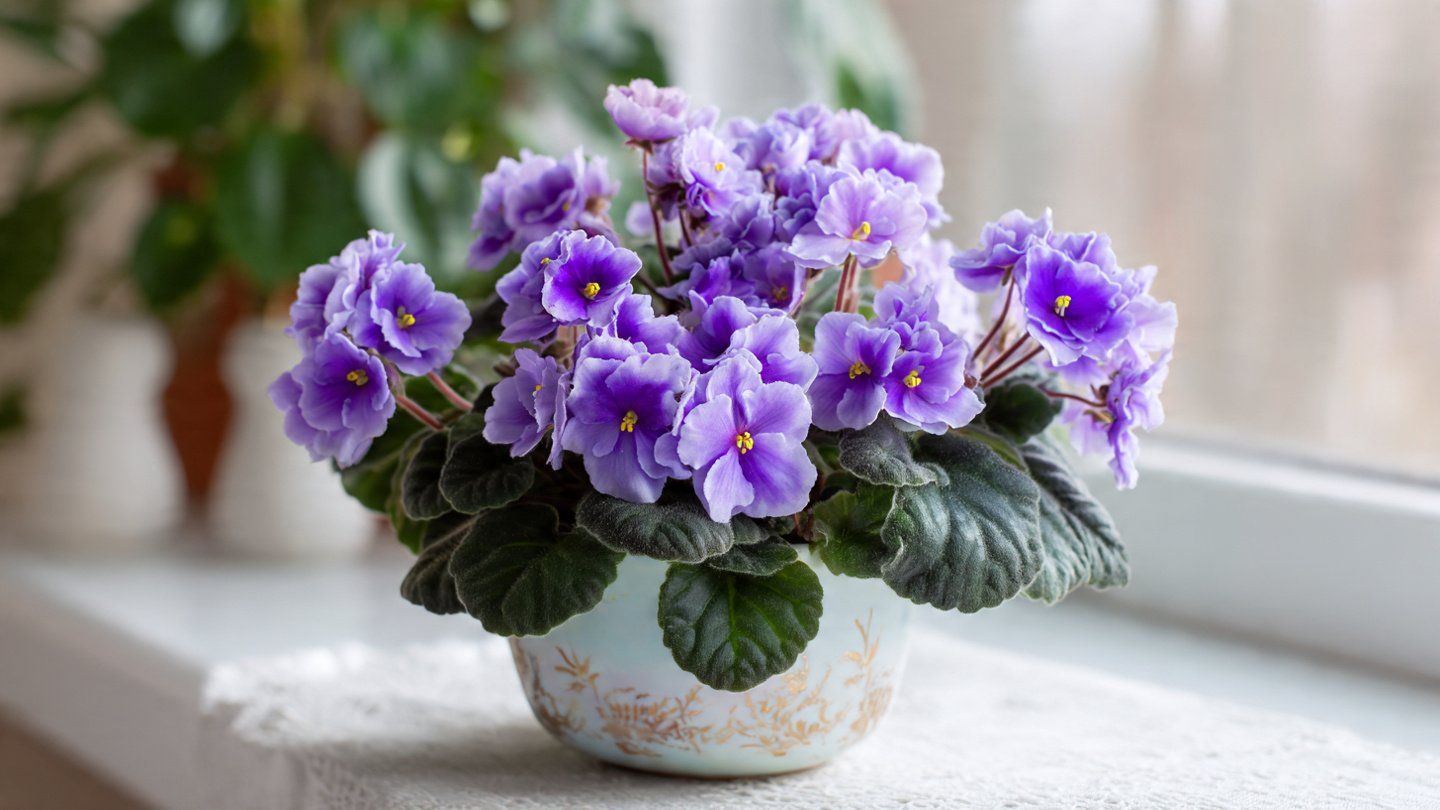
African violets are among the most beloved houseplants in the world, prized for their velvety leaves and cheerful blooms that can appear almost continuously when cared for correctly. Many gardeners believe these plants are fussy, but in reality African violets thrive when their basic needs are met consistently. With the right balance of light, water, soil, and environment, you can enjoy healthy plants and colorful flowers throughout the year with very little effort.
The foundation of successful African violet growth begins with understanding their natural habitat. These plants originate from tropical regions where they grow in warm, humid conditions under filtered light. Replicating this environment indoors is easier than it sounds. African violets prefer bright, indirect light rather than harsh sun. An east facing window is often ideal, providing gentle morning light that encourages blooming without scorching the leaves. If natural light is limited, fluorescent or LED grow lights can work beautifully, as long as the plants receive around twelve to fourteen hours of light each day.
Watering is another crucial aspect that often intimidates beginners. African violets dislike extremes, so consistency is key. The soil should be kept lightly moist but never soggy. Overwatering can lead to root rot, while letting the plant dry out completely can stress it and reduce flowering. Many growers prefer bottom watering, placing the pot in a shallow dish of room temperature water and allowing the plant to absorb moisture through the drainage holes. After about thirty minutes, any excess water should be removed to prevent standing moisture.
Equally important is the quality of the water you use. African violets are sensitive to cold water and chemical buildup. Always use lukewarm water, and if possible, allow tap water to sit for several hours before use so chlorine can dissipate. This small step can make a noticeable difference in leaf health and overall vigor.
Soil choice plays a major role in effortless growth. African violets need a light, airy potting mix that drains well while still retaining some moisture. Standard houseplant soil is often too dense, so a mix specifically formulated for African violets is recommended. These blends typically contain peat moss, perlite, and vermiculite, creating the perfect balance of moisture retention and aeration. Healthy roots are the secret to continuous blooms, and proper soil helps ensure they receive both water and oxygen.
Pot size is another factor that influences flowering. African violets actually prefer to be slightly root bound. A pot that is too large encourages leaf growth at the expense of flowers. As a general rule, the diameter of the pot should be about one third the width of the plant’s leaf span. Repotting is usually only necessary once or twice a year, and when you do repot, moving up just one pot size is sufficient.
Temperature and humidity complete the picture of a comfortable environment. African violets thrive in temperatures between sixty five and seventy five degrees Fahrenheit. They dislike cold drafts and sudden temperature changes, so keep them away from doors, vents, and air conditioners. Moderate humidity is beneficial, especially in dry indoor climates. You can increase humidity by placing the pot on a tray filled with pebbles and water, making sure the bottom of the pot does not sit directly in the water.
Feeding African violets regularly supports year round blooming. Because they flower so frequently, they benefit from gentle, consistent fertilization. A balanced fertilizer formulated for African violets, diluted to half strength, can be applied every two to four weeks. Some growers prefer a weak solution with every watering, which provides a steady supply of nutrients without the risk of overfeeding. Healthy foliage and frequent blooms are signs that your feeding routine is working.
Grooming is a simple but often overlooked part of care. Removing spent flowers and older outer leaves helps direct the plant’s energy toward new growth and buds. This practice also improves air circulation and reduces the risk of disease. When removing leaves or flowers, use clean fingers or sterilized scissors to avoid introducing pathogens.
Pests and diseases are relatively uncommon when African violets are grown in proper conditions, but vigilance is still important. Common issues include mealybugs, spider mites, and powdery mildew. Regularly inspecting your plants allows you to catch problems early. Isolating new plants before placing them near your collection is a wise preventive measure. Healthy plants grown in stable conditions are naturally more resistant to pests and disease.
One of the most rewarding aspects of African violet care is propagation. These plants are incredibly easy to propagate from leaf cuttings, making it simple to expand your collection or share plants with friends. A healthy leaf placed in water or moist soil will often produce new plantlets within weeks. This process not only provides new plants but also rejuvenates older specimens.
Consistency is the true secret behind effortless African violet growth. Rather than constantly adjusting care routines, aim to provide stable conditions that mimic their natural preferences. When African violets are comfortable, they respond generously with lush foliage and abundant blooms. Small observations, such as noticing leaf color or growth patterns, can guide minor adjustments without guesswork.
With patience and a basic understanding of their needs, African violets become reliable, long blooming companions in the home. They reward gentle care with vibrant color and a sense of connection to nature, even indoors. By focusing on light, water, soil, and environment, you can transform these charming plants into year round bloomers that bring beauty and satisfaction with minimal effort.