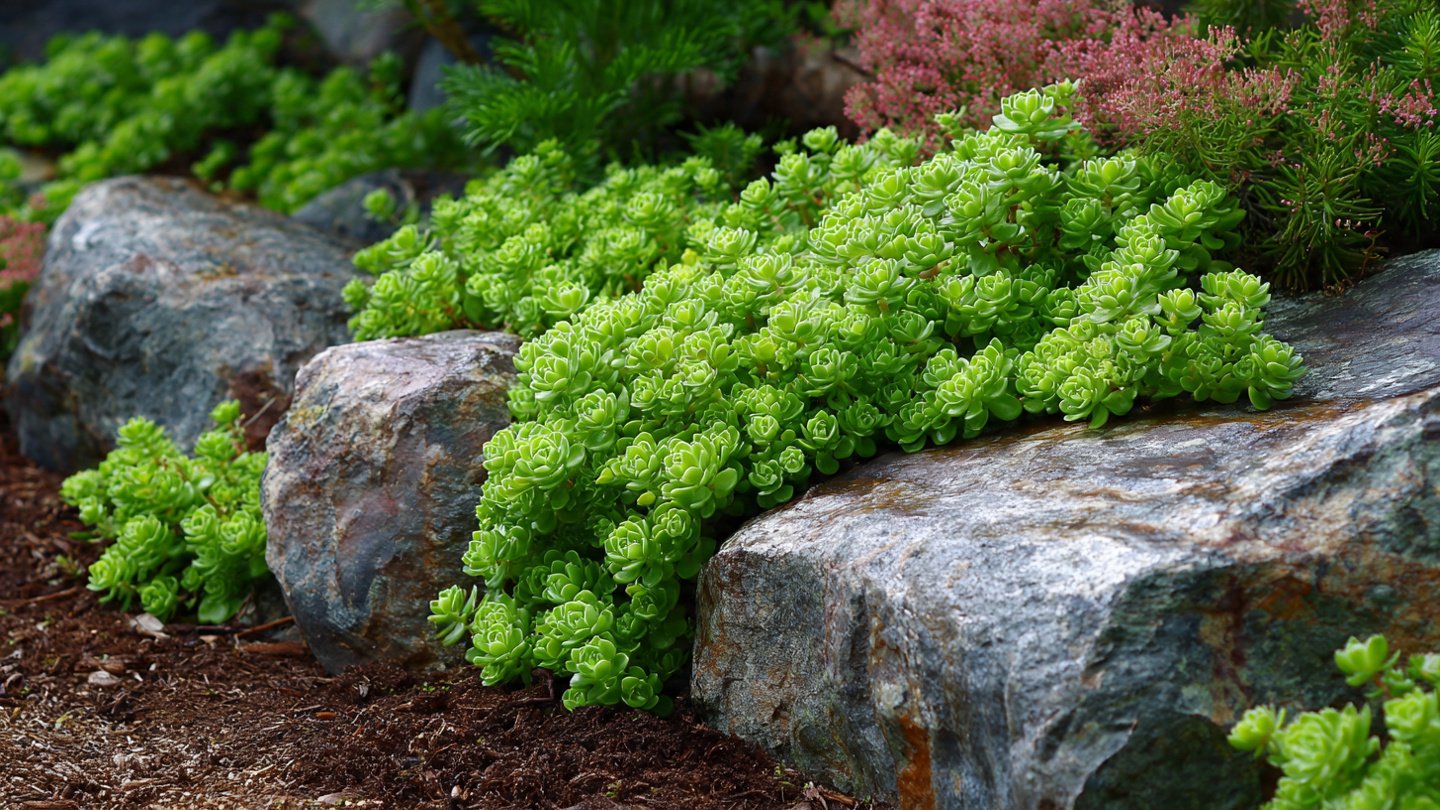
Sedum ground cover is one of the most reliable, beautiful, and low-maintenance plants you can choose for a rock garden. Known for its fleshy leaves, spreading habit, and vibrant seasonal color, sedum thrives where many other plants struggle. Whether you are designing a new rock garden or improving an existing one, sedum offers texture, durability, and year-round interest with minimal effort. Understanding how to grow and care for sedum properly will help you create a rock garden that looks natural, healthy, and visually striking.
Sedum belongs to a group of plants commonly referred to as stonecrops, which are well adapted to harsh environments. Their natural ability to store water in their leaves makes them ideal for rocky, well-drained soils. In a rock garden, these traits allow sedum to spread gently between stones, soften hard edges, and fill gaps without becoming invasive. Their growth habit creates a living carpet that enhances the structure of rocks while reducing exposed soil.
One of the first advantages of sedum ground cover is its wide range of varieties. Some sedums stay low and form tight mats, while others grow slightly taller with upright stems and flower clusters. For rock gardens, low-growing sedum varieties are especially valuable because they hug the ground, tolerate heat, and resist drought. Their leaves may be green, blue-gray, gold, red, or purple, often changing color with the seasons. This color variation adds depth and interest even when the plants are not in bloom.
Choosing the right location is essential for success. Sedum performs best in full sun, where it receives at least six hours of direct sunlight each day. Sun exposure encourages compact growth, vivid leaf color, and abundant flowering. While sedum can tolerate partial shade, too much shade may cause it to become leggy and less vibrant. In a rock garden, positioning sedum on slopes or raised areas ensures good drainage and maximizes sun exposure.
Soil preparation is another key factor. Sedum prefers poor to moderately fertile soil that drains quickly. Heavy, compacted soil holds too much moisture and can lead to root rot. In rock gardens, this is rarely a problem, but if your soil is clay-heavy, amending it with coarse sand, gravel, or small stones can improve drainage. Sedum does not require rich soil, and excessive nutrients may actually weaken the plant and reduce its natural resilience.
Planting sedum ground cover is simple and forgiving. Sedum can be planted from nursery-grown plants, cuttings, or divisions. When planting, space the plants according to their mature spread, allowing room for them to fill in naturally. Gently loosen the soil, place the plant so the roots are just covered, and firm the soil lightly around it. Water thoroughly after planting to help the roots establish, but avoid soaking the area.
Watering needs are minimal once sedum is established. During the first few weeks after planting, regular watering helps the roots settle into the soil. After that, sedum relies mostly on natural rainfall. Overwatering is one of the most common mistakes when growing sedum. Too much moisture can cause the roots to rot and the leaves to become soft and weak. In a rock garden, it is better to err on the side of dryness than excess water.
Maintenance of sedum ground cover is refreshingly easy. Unlike many garden plants, sedum does not require frequent fertilizing. In fact, fertilizer is rarely necessary. If the plants appear weak or pale, a light application of compost in spring is sufficient. Pruning is minimal and usually limited to removing dead stems or tidying the plant’s shape. Some gardeners trim sedum lightly after flowering to encourage a more compact appearance.
Weed control is another benefit of using sedum in rock gardens. As sedum spreads, it forms a dense mat that suppresses weed growth by shading the soil. During the early stages, occasional hand weeding may be needed until the sedum fills in. Once established, sedum significantly reduces the time and effort spent managing weeds, making it ideal for low-maintenance landscapes.
Sedum ground cover also provides seasonal interest. In spring and summer, fresh leaves emerge and spread quickly across the rocks. Many varieties produce small, star-shaped flowers in shades of yellow, white, pink, or red. These flowers attract pollinators such as bees and butterflies, adding life and movement to the garden. In autumn, the foliage of many sedums deepens in color, turning rich shades of red, bronze, or purple. Even in winter, dried stems and seed heads can add texture and visual appeal.
Rock gardens often face extreme conditions, including intense heat, wind, and limited soil. Sedum is well suited to these challenges. Its thick leaves reduce water loss, while its shallow root system anchors it securely among stones. This adaptability makes sedum an excellent choice for sloped areas where erosion might otherwise be a concern. By covering exposed soil, sedum helps stabilize the ground and protect it from heavy rain.
Another advantage of sedum is its compatibility with other rock garden plants. Sedum pairs well with ornamental grasses, small succulents, alpine plants, and drought-tolerant perennials. Its low profile allows taller plants to stand out, while its spreading habit fills empty spaces naturally. When designing your rock garden, using sedum as a base layer creates a cohesive look and ties different elements together.
Propagation of sedum is easy and rewarding. Many sedum varieties can be propagated by simply placing a leaf or stem cutting on the soil surface. The cutting will root on its own and begin to grow. This makes sedum an economical choice for gardeners who want to expand their rock garden over time. Dividing established plants every few years can also rejuvenate growth and maintain healthy coverage.
Pests and diseases are rarely a problem for sedum. Its tough leaves and drought tolerance make it unattractive to many common garden pests. Occasional issues such as aphids or fungal problems usually occur only when plants are stressed by excessive moisture or poor air circulation. Maintaining proper spacing, good drainage, and appropriate watering prevents most issues before they start.
In colder climates, sedum is especially valued for its hardiness. Many varieties can survive freezing temperatures and return year after year. In warmer regions, sedum continues to perform well with little intervention. This wide climate adaptability makes sedum a dependable choice for gardeners in diverse environments.
In conclusion, sedum ground cover is an outstanding plant for rock gardens of all sizes and styles. Its ability to thrive in challenging conditions, combined with its beauty and ease of care, makes it a favorite among gardeners seeking sustainable and attractive landscapes. By providing the right location, well-drained soil, and minimal maintenance, you can enjoy a rock garden enhanced by the natural charm and resilience of sedum. Over time, sedum will transform your rock garden into a living tapestry of color, texture, and enduring beauty.