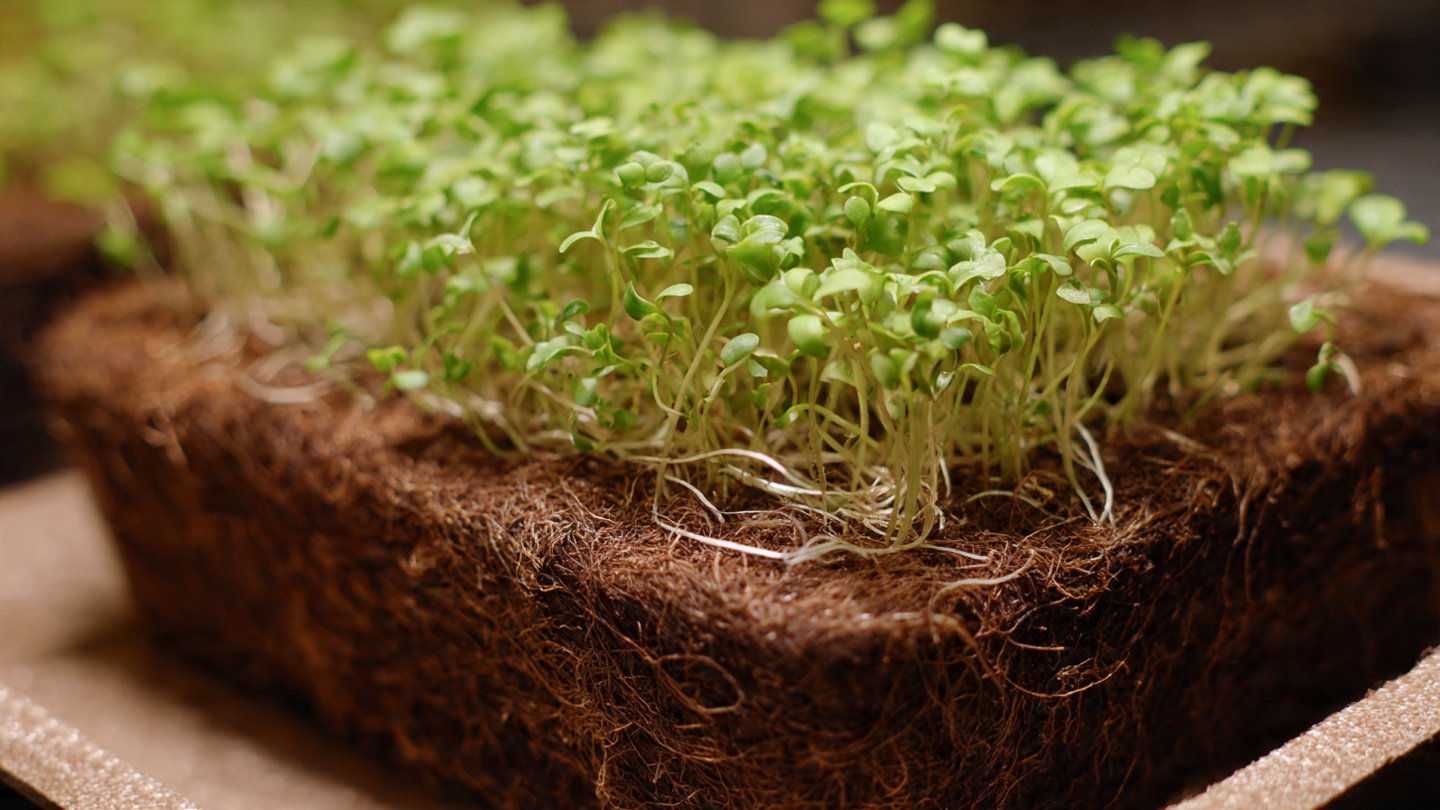
Microgreens have quickly become a favorite among home gardeners, health enthusiasts, and chefs. These young, tender greens are packed with flavor, nutrients, and color, yet they require very little space or time to grow. Many beginners assume that gardening always requires soil, but microgreens challenge that idea completely. Coconut coir offers a clean, sustainable, and beginner-friendly alternative that makes growing microgreens easier than ever. With no mess, minimal equipment, and fast results, coconut coir proves that soil is not a necessity for successful plant growth.
Coconut coir is a natural fiber made from the husk of coconuts. Once considered agricultural waste, it is now widely used as a growing medium because of its excellent water retention, breathability, and sustainability. Unlike traditional soil, coconut coir is lightweight, sterile, and free from weeds or pests. These qualities make it especially well suited for microgreens, which rely more on moisture and light than on heavy nutrients during their short growth cycle.
Microgreens are harvested very early, usually between seven and twenty-one days after planting. At this stage, plants rely primarily on the nutrients stored inside the seed itself. This is why coconut coir works so well. It provides physical support and moisture without interfering with germination or early growth. Since nutrients are not heavily required, soil becomes optional rather than essential.
One of the biggest advantages of using coconut coir is cleanliness. Soil can be messy, heavy, and prone to mold or fungus when used indoors. Coconut coir is clean to handle and produces less odor, making it ideal for kitchen counters, shelves, or windowsills. For beginners who want a simple and hygienic setup, coir removes many of the common frustrations associated with indoor gardening.
Preparing coconut coir is straightforward. It is usually sold in compressed bricks or loose bags. Compressed bricks expand significantly when soaked in water. Once hydrated, the coir becomes soft and fluffy, creating an ideal environment for seed germination. Excess water should be drained so the coir is moist but not soggy. This balance is critical, as microgreens need consistent moisture but are sensitive to standing water.
Choosing the right container is another important step. Shallow trays work best because microgreens have short root systems. Containers with drainage holes help prevent excess moisture buildup, though solid trays can also work if watering is carefully controlled. The coconut coir should be spread evenly across the tray, creating a smooth surface that allows seeds to rest evenly during germination.
Seed selection plays a major role in success. Popular microgreens include broccoli, radish, kale, arugula, mustard, peas, and sunflower. These seeds germinate quickly and grow vigorously in coconut coir. Seeds should be spread densely across the surface, but not stacked on top of one another. Even distribution ensures uniform growth and prevents mold caused by overcrowding.
After sowing, seeds should be gently pressed into the coconut coir to ensure good contact. Covering the tray during the first few days helps retain moisture and encourages strong germination. Darkness during this phase mimics natural soil conditions and allows roots to anchor firmly into the coir. Once most seeds have sprouted, the cover can be removed and light introduced.
Light is essential for healthy microgreens. Bright indirect sunlight or grow lights positioned close to the tray encourage compact, vibrant growth. Without enough light, microgreens become leggy and pale. Coconut coir supports even moisture distribution, which helps seedlings focus energy on leaf development rather than struggling for water.
Watering microgreens grown in coconut coir requires a gentle approach. Bottom watering is often preferred. By adding water to a tray beneath the growing container, the coir absorbs moisture upward, reducing the risk of disturbing delicate seedlings. If top watering is used, a fine mist is best to avoid displacing seeds or compacting the coir.
One concern beginners often have is nutrients. Since coconut coir is inert and contains little nutrition, some assume fertilizers are required. For microgreens, this is usually unnecessary. The plants are harvested before they deplete the nutrients stored in the seed. Adding fertilizer too early can actually encourage mold or cause overly rapid growth that reduces flavor and texture.
Air circulation is another important factor. Good airflow prevents excess humidity, which can lead to mold. Coconut coir naturally resists compaction, allowing air to reach roots more easily than dense soil. Placing trays in a well-ventilated area or using a small fan can significantly improve results.
Harvesting microgreens is simple and satisfying. Most varieties are ready when they develop their first set of true leaves. Using clean scissors, microgreens are cut just above the surface of the coconut coir. They can be eaten immediately or stored briefly in the refrigerator. Freshly harvested microgreens offer intense flavor and high nutritional value.
After harvest, coconut coir can often be composted or reused for non-edible plants. While it is possible to grow another batch of microgreens in the same coir, beginners are encouraged to start fresh to reduce the risk of disease. Coconut coir’s biodegradable nature makes disposal environmentally friendly.
Compared to soil, coconut coir offers consistency. Soil quality varies widely and may contain pathogens or pests. Coconut coir provides a predictable growing environment, which is especially helpful for beginners learning the basics of plant care. Its neutral pH and stable structure support reliable germination and growth.
Another benefit is sustainability. Coconut coir is a renewable resource that repurposes agricultural waste. Unlike peat moss, which is harvested from sensitive ecosystems, coir offers an environmentally responsible alternative. Choosing coconut coir supports sustainable gardening practices without sacrificing performance.
Growing microgreens with coconut coir also builds confidence. Beginners experience quick success, which encourages further exploration into gardening. The fast growth cycle provides immediate feedback, allowing growers to learn from each batch and refine techniques without long waiting periods.
For those living in apartments or homes without outdoor space, coconut coir makes gardening accessible. Microgreens require little room, minimal tools, and no soil mess. This simplicity lowers the barrier to entry and transforms gardening from an intimidating task into an enjoyable daily routine.
Ultimately, coconut coir demonstrates that plants do not always need soil to thrive. By understanding the basic needs of microgreens and providing moisture, light, and support, beginners can achieve impressive results. Coconut coir simplifies the process while offering reliability, cleanliness, and sustainability.
No soil truly is no problem. With coconut coir, anyone can grow fresh, nutritious microgreens year-round. This growing method proves that gardening does not have to be complicated or space-consuming. With a shallow tray, quality seeds, and a bit of attention, beginners can enjoy the satisfaction of harvesting vibrant greens in just days. Coconut coir opens the door to modern, efficient gardening and shows that even without soil, nature finds a way to flourish.