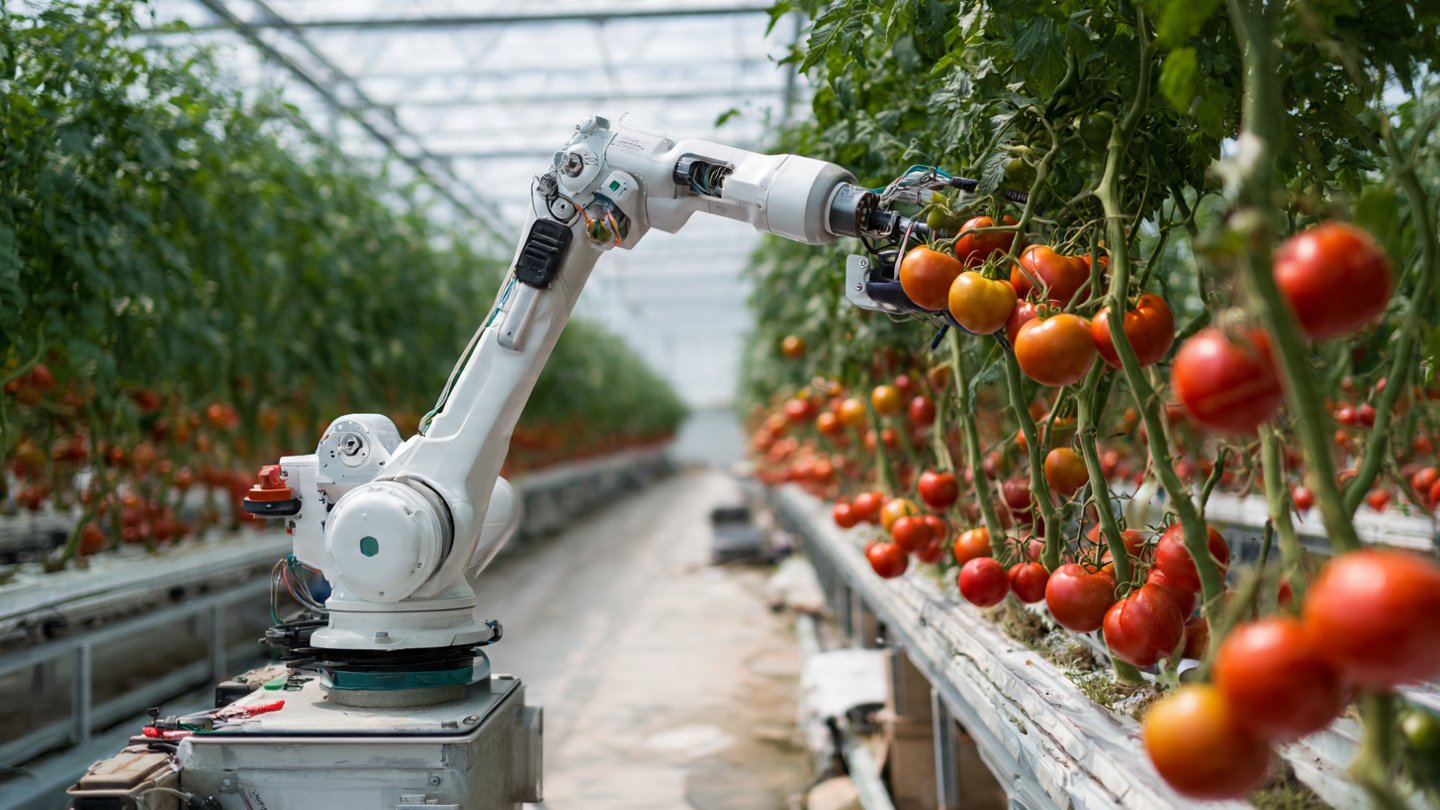
Tomato farming is one of the most labor-intensive sectors in agriculture, requiring careful attention to plant health, ripeness, and harvesting techniques. Unlike grains or root vegetables, tomatoes are delicate, prone to bruising, and highly sensitive to timing. Traditionally, human labor has been essential to ensure high-quality harvests, but rising labor costs, shortages of skilled farmworkers, and the increasing scale of commercial tomato operations are prompting growers to explore automation. Among the most promising innovations are robots that “think before they pick,” intelligent machines capable of assessing each tomato before harvesting it. These systems have the potential to revolutionize tomato farming by increasing efficiency, reducing waste, and improving crop quality.
Unlike simple mechanical harvesters, these advanced robots combine computer vision, artificial intelligence (AI), and gentle handling mechanisms. Their ability to analyze the size, color, and firmness of fruit before picking ensures that only tomatoes at optimal ripeness are harvested. This careful approach not only maximizes quality but also minimizes damage and waste—a critical factor in high-value crops like tomatoes.
The Challenges of Traditional Tomato Harvesting
Tomatoes are notoriously difficult to harvest efficiently. Manual laborers must carefully assess ripeness, avoid bruising, and navigate densely planted fields. Labor-intensive harvesting is expensive and time-consuming. In many regions, labor shortages make it increasingly difficult to find workers willing or able to perform repetitive, physically demanding harvesting tasks.
Mechanical harvesters have been introduced for some crops, but tomatoes present unique challenges. Unlike apples or oranges, which are firm and resilient, tomatoes bruise easily. Automated systems must handle each fruit delicately, distinguishing ripe from unripe or damaged produce. Without precision, mechanical harvesting can lead to high levels of waste, reduced marketable yield, and lower profits for growers.
How Robots “Think Before They Pick”
The next generation of harvesting robots uses advanced AI and sensors to replicate the judgment of human pickers. These robots rely on several technologies:
- Computer Vision: High-resolution cameras and 3D sensors allow robots to detect and evaluate each tomato on the plant. They analyze color gradients, size, and surface texture to determine ripeness.
- Machine Learning Algorithms: AI models trained on thousands of images learn to recognize subtle differences in ripeness and quality. The system improves over time, adapting to different tomato varieties, lighting conditions, and growth stages.
- Force-Sensitive Grippers: Once the robot identifies a ripe tomato, it uses specialized end-effectors that apply precise pressure to pick the fruit without bruising. Some designs mimic human fingers, adjusting grip strength based on fruit size and firmness.
- Environmental Sensors: Temperature, humidity, and plant stress data are integrated to help the robot decide the optimal harvesting time. For example, tomatoes picked too early may not ripen fully, while late picking risks overripe or cracked fruit.
By combining these capabilities, robots effectively “think” before harvesting, ensuring only high-quality tomatoes are collected while leaving immature or unripe fruit to ripen further.
Advantages of Intelligent Tomato Harvesting Robots
The potential benefits of these robots are substantial, both economically and environmentally.
1. Reduced Labor Costs
By automating the most labor-intensive part of tomato farming, growers can reduce reliance on seasonal workers. While human oversight is still necessary for maintenance and monitoring, robots can perform repetitive harvesting tasks continuously and efficiently. This reduction in labor dependence is particularly valuable in regions facing chronic farmworker shortages.
2. Increased Harvest Efficiency
Robots operate consistently, picking tomatoes throughout the day without fatigue. Unlike human workers, they do not tire, take breaks, or vary in attention. Continuous operation can significantly shorten the harvesting window, ensuring that more tomatoes reach the market at peak freshness.
3. Minimization of Fruit Damage
One of the biggest issues in tomato farming is bruising and damage during harvest. Robots with force-sensitive grippers and AI-driven picking decisions minimize the risk of crushing or overhandling fruit. Reduced damage translates to higher-quality produce, longer shelf life, and increased market value.
4. Precision Harvesting for Quality Control
Not all tomatoes ripen uniformly. By selectively picking only ripe fruit, these robots ensure consistent quality across the crop. Early or late-harvested tomatoes that might otherwise be wasted are left on the plant until optimal ripeness. This precision improves the overall yield of marketable fruit and reduces food waste.
5. Data Collection and Crop Monitoring
Harvesting robots equipped with sensors collect valuable data during operation. Measurements of plant health, fruit size distribution, and ripening patterns can help growers make informed decisions about irrigation, fertilization, and pest management. Over time, this data-driven approach enables more efficient and sustainable farming practices.
Challenges and Considerations
Despite the advantages, intelligent tomato-harvesting robots face several hurdles before widespread adoption.
- High Initial Investment: Advanced robots with AI capabilities are expensive. Smaller farms may find the upfront costs prohibitive, though long-term savings on labor can offset this over several seasons.
- Complexity of Implementation: Integrating robots into existing greenhouses or field layouts requires careful planning. Robots need unobstructed access to plants, and infrastructure may need modification for optimal operation.
- Adaptability to Different Varieties: Tomatoes come in many shapes, sizes, and growth habits. Robots must be trained to recognize multiple varieties and adapt their picking techniques accordingly. This flexibility is essential for commercial farms that grow more than one type of tomato.
- Maintenance and Technical Skills: Operating advanced robots requires technical expertise. Farmers must invest in staff training or contract maintenance services to ensure smooth operation and prevent downtime.
Current Applications and Developments
Several prototypes and commercial models of tomato-harvesting robots are already in use. Greenhouse operations, where plant spacing and environmental conditions are controlled, are ideal environments for early adoption. Some systems can harvest over 90% of ripe fruit with minimal damage, demonstrating the technology’s potential.
Research institutions and agtech companies are continually refining AI algorithms, gripper designs, and sensor systems. Innovations such as autonomous navigation, integration with crop monitoring software, and solar-powered operation promise to increase efficiency and reduce operational costs further.
Some farms are experimenting with hybrid approaches, where robots perform bulk harvesting while humans handle delicate or hard-to-reach fruit. This collaborative model combines the precision and consistency of robots with the nuanced judgment of human pickers.
The Future of Tomato Farming
The integration of intelligent robots in tomato farming represents a significant step toward fully automated horticulture. As AI becomes more sophisticated and sensor technology improves, robots will not only harvest tomatoes but also monitor plant health, detect pests, and optimize irrigation and fertilization schedules.
This technological shift could redefine labor dynamics in agriculture, making farms less dependent on seasonal labor while increasing productivity and sustainability. High-tech greenhouses may see near-complete automation of planting, maintenance, and harvesting, reducing waste and increasing efficiency.
Moreover, data collected by harvesting robots could inform predictive analytics, helping growers anticipate ripening patterns, forecast yields, and plan market supply. The combination of AI, robotics, and data science has the potential to transform tomato farming from a labor-intensive operation into a precision, technology-driven enterprise.
Environmental and Economic Implications
By reducing wasted fruit and minimizing chemical interventions through better monitoring, intelligent harvesting robots can contribute to more sustainable farming practices. Robots can reduce over-picking, minimize bruising, and optimize harvest timing, decreasing food waste throughout the supply chain.
Economically, while the initial investment is high, robots can lower long-term labor costs, improve yield quality, and increase profitability. Farms able to adopt this technology may gain a competitive edge, particularly in regions facing rising wages or labor shortages.
Conclusion
Robots that “think before they pick” represent a promising evolution in tomato farming. By combining AI, computer vision, and delicate handling mechanisms, these machines are capable of selectively harvesting ripe fruit while minimizing waste and damage. They reduce labor dependence, increase efficiency, and provide valuable data for crop management.
Despite challenges such as high costs, technical complexity, and adaptation to different tomato varieties, the potential benefits are significant. Precision harvesting not only improves yield and quality but also supports sustainability by reducing food waste and optimizing resource use.
As technology advances, these intelligent robots could become standard in commercial tomato production, transforming the industry and enabling growers to produce more with less effort. They represent a future where automation and artificial intelligence work hand-in-hand with human expertise to create efficient, sustainable, and profitable tomato farming operations.
The era of “thinking robots” in agriculture is here, and for tomato growers, embracing this technology could be the key to higher productivity, better-quality crops, and a more sustainable approach to farming. In a world where labor shortages and rising costs challenge traditional farming methods, robots that evaluate and pick with intelligence may be the solution that transforms how tomatoes reach our tables.