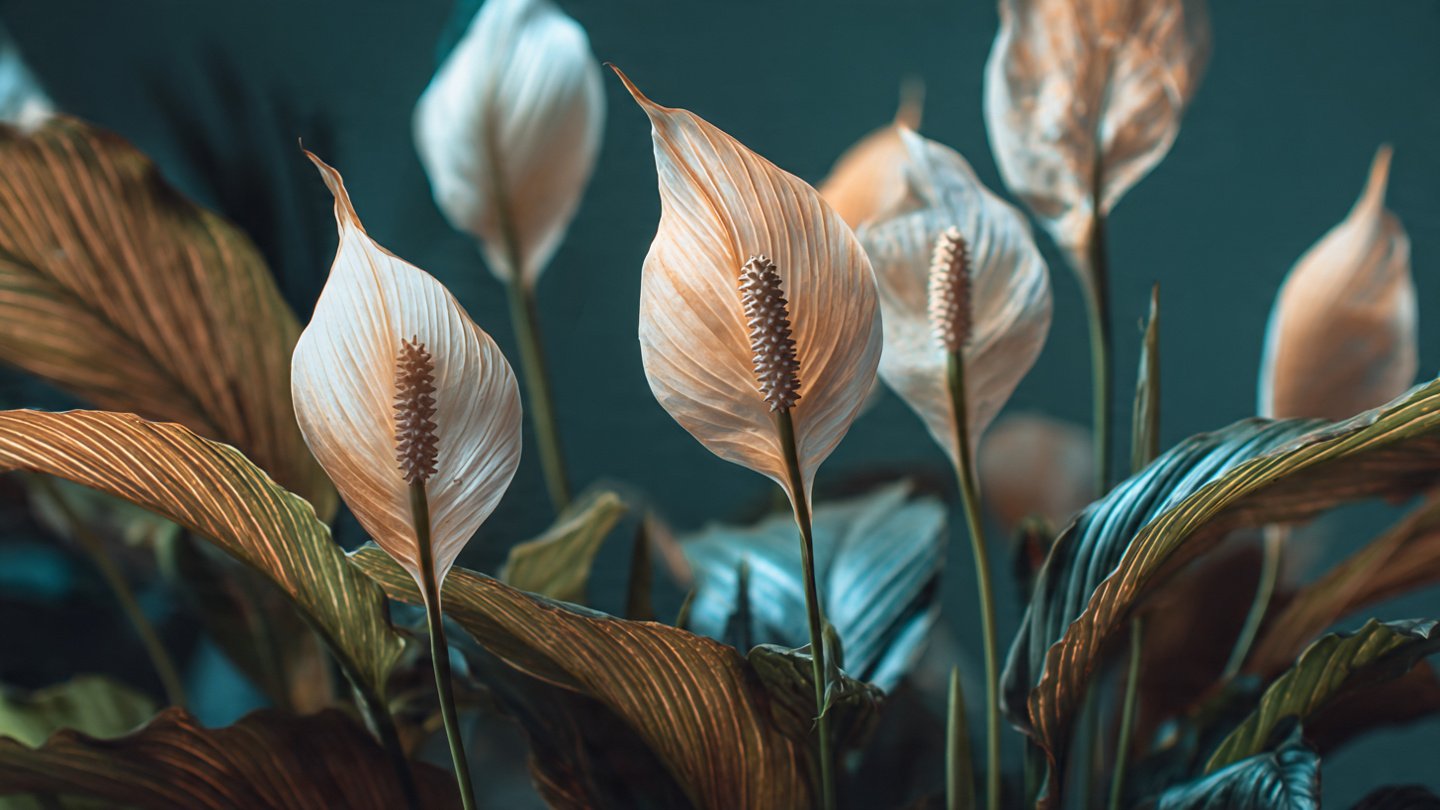
Peace lilies (Spathiphyllum) are popular houseplants known for their lush green leaves and elegant white blooms. However, many growers notice a common problem: brown tips on the leaves. While this doesn’t always indicate a fatal problem, it signals that the plant is experiencing stress. Understanding the reasons behind brown tips can help you correct care practices and restore your peace lily’s health.
1. Low Humidity
Peace lilies are tropical plants that thrive in high humidity. Dry indoor air, especially in winter when heating systems are running, can cause the leaf tips to dry out and turn brown. The plant’s leaves lose moisture faster than the roots can supply it, leading to tip burn.
Solution: Increase humidity around your peace lily by placing it on a tray with water and pebbles, grouping it with other plants, or using a humidifier nearby. Regular misting can also help, but avoid excessive wetting of the leaves, which can promote fungal growth.
2. Overwatering or Underwatering
Both too much and too little water can lead to brown leaf tips. Overwatering causes root rot, which prevents the roots from absorbing nutrients, resulting in tip browning. Underwatering, on the other hand, dehydrates the plant, and the leaf tips are the first to show stress.
Solution: Water your peace lily consistently, keeping the soil evenly moist but not soggy. Allow the top inch of soil to dry out before watering again. Ensure the pot has proper drainage to prevent water accumulation at the bottom.
3. Fertilizer Issues
Over-fertilizing peace lilies or using fertilizers with high salt content can burn the leaf tips. This happens because excess salts accumulate in the soil, drawing water out of the leaf tissue and causing tip browning. Conversely, nutrient deficiencies may also cause leaf damage.
Solution: Use a balanced, diluted houseplant fertilizer during the growing season (spring and summer). Avoid fertilizing in the dormant period (fall and winter), and flush the soil occasionally with water to prevent salt buildup.
4. Tap Water Quality
Peace lilies are sensitive to chemicals commonly found in tap water, such as chlorine or fluoride. Repeated exposure can lead to brown tips along the edges of the leaves.
Solution: Use filtered or distilled water, or let tap water sit out for 24 hours before using it to water the plant. Rainwater is also an excellent option.
5. Temperature Stress
Extreme temperatures, drafts, or sudden temperature changes can stress peace lilies. Exposure to cold drafts, direct heat from radiators, or hot air from vents can cause leaf tips to brown.
Solution: Keep your peace lily in a stable environment with temperatures between 65°F and 80°F (18°C–27°C). Avoid placing the plant near drafty windows or heating vents.
6. Natural Aging
Some brown tips are simply part of the plant’s natural life cycle. Older leaves may develop brown tips before eventually dying off. This is normal and not a cause for concern as long as new growth appears healthy.
Solution: Trim the affected leaf tips with sterilized scissors for aesthetic purposes, and monitor new growth to ensure the plant remains healthy.
Conclusion
Brown tips on peace lily leaves are a common sign of stress caused by low humidity, inconsistent watering, fertilizer issues, water quality, temperature fluctuations, or natural aging. By identifying the underlying cause and adjusting care routines, you can restore your peace lily’s lush, green appearance. Maintaining stable conditions, proper watering, and moderate fertilization ensures a vibrant, thriving plant that will continue to brighten your indoor space.
If you want, I can also give a step-by-step guide to fix brown tips and prevent them from recurring for your peace lily. Do you want me to do that?