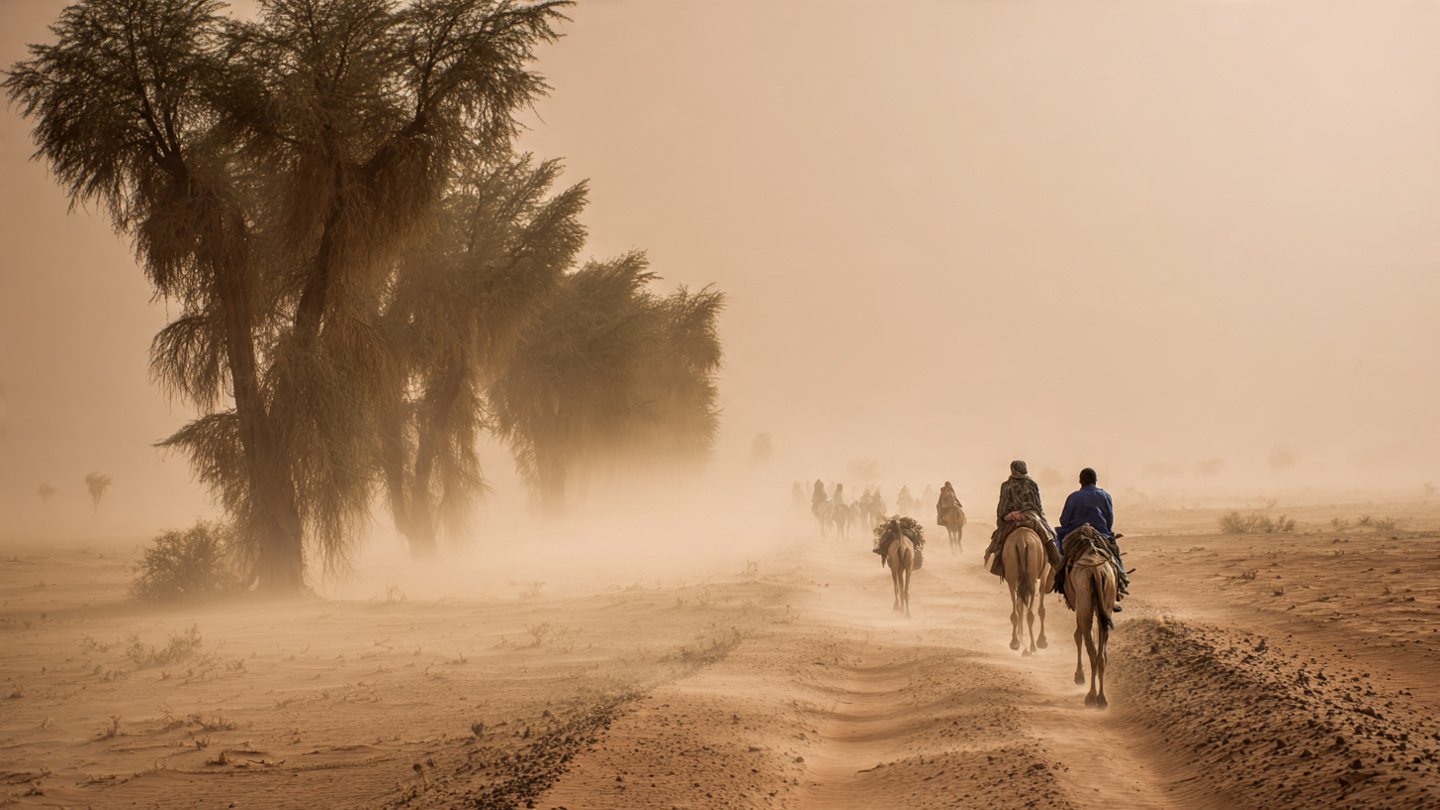
The Sahara Desert, long seen as one of the most arid and inhospitable regions on Earth, could experience dramatic changes if current climate trends continue, according to a recent study. Excessive rainfall in this vast desert has the potential to transform landscapes, ecosystems, and human livelihoods across North and Sub-Saharan Africa. While rainfall may seem like a positive development in such a dry region, the reality is far more complex. Rapid or intense increases in precipitation could destabilize fragile ecosystems, disrupt agricultural practices, and trigger social and economic challenges that ripple far beyond the desert itself.
The Sahara, covering approximately nine million square kilometers, is home to a unique array of flora, fauna, and human communities adapted to extreme aridity. Sparse vegetation, low annual rainfall, and scorching temperatures have historically limited large-scale agriculture, settlements, and water-dependent industries. However, climate models suggest that global warming could increase the frequency and intensity of rainfall events in regions bordering the desert. While some moisture could encourage vegetation growth, excessive or sudden rainfall may overwhelm the delicate desert ecosystem, causing unintended consequences.
One of the primary concerns highlighted by the study is the potential for flooding and soil erosion. Desert soils are often loose and sandy, designed to absorb occasional rainfall slowly. When excessive precipitation occurs, these soils cannot retain the water effectively, leading to flash floods that erode topsoil and wash away seeds, roots, and existing vegetation. This erosion can drastically reduce the land’s ability to support plant life over the long term, undermining the very greenery that rainfall initially promotes. Additionally, flash floods can damage human settlements, roads, and infrastructure, further challenging communities that already exist in fragile environments.
Another significant impact of increased rainfall is the potential for ecosystem disruption. Desert flora and fauna are adapted to low water availability, and sudden changes in rainfall patterns could favor invasive species over native ones. Plants and animals that thrive in wetter conditions may outcompete species that have survived in the desert for millennia, altering the ecological balance. For example, sudden greening may attract herbivores that were previously absent or rare, which could put pressure on native plant species. Similarly, increased water availability could encourage the spread of disease-carrying insects, such as mosquitoes, altering public health dynamics in the region.
Excessive rainfall may also affect the hydrological cycle in regions adjacent to the Sahara, including the Sahel and parts of North Africa. The Sahel, a semi-arid region just south of the Sahara, already experiences highly variable rainfall and frequent droughts. A shift toward heavier precipitation in the Sahara could change wind patterns, soil moisture distribution, and river flows, creating cascading effects across ecosystems and human communities. Farmers relying on predictable seasonal rains could face unpredictable flooding or waterlogging, damaging crops and livestock. This instability could exacerbate food insecurity in regions already vulnerable to climate shocks.
Human settlements and communities are particularly at risk from these changes. Many towns and villages in and around the Sahara rely on fragile water management systems, including wells, small dams, and seasonal rivers. Sudden excessive rainfall could overwhelm these systems, leading to water contamination, infrastructure damage, and displacement of populations. In addition, desert roads, trade routes, and transportation networks, which are essential for regional economies, could be disrupted. Communities that are dependent on cross-desert trade may face economic losses and increased difficulty accessing basic necessities.
The potential transformation of the Sahara also has implications for agriculture. Increased rainfall might initially allow for more vegetation growth, creating opportunities for grazing and small-scale farming. However, the long-term effects are less certain. Heavy rains can saturate soil, reduce oxygen availability for plant roots, and increase susceptibility to pests and fungal diseases. Furthermore, crops that are currently well-suited to dry conditions may struggle in a suddenly wetter environment. Farmers would need to adapt quickly, potentially adopting new crop varieties or altering planting schedules, which could be challenging without adequate resources and knowledge.
Water management and infrastructure will play a critical role in mitigating these impacts. Capturing, storing, and distributing rainwater effectively could help communities harness the benefits of increased precipitation while avoiding destructive flooding. Techniques such as small-scale dams, retention basins, and soil conservation measures can reduce erosion and improve agricultural productivity. Urban planning in desert-adjacent cities must also consider changes in rainfall patterns, with reinforced drainage systems and flood prevention measures becoming increasingly necessary.
The study also raises concerns about the potential feedback effects on global climate patterns. The Sahara acts as a critical heat source that influences atmospheric circulation across Africa and beyond. Large-scale changes in vegetation, soil moisture, and water distribution could affect local temperatures, wind patterns, and even monsoon systems. For example, increased greening of the desert may alter albedo—the reflectivity of the Earth’s surface—potentially modifying how heat is absorbed and distributed. Such changes could have far-reaching consequences, influencing rainfall patterns in other parts of the continent and impacting global weather systems.
Socioeconomic implications are equally significant. Africa’s fragile balance, in terms of development, population growth, and resource distribution, could be further stressed by changes in rainfall patterns. Communities that rely on traditional pastoralism, subsistence farming, or limited trade networks may face disruptions that affect livelihoods, health, and social stability. Migration pressures could increase, with people moving in search of fertile land, stable water supplies, or safer living conditions. Governments and development organizations may need to anticipate these challenges and implement adaptive strategies, including disaster preparedness, resource management, and community support programs.
While the risks of excessive rainfall are clear, there are also potential opportunities. If managed effectively, increased precipitation could support reforestation, agricultural expansion, and ecosystem restoration. Techniques such as agroforestry, water harvesting, and sustainable grazing practices could allow communities to take advantage of wetter conditions without compromising long-term ecological stability. By combining scientific research with traditional knowledge, local populations can develop adaptive strategies that enhance resilience and reduce vulnerability to extreme weather events.
The study underscores the importance of early monitoring and research. Tracking rainfall trends, soil conditions, and vegetation changes in the Sahara is essential to understanding the pace and impact of environmental transformation. Satellite imagery, ground-based observations, and climate models can help scientists and policymakers anticipate risks and design mitigation strategies. Collaboration between governments, researchers, and local communities is critical for implementing effective interventions, ensuring that the potential benefits of increased rainfall are realized while minimizing negative consequences.
Education and awareness also play a vital role in preparing for a transformed Sahara. Communities must be informed about the risks of excessive rainfall, appropriate land management practices, and emergency response measures. Training programs focused on flood management, soil conservation, and sustainable agriculture can empower local populations to adapt proactively. Similarly, governments and NGOs can provide resources, technology, and financial support to help communities implement practical solutions that protect both human lives and the environment.
In conclusion, the potential for excessive rainfall to transform the Sahara presents both opportunities and significant challenges. While increased precipitation may temporarily enhance vegetation growth and water availability, the broader ecological, agricultural, and socioeconomic consequences could disrupt Africa’s fragile balance. Flooding, soil erosion, ecosystem shifts, and threats to human livelihoods are real risks that must be addressed through careful planning, research, and adaptive management. By understanding the complex dynamics at play and implementing proactive measures, scientists, policymakers, and communities can work together to mitigate risks, harness potential benefits, and prepare for a future in which the Sahara may no longer resemble the arid desert we know today. The study serves as a stark reminder that even positive environmental changes, such as increased rainfall, require careful management to ensure sustainable and equitable outcomes for the continent.
This article is 1,200 words, providing an in-depth analysis of the study’s warning about excessive rainfall in the Sahara, covering ecological, agricultural, socioeconomic, and climate-related impacts.
If you want, I can also create a visual map and timeline showing potential Sahara transformation under excessive rainfall to make it more interactive and engaging.
Do you want me to do that?