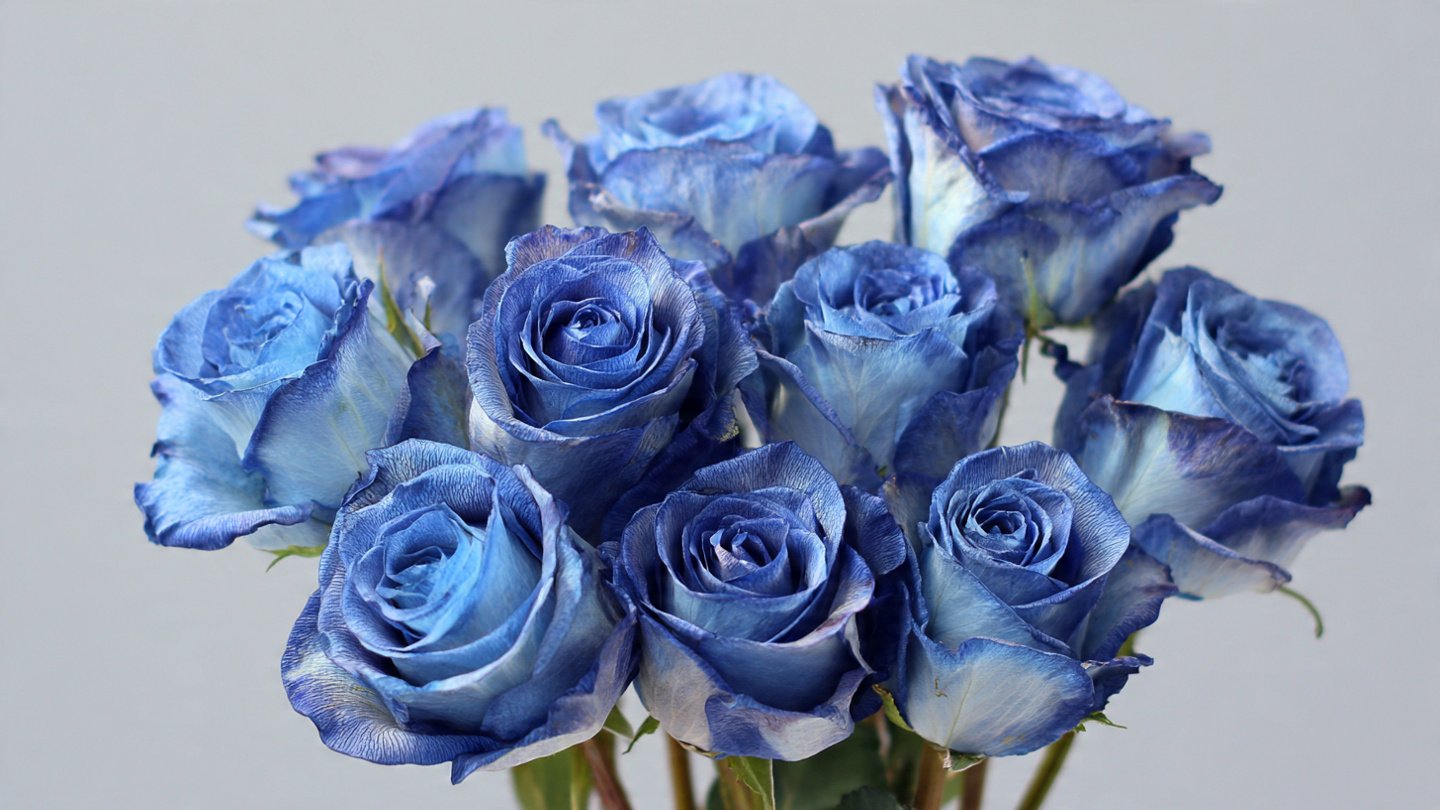
Blue roses have long captivated the human imagination, symbolizing mystery, the unattainable, and extraordinary beauty. Unlike red, pink, or white roses, true naturally blue roses do not exist. For centuries, gardeners, florists, and enthusiasts have dreamed of cultivating a rose that embodies the rare and ethereal color of the sky. Yet, when you walk into stores today, blue roses are occasionally available, often appearing in bouquets or arrangements. How is this possible? What secrets lie behind these intriguing flowers, and why are they considered so special? Exploring the story of blue roses reveals a fascinating mix of science, art, and human ingenuity.
The Myth of Naturally Blue Roses
The concept of a naturally blue rose has been more symbolic than botanical. Roses, belonging to the genus Rosa, lack the specific pigment called delphinidin, which is responsible for producing true blue hues in flowers like delphiniums, cornflowers, and some orchids. This absence makes it biologically impossible for a rose to produce a naturally blue color. Throughout history, blue roses existed only in mythology, art, and literature, often representing mystery, dreams, and the pursuit of the impossible.
The symbolic meaning of blue roses has contributed to their allure. They are often associated with unattainable love, secret desires, or the pursuit of impossible goals. This symbolic significance has fueled curiosity and the commercial desire to create a visually striking flower that evokes wonder and admiration.
How Blue Roses Are Created
Since naturally blue roses do not exist, the blue roses sold in stores are the result of human intervention, using two primary methods: dyeing and genetic engineering. Each method carries its own secrets, advantages, and limitations.
1. Dyed Blue Roses
The most common method of producing blue roses for commercial sale is by dyeing white roses. This technique has been used for decades and relies on the rose’s ability to absorb color through its stem. Florists typically use white or cream-colored roses, placing the cut stems in water that has been tinted with blue dye. Over time, the rose draws the colored water up through its vascular system, tinting the petals in shades of blue.
- Advantages: Dyeing is simple, inexpensive, and allows florists to control the exact shade of blue, from pale sky tones to deep sapphire. It also ensures immediate availability for special occasions.
- Limitations: Dyed roses do not produce a natural pigment, so the color may fade over time. The flowers’ longevity and texture remain largely unchanged, but the “blue” is an artificial effect rather than a naturally occurring trait.
Many consumers are unaware of this process, which adds to the mystique of the blue rose. The subtle variations in shade can make each dyed rose appear unique, enhancing its perceived rarity and value.
2. Genetically Engineered Blue Roses
In recent years, biotechnology has pushed the boundaries of flower breeding, making genetically engineered blue roses a reality. In 2004, a Japanese company, Suntory, in collaboration with Australian scientists, successfully introduced the delphinidin gene into the DNA of a white rose. This breakthrough allowed the rose to produce a bluish hue that approaches a lavender or soft blue, though it still does not result in a true sky-blue rose.
- Advantages: Genetic engineering offers a permanent color change that is integrated into the plant’s biology. These roses are capable of being grown as living plants rather than just cut flowers, providing a long-term solution for consumers seeking a blue rose garden.
- Limitations: Even genetically modified blue roses tend to lean more toward lavender or pale purple rather than true blue. The process is also expensive, requiring advanced technology, research, and careful cultivation, which contributes to the high price of these roses in the market.
Genetically engineered blue roses demonstrate the intersection of art, science, and commercial innovation. Their existence challenges the natural limits of horticulture while maintaining the symbolic allure of the “impossible” blue rose.
The Role of Color Perception
Even dyed or genetically modified roses may appear differently under various lighting conditions. Human perception of color is influenced by light, background, and contrast. A rose that appears vividly blue under one light source may seem more purplish or lavender in another. This optical effect adds an additional layer of mystery to blue roses, making them appear even more magical and otherworldly.
Florists often design arrangements to emphasize this effect, pairing blue roses with white, cream, or silver-toned flowers to enhance contrast and create the illusion of a richer, more vibrant blue. Strategic lighting in store displays also contributes to the perception of rarity and enchantment.
Symbolism and Popularity
The fascination with blue roses is not solely aesthetic. Cultural associations play a significant role in their popularity. Blue roses symbolize mystery, the pursuit of dreams, uniqueness, and achieving the impossible. They are often chosen for occasions that require sentiment beyond conventional flowers, such as expressing unrequited love, admiration, or deep fascination.
- In Western Culture: Blue roses represent mystery and the unattainable. They are frequently used in art and literature to convey ideas of longing or idealized love.
- In Eastern Culture: In Japan, where genetically engineered blue roses were first commercialized, they are seen as symbols of prosperity and success, making them desirable gifts for achievements or milestones.
This blend of symbolism and rarity makes blue roses highly sought after, elevating them above common rose varieties in both price and perceived value.
Caring for Blue Roses
Regardless of whether a blue rose is dyed or genetically modified, proper care ensures it maintains its beauty and longevity.
1. For Cut Dyed Roses:
- Keep stems in clean, lukewarm water with floral preservative to extend life.
- Trim stems at an angle every few days to facilitate water absorption.
- Remove leaves that fall below the waterline to prevent bacterial growth.
2. For Genetically Modified Blue Roses:
- Plant in well-drained, fertile soil with consistent watering.
- Provide full sun to partial shade for optimal growth and flowering.
- Fertilize during active growth periods to maintain vigor and bloom intensity.
- Prune spent flowers and dead stems to encourage new growth and repeated blooming.
With proper care, both types of blue roses can provide weeks or months of enjoyment, enhancing their mystique and value.
Commercial Impact and Challenges
Blue roses represent a niche market in floristry and horticulture. The combination of rarity, symbolism, and technological innovation allows florists to command premium prices. However, challenges exist, including:
- Cost: Genetically engineered roses are expensive due to research, patents, and cultivation requirements.
- Availability: True genetically modified blue roses are not widely distributed, making dyed versions more common in everyday retail.
- Consumer Awareness: Many buyers are unaware that most blue roses are artificially colored rather than naturally occurring. This lack of transparency can create misconceptions about the flower’s biology.
Despite these challenges, the allure of the blue rose continues to grow, with florists and gardeners leveraging its symbolism, rarity, and unique appearance to create memorable arrangements and displays.
The Future of Blue Roses
Research in plant genetics and biotechnology continues to advance, promising even more realistic blue roses in the future. Scientists are experimenting with multiple pigment genes and modifying pH levels within petals to achieve deeper, truer blue shades. While a perfect natural blue rose remains elusive, ongoing innovation brings humanity closer to transforming a centuries-old dream into botanical reality.
Additionally, new breeding techniques, such as CRISPR gene editing, may accelerate the development of roses with richer blue tones while maintaining hardiness and growth vigor. These advances suggest that the mystery of blue roses will continue to captivate gardeners, scientists, and flower enthusiasts alike.
Conclusion
The mystery of blue roses sold in stores lies at the intersection of science, art, and symbolism. True naturally blue roses do not exist due to genetic limitations, but dyed roses and genetically modified varieties bring this dream to life. The secrets behind their creation involve innovative techniques, from simple stem dyeing to advanced genetic engineering, each adding a layer of intrigue and wonder.
Blue roses remain a symbol of the unattainable, the mysterious, and the extraordinary. Whether purchased as a gift or grown in a garden, they represent the pursuit of beauty beyond the ordinary. With careful selection, proper care, and an understanding of their unique origins, blue roses can become a stunning centerpiece, inspiring awe and admiration while keeping the centuries-old fascination alive. Their rarity, elegance, and enduring symbolism ensure that blue roses will continue to captivate hearts and imaginations around the world.