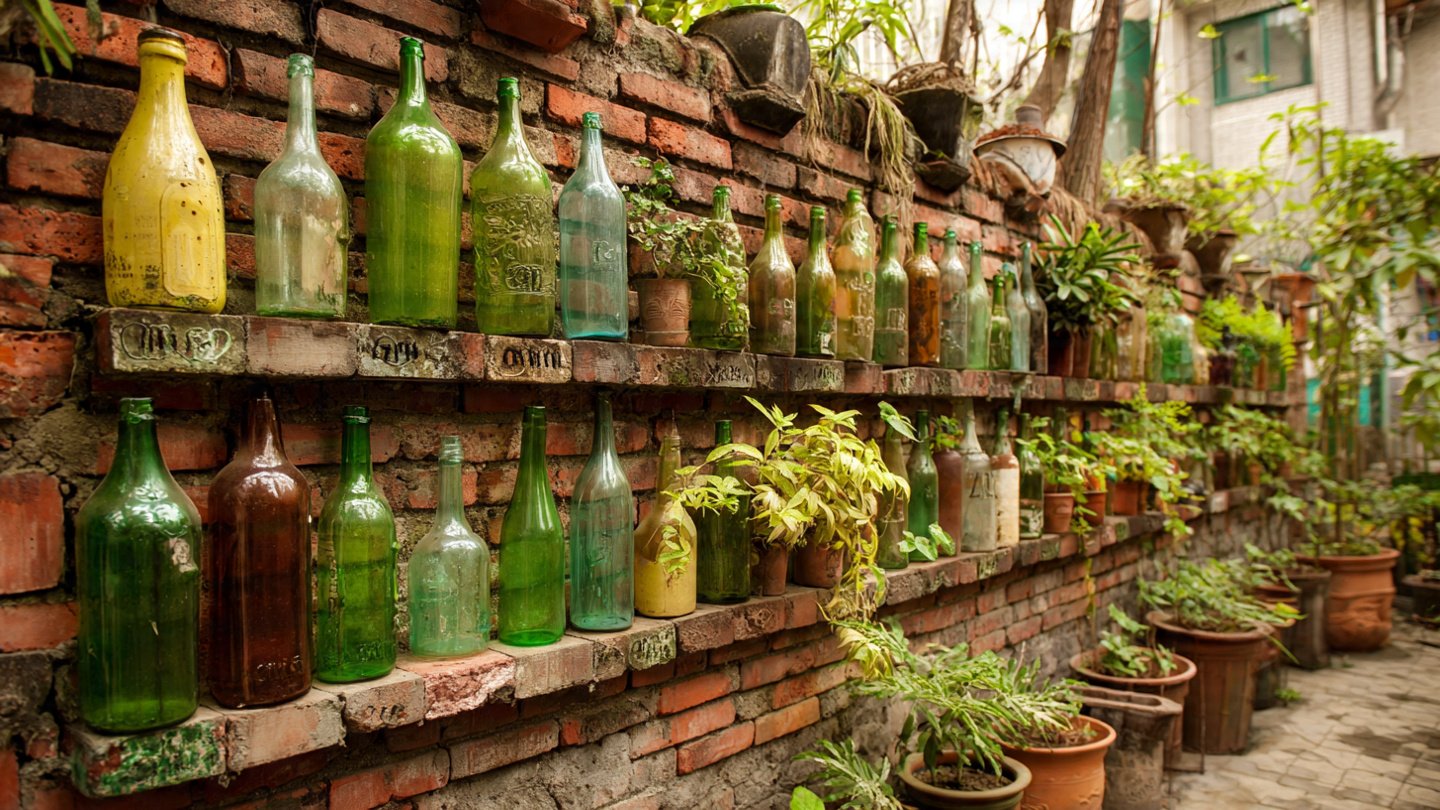
Gardens are more than just patches of greenery; they are spaces for creativity, expression, and sustainability. One of the most innovative ways to enhance your garden is by repurposing old glass bottles to create a unique wall. Not only does this approach add visual interest and color, but it also promotes environmental consciousness by reusing materials that would otherwise go to waste. From decorative partitions to functional retaining walls, old glass bottles offer endless possibilities for transforming ordinary garden spaces into extraordinary landscapes. This guide explores the concept, benefits, techniques, and ideas for turning old glass bottles into striking garden walls.
The Concept of Glass Bottle Walls
Glass bottle walls are structures built using empty glass bottles, often filled or embedded in cement, mortar, or wood frameworks. The bottles serve both as building blocks and design elements. Their translucent nature allows light to pass through, creating beautiful patterns and luminous effects, while their shapes and colors provide texture and visual variety.
Historically, glass bottle walls were used in creative architectural projects to reduce costs and recycle materials. Today, they are celebrated in gardens for their aesthetic appeal, sustainability, and adaptability. A glass bottle wall can be freestanding, incorporated into fences, or used as a backdrop for plant displays.
Environmental Benefits of Using Glass Bottles
Repurposing glass bottles in your garden has multiple environmental advantages:
- Waste Reduction: Millions of glass bottles end up in landfills each year. Reusing them in garden projects prevents waste and reduces environmental impact.
- Sustainable Construction: Glass bottles reduce the need for conventional building materials like bricks or concrete blocks, lowering the carbon footprint of construction.
- Energy Efficiency: Glass is durable and weather-resistant, meaning your wall can last for decades without the need for frequent repairs or replacements.
- Creative Recycling: Using bottles creatively demonstrates how everyday items can be repurposed, inspiring sustainable living practices.
By incorporating glass bottles into garden design, you create an environmentally responsible feature while adding unique beauty.
Design Possibilities
Glass bottle walls are highly versatile and can be customized to suit any garden style. Some popular design ideas include:
- Freestanding Walls: Serve as a decorative partition between garden zones, providing privacy while allowing light to filter through.
- Backdrops for Plants: A glass wall behind flower beds or climbing vines enhances colors and creates a focal point.
- Retaining Walls: Glass bottles can be integrated into soil-retaining structures, combining functionality with aesthetics.
- Decorative Fences: Bottles embedded in concrete or wood frames can form whimsical fences that let light shine through, creating dynamic patterns.
- Artistic Murals: Arrange colored bottles in patterns, shapes, or mosaics for a personalized artistic touch.
The translucent nature of glass allows sunlight to illuminate the wall, producing a stained-glass effect that changes with the angle of light throughout the day.
Types of Glass Bottles to Use
Any empty glass bottle can be used, but certain types work better depending on your design goals:
- Wine Bottles: Tall, slender, and often colored, ideal for vertical patterns and mosaics.
- Beer Bottles: Uniform size and shape make them easy to stack or embed in mortar.
- Mason Jars: Short and wide, perfect for freestanding walls or as light holders.
- Assorted Colored Bottles: Provide natural variation and allow for artistic patterns in the wall.
Before starting, clean bottles thoroughly, removing labels, adhesive, and residue to ensure a polished appearance and proper adhesion if embedding in mortar.
Methods for Building a Glass Bottle Wall
There are several approaches to constructing a glass bottle wall, depending on your desired effect, durability, and complexity.
1. Mortar or Cement Embedding
One of the most common methods is embedding bottles in a mortar or cement matrix.
Steps:
- Lay a solid foundation with concrete or compacted soil.
- Position bottles horizontally or vertically according to the design.
- Apply mortar around the bottles, filling gaps for stability.
- Smooth the surface and allow the structure to cure.
This method creates a sturdy, permanent wall suitable for structural or decorative purposes. Horizontal placement of bottles is ideal for a more whimsical, textured appearance, while vertical placement emphasizes height and light transmission.
2. Wooden Frames
Wooden frames offer a flexible, lightweight approach.
Steps:
- Construct a wooden frame to hold bottles.
- Insert bottles into slots or holes in the frame.
- Secure bottles with adhesive, wire, or mortar for stability.
- Mount the frame in your desired garden location.
Wooden frames are particularly suitable for smaller walls, vertical gardens, or indoor-outdoor transitional spaces. They allow for easy rearrangement or replacement of bottles if desired.
3. Bottle Columns
Individual columns made of stacked bottles can serve as garden features or boundary markers.
Steps:
- Select uniform bottles for stacking.
- Apply mortar or adhesive between each bottle for stability.
- Continue stacking to the desired height, finishing with a cap or planter on top.
Bottle columns add vertical interest and can be incorporated into larger wall designs or used as standalone accents.
4. Decorative Patterns and Mosaics
For purely artistic effects, bottles can be arranged in patterns:
- Alternate colors to form geometric shapes.
- Create flowing patterns resembling waves or vines.
- Incorporate small lights inside bottles for illumination at night.
Using different bottle sizes and colors adds depth and creates a striking visual impact.
Integrating Plants and Greenery
A glass bottle wall becomes even more enchanting when combined with plants:
- Climbing Vines: Plants like ivy, morning glory, or jasmine can weave around bottles, softening the structure and creating a living wall.
- Potted Plants: Small planters or bottles can hold soil and plants directly in the wall.
- Vertical Garden Elements: Integrate pockets or gaps in the wall to grow herbs, succulents, or flowers.
Plants complement the reflective and transparent qualities of glass, producing a dynamic interplay of light, color, and texture.
Maintenance and Durability
Glass bottle walls are generally low-maintenance but require some care:
- Cleaning: Dust, dirt, and algae can accumulate on bottles over time. Wipe with a damp cloth or gentle brush to maintain clarity.
- Inspect Stability: Check mortar or adhesive periodically to ensure bottles remain secure, particularly after heavy rain or storms.
- Plant Care: If integrating greenery, water plants carefully to avoid over-saturating the structure.
Proper maintenance ensures your glass bottle wall remains a safe, attractive, and functional feature for years to come.
Advantages Over Conventional Walls
Glass bottle walls offer several advantages over traditional garden walls:
- Light Transmission: Unlike opaque walls, glass bottles allow natural light to pass through, brightening shaded areas of the garden.
- Eco-Friendly: They repurpose waste materials, reducing the need for new construction materials.
- Customization: The variety of bottle sizes, colors, and arrangements allows for unique, personalized designs.
- Cost-Effective: Using recycled bottles and reclaimed wood or mortar can be far cheaper than buying bricks or decorative stones.
- Aesthetic Appeal: The play of sunlight and shadow through bottles creates a magical, ever-changing effect that conventional walls cannot replicate.
Creative Ideas for Your Garden
- Backlit Walls: Place solar lights or LEDs behind colored bottles to illuminate the wall at night.
- Seasonal Displays: Incorporate seasonal flowers or ornamental plants in gaps to refresh the look throughout the year.
- Interactive Art: Paint or etch designs on bottles before embedding them to create personalized mosaics or patterns.
- Multi-Purpose Walls: Use portions of the wall for climbing vegetables or herbs to combine beauty and utility.
By blending creativity with sustainability, you can turn a simple collection of old glass bottles into a captivating, functional garden feature.
Conclusion
Old glass bottles are far more than discarded containers—they are building blocks for creativity, sustainability, and beauty in the garden. Transforming them into a unique wall allows gardeners to combine art, function, and environmental responsibility. Glass bottle walls can serve as partitions, decorative backdrops, retaining walls, or even vertical gardens, offering endless possibilities for customization and personal expression.
From the environmental benefits of recycling to the aesthetic allure of colored glass and light transmission, the advantages of glass bottle walls are compelling. When integrated with plants, lighting, and creative arrangements, they become living works of art that enrich any garden space.
Building a glass bottle wall requires careful planning, basic construction techniques, and a willingness to experiment with design, but the results are stunning. Each wall is unique, reflecting the gardener’s creativity, the colors of reused bottles, and the surrounding greenery. By incorporating this approach, you not only create a visually striking feature but also contribute to sustainable living, giving old glass bottles a second life in a form that is beautiful, functional, and environmentally responsible.