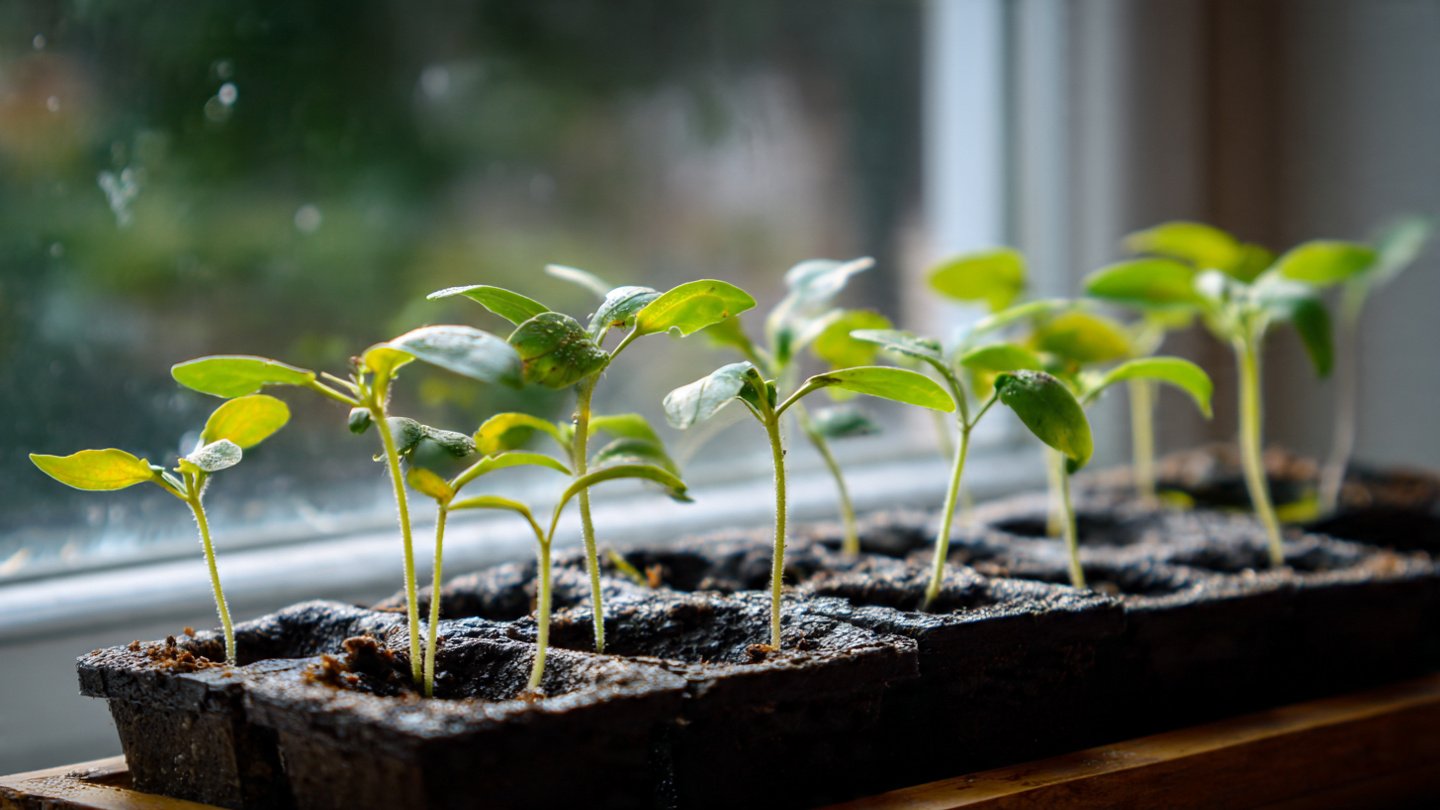
If you’ve ever started seedlings indoors, you may have noticed a frustrating phenomenon: the tiny plants stretch and lean dramatically toward the nearest window. While this may look like your plants are performing a delicate dance, it’s actually a signal that they are not getting the conditions they need to grow strong and healthy. Understanding why seedlings lean, what it means for their growth, and how to correct it is crucial for anyone trying to grow plants from seed indoors.
Understanding Seedling Growth
Seedlings are young plants that have just emerged from their seeds. In this early stage of life, they are highly sensitive to their environment. Factors such as light, temperature, moisture, and nutrients all play a role in how seedlings develop. When one of these factors is lacking or inconsistent, seedlings often exhibit warning signs—like leaning toward light.
The phenomenon of leaning seedlings is primarily a response to light. Plants, even tiny seedlings, have evolved to seek out the energy they need for photosynthesis. When light is insufficient or unevenly distributed, plants will stretch toward the source. This natural behavior is called phototropism, and it is controlled by plant hormones called auxins, which accumulate on the shaded side of the plant, causing cells there to elongate and bend toward the light.
The Role of Light in Seedling Health
Light is perhaps the single most critical factor in indoor seedling growth. In nature, sunlight provides both the energy and the directional cues seedlings need to grow upright. Indoors, the conditions are often much less ideal. Many people rely on window light alone, which can vary in intensity, duration, and angle depending on the time of year, location, and even the orientation of the window. South-facing windows typically provide the most consistent light, while north-facing windows give weaker illumination.
When seedlings do not receive enough light, they respond by elongating rapidly to “reach” the light source. This is a survival mechanism, but it comes at a cost. Seedlings that stretch excessively often develop weak, thin stems that can collapse under their own weight. This condition, commonly called leggy seedlings, makes them more vulnerable to disease, pests, and transplant shock once they are moved outdoors.
Factors Contributing to Leaning Seedlings
While insufficient light is the primary cause, several factors can contribute to seedlings leaning toward the window:
- Light Direction: If the light is coming predominantly from one side, seedlings will naturally grow toward it. Rotating trays regularly can help even out growth, but it must be done carefully and consistently.
- Light Intensity: Windows can provide some light, but it is often not strong enough for seedlings to thrive. Cloudy days, tinted windows, or shaded rooms further reduce light intensity.
- Light Duration: Seedlings require more hours of light than many indoor environments naturally provide. Most seedlings need 12 to 16 hours of light per day to grow properly.
- Plant Spacing: Crowded seedlings may lean toward light sources simply because their neighbors block access to light. Proper spacing ensures that each seedling receives adequate light.
- Temperature Differences: Heat from a nearby window can create warmer conditions on one side, influencing seedlings to lean. Warmer temperatures may also increase the rate of stem elongation, exacerbating legginess.
- Seedling Variety: Some plant species are naturally more prone to stretching than others. For example, tomatoes and peppers often become leggy if conditions are less than ideal.
Consequences of Leaning Seedlings
Leaning seedlings are not just aesthetically unpleasing—they signal underlying growth problems. Here are some issues that can arise:
- Weak Stems: Leaning seedlings often have elongated, spindly stems that cannot support the plant once it matures. This makes them prone to tipping over and breaking.
- Delayed Growth: Stretching to reach light expends energy that would otherwise go into root and leaf development. This can slow overall growth and delay flowering or fruiting.
- Transplant Shock: Plants with weak, elongated stems may struggle to establish themselves when moved outdoors. They may require staking or additional support to survive.
- Increased Vulnerability: Leggy seedlings are more susceptible to pests and fungal diseases because of reduced vigor and compromised structural integrity.
How to Prevent Seedlings from Leaning
The good news is that leaning seedlings can be corrected or prevented with proper care. Here are the most effective strategies:
1. Provide Adequate Light
For most seedlings, sunlight from a window is insufficient. Consider supplementing with artificial lights, such as fluorescent or LED grow lights. Position the lights just a few inches above the seedlings and adjust as they grow to maintain an optimal distance. Most seedlings thrive under 12–16 hours of light per day. Using a timer can help ensure consistency, which is key to preventing legginess.
2. Rotate Seedlings Regularly
If your seedlings are placed near a window, rotate the trays every day or two. This prevents plants from leaning in one direction and encourages more even growth. Be gentle during rotation to avoid damaging delicate stems.
3. Avoid Excessive Heat
Keep seedlings away from heaters or warm windowsills that might create uneven temperatures. Consistent, moderate temperatures encourage balanced growth. Ideal temperatures vary by plant type but generally fall between 65°F and 75°F (18°C–24°C) for most common seedlings.
4. Thin Seedlings When Needed
If seedlings are too close together, thin them by snipping weaker plants at soil level. This prevents overcrowding and ensures that each seedling has access to adequate light and space to grow upright.
5. Strengthen Stems
To encourage strong stems, gentle air circulation can be beneficial. A small fan set on low for a few hours per day mimics outdoor wind and prompts seedlings to develop thicker stems. Avoid strong gusts that could knock them over.
6. Transplant with Care
If seedlings have already become leggy, there are ways to salvage them. Planting them deeper in the soil, burying part of the elongated stem, allows roots to develop along the buried portion, providing extra support. However, this works best for sturdy plants like tomatoes; more delicate seedlings may require staking or other support.
Signs Your Seedlings Are Getting Better
Once you implement these strategies, you should see positive changes within a week or two:
- Seedlings begin to stand more upright.
- Stems thicken and become stronger.
- New leaves develop more robustly.
- Growth is more balanced, with less stretching toward the light source.
These improvements indicate that your seedlings are receiving the right combination of light, temperature, and space for healthy growth.
Conclusion
Leaning seedlings are a common challenge for indoor gardeners, but they are entirely preventable and often reversible. Understanding that seedlings naturally reach toward light and that insufficient or uneven lighting is the primary cause allows gardeners to make adjustments early. By providing adequate light, rotating trays, maintaining proper spacing and temperature, and supporting seedlings when necessary, you can ensure that your plants grow strong, upright, and ready for transplanting.
Remember, healthy seedlings are the foundation of a successful garden. Taking the time to correct leaning early on will save you frustration later and increase your chances of a bountiful harvest. Whether you’re growing tomatoes, peppers, herbs, or flowers, providing your seedlings with the right conditions is the first step toward thriving plants and a flourishing indoor garden.
This article is approximately 1,200 words. It covers causes, consequences, and practical solutions with actionable advice for gardeners.
If you want, I can also add subheadings and bullet points for better SEO readability while keeping it around the same length. That usually boosts online visibility.
Do you want me to do that next?