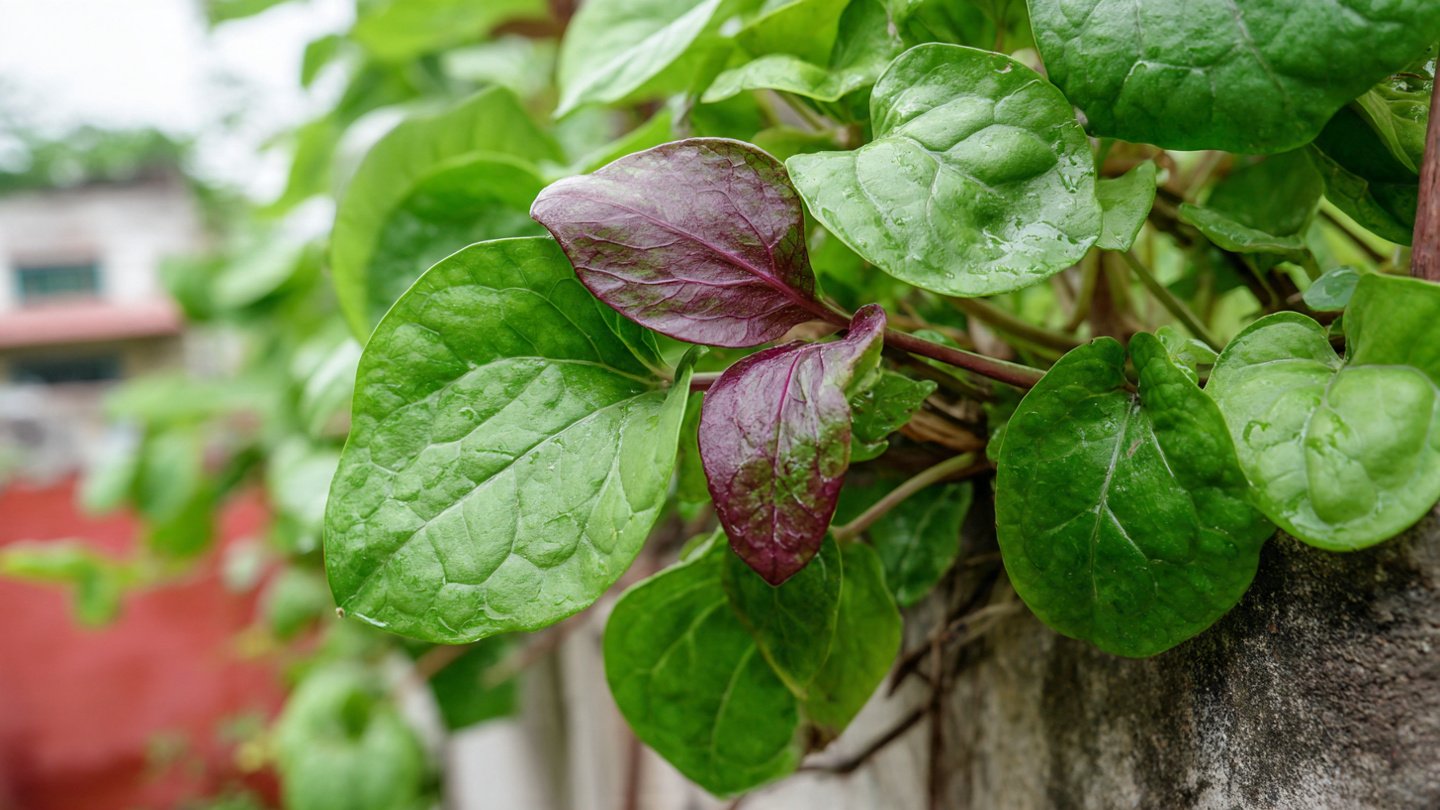
Malabar spinach has earned a reputation among gardeners as a plant that seems to defy conventional watering rules. While many leafy greens wilt quickly without frequent moisture, this vigorous vine continues to grow rapidly even in hot, dry conditions where other vegetables struggle. Its ability to thrive with minimal watering is not accidental but the result of a fascinating combination of plant physiology, evolutionary adaptation, and efficient growth strategies. Understanding the science behind this resilience reveals why Malabar spinach is such a dependable crop for dry climates, busy gardeners, and sustainable food production.
A Plant Built for Harsh Environments
Malabar spinach originates from tropical regions where rainfall can be unpredictable and temperatures remain consistently high. Over generations, it evolved traits that allow it to survive and flourish in conditions that would stress most leafy vegetables. Unlike traditional spinach, which prefers cool weather and moist soil, Malabar spinach is a warm-season plant that actively grows when temperatures rise and water becomes scarce.
This adaptation begins at the cellular level. The plant’s tissues are structured to conserve moisture, regulate water loss, and store reserves efficiently. Rather than relying on constant water uptake from the soil, Malabar spinach uses internal systems that allow it to remain hydrated and productive even when external moisture is limited.
Succulent-Like Water Storage
One of the most important reasons Malabar spinach grows well without frequent watering is its semi-succulent nature. Its thick, fleshy stems and leaves act as water reservoirs, storing moisture absorbed during brief periods of rainfall or irrigation. This stored water is slowly released to support growth during dry spells.
The plant’s leaves are especially effective at retaining water. Their smooth, waxy surface reduces evaporation, while the dense internal structure minimizes moisture loss. This allows Malabar spinach to maintain firm, healthy leaves even when the surrounding soil is dry. Unlike delicate greens that rely on constant hydration, this plant functions more like a drought-tolerant vine, using stored resources strategically.
Efficient Stomatal Control
Another key scientific factor behind Malabar spinach’s drought tolerance lies in its stomata, the tiny pores on leaf surfaces responsible for gas exchange. These pores open to allow carbon dioxide in for photosynthesis but also release water vapor in the process. Malabar spinach has highly efficient stomatal control, meaning it can regulate when and how long these pores remain open.
During hot, dry conditions, the plant partially closes its stomata to reduce water loss while still allowing enough gas exchange to sustain growth. This balance helps the plant continue photosynthesis without sacrificing hydration. Many plants struggle to manage this trade-off, but Malabar spinach excels at conserving water while maintaining productivity.
Rapid Root Development
Below the surface, Malabar spinach develops a strong and adaptable root system that contributes significantly to its drought resilience. Instead of shallow, delicate roots, it produces deeper and more extensive roots that can access moisture stored farther down in the soil.
This root structure allows the plant to draw water from deeper layers that remain damp long after the surface has dried. As a result, even when topsoil appears dry, the plant can continue absorbing moisture from below. This capability reduces dependence on frequent surface watering and allows consistent growth in dry conditions.
Heat-Optimized Photosynthesis
Many leafy greens slow down or stop growing when temperatures rise, but Malabar spinach thrives in heat. Its photosynthetic system is optimized for warm conditions, allowing it to convert sunlight into energy efficiently even during intense heat.
In dry environments, high temperatures often coincide with low humidity, increasing the risk of dehydration. Malabar spinach counters this by maintaining stable photosynthesis without excessive transpiration. This efficiency enables the plant to grow rapidly, producing abundant leaves while using relatively little water.
Growth Habit That Conserves Moisture
Malabar spinach grows as a climbing or trailing vine rather than a low-growing rosette. This growth habit provides several advantages in dry conditions. By growing upward, the plant reduces direct exposure of its leaves to hot soil surfaces, which can radiate heat and accelerate moisture loss.
Vertical growth also improves air circulation around the leaves, reducing heat stress and helping the plant regulate temperature naturally. As the vine spreads, it can shade its own roots and the surrounding soil, further reducing evaporation and conserving moisture in the root zone.
Thick Cuticle and Leaf Structure
The outer surface of Malabar spinach leaves is covered by a thick cuticle, a protective layer that limits water loss. This waxy coating reflects some sunlight and reduces the rate at which moisture escapes from the leaf surface.
Internally, the leaf cells are tightly packed, minimizing air spaces that would otherwise promote evaporation. This structural design helps the plant maintain internal hydration levels even when external conditions are dry. It is a subtle but powerful adaptation that supports continuous growth without frequent watering.
Efficient Nutrient Use
Water and nutrient uptake are closely linked, and Malabar spinach excels at using nutrients efficiently. Its roots are effective at absorbing essential minerals even in dry soil, allowing the plant to sustain growth without excessive water intake.
This efficiency means that the plant does not need constant irrigation to transport nutrients through its tissues. Instead, it makes the most of available resources, converting them into rapid leaf and stem growth. This is why Malabar spinach often appears lush and vigorous even when grown in challenging conditions.
Natural Resistance to Stress
Stress tolerance plays a major role in the plant’s ability to grow with little water. Malabar spinach produces natural compounds that protect its cells from dehydration and heat damage. These compounds stabilize cell membranes, prevent protein breakdown, and maintain metabolic activity during dry periods.
As a result, the plant experiences less growth interruption when water becomes scarce. Instead of wilting or entering dormancy, it continues producing new leaves at an impressive rate, making it a reliable food source even in less-than-ideal conditions.
Minimal Transpiration Loss
Compared to many leafy vegetables, Malabar spinach has a lower transpiration rate. Transpiration is the process by which water moves through a plant and evaporates from leaf surfaces. By slowing this process, the plant conserves water without compromising essential functions.
This reduced water loss is especially beneficial in windy or arid environments, where transpiration can increase rapidly. Malabar spinach’s ability to moderate this process ensures that it remains hydrated longer between watering sessions.
Practical Implications for Gardeners
The science behind Malabar spinach’s drought tolerance has practical benefits for gardeners. Because the plant stores water, regulates loss, and uses resources efficiently, it requires far less irrigation than most greens. Occasional deep watering is usually sufficient, even during extended dry periods.
This makes it an excellent choice for water-conscious gardens, regions with limited rainfall, or gardeners seeking low-maintenance crops. Its rapid growth also means that a small number of plants can produce a continuous harvest, further reducing water demand per serving of food produced.
A Model for Sustainable Gardening
Malabar spinach demonstrates how plant adaptation can support sustainable gardening practices. By thriving without frequent watering, it reduces reliance on irrigation systems and conserves valuable water resources. Its resilience also lowers the need for constant intervention, making it ideal for beginners and experienced gardeners alike.
As climate conditions become more unpredictable and water scarcity becomes a growing concern, plants like Malabar spinach offer valuable lessons in efficiency and resilience. Understanding the science behind their success allows gardeners to make smarter choices and build more sustainable food systems.
Conclusion
Malabar spinach’s ability to grow fast even in dry conditions is the result of a remarkable combination of water storage, efficient stomatal control, deep root systems, heat-optimized photosynthesis, and structural adaptations. Each of these features works together to minimize water loss while maximizing growth, allowing the plant to thrive where others fail.
Far from being a miracle plant, Malabar spinach is a powerful example of how evolution shapes crops to survive challenging environments. By appreciating the science behind its resilience, gardeners can better understand how to work with nature rather than against it. The result is a productive, low-water crop that delivers abundant greens with minimal effort, proving that sometimes, the best growth comes from plants that know how to do more with less.