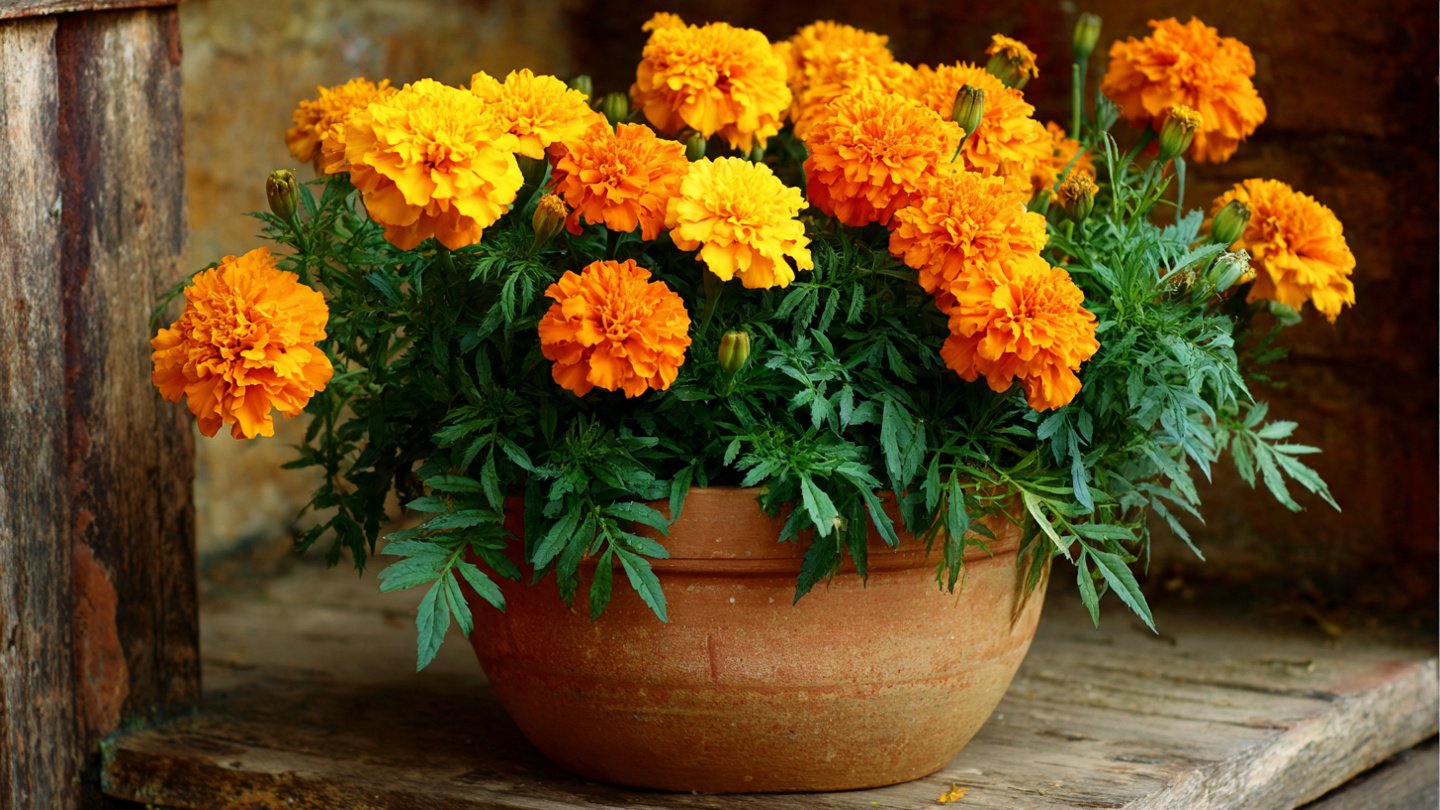
Marigolds are among the most popular and versatile flowers for home gardeners. Known for their bright, cheerful blooms and distinctive fragrance, marigolds are not only visually appealing but also incredibly functional. They are natural pest repellents, making them an excellent companion plant for vegetable gardens, fruit trees, and ornamental beds. Growing marigolds in pots is a convenient and effective way to harness their pest-repelling properties while adding vibrant color to patios, balconies, and small garden spaces. With the right techniques, marigolds can thrive in containers, providing a natural and sustainable way to maintain a healthy garden.
Why Marigolds Are Essential for Pest Control
Marigolds release natural compounds called thiophenes, which deter a variety of garden pests, including nematodes, aphids, whiteflies, and certain beetles. Their strong scent also masks the smell of more vulnerable plants, reducing insect damage. Companion planting with marigolds can minimize the need for chemical pesticides, making your garden healthier for humans, pollinators, and beneficial insects.
By growing marigolds in pots, gardeners gain flexibility in placement, allowing them to strategically position plants near vegetables, herbs, or flowers that are most prone to pests. Container planting also makes it easier to monitor plant health and control soil conditions, ensuring optimal growth and effectiveness in pest control.
Choosing the Right Marigold Variety
There are two primary types of marigolds: French marigolds (Tagetes patula) and African marigolds (Tagetes erecta). Both types repel pests effectively, but their growth habits differ.
French marigolds are smaller, bushier plants that typically grow up to 12 inches tall. They are ideal for pots and small spaces and produce abundant flowers throughout the growing season. African marigolds are taller, often reaching 18 to 36 inches, and produce large, showy blooms. They are well-suited for larger containers and garden borders.
Select a variety based on the space available, container size, and personal preference for flower size and color. Both types are hardy and adaptable, making them excellent choices for beginner gardeners.
Selecting the Right Container
Marigolds thrive in containers that provide adequate space for root growth. For small varieties like French marigolds, pots with a diameter of 6 to 10 inches are sufficient. Larger varieties, such as African marigolds, require containers at least 12 to 14 inches in diameter.
Choose pots with good drainage to prevent waterlogging, which can cause root rot. Materials like terracotta, ceramic, plastic, or metal can all work, but ensure the container is sturdy and stable, particularly for larger plants. If drainage holes are limited, add a layer of gravel at the bottom of the pot to enhance water flow.
Choosing the Right Soil
Healthy soil is essential for robust marigold growth. Use a well-draining, nutrient-rich potting mix. A combination of garden soil, compost, and perlite or sand creates an ideal environment for roots to expand and access nutrients.
Marigolds prefer slightly acidic to neutral soil, with a pH range of 6.0 to 7.0. Avoid heavy clay soils or dense garden soil, as these retain too much water and limit root development. Regularly refreshing the top layer of soil each season can maintain fertility and prevent nutrient depletion.
Planting Marigolds in Pots
Marigolds can be grown from seeds, seedlings, or young plants purchased from nurseries. When starting from seeds, plant them about ¼ inch deep in the soil, spacing multiple seeds 1 to 2 inches apart. Keep the soil moist until germination, which typically occurs within 5 to 10 days.
For seedlings or young plants, dig a small hole in the soil, place the plant, and gently firm the soil around the roots. Space multiple plants according to their expected mature size, ensuring good air circulation between stems to prevent disease.
Sunlight Requirements
Marigolds thrive in full sun, requiring at least 6 to 8 hours of direct sunlight daily. Adequate sunlight promotes strong stems, vibrant flowers, and enhanced pest-repelling properties. In shaded areas, marigolds may become leggy, produce fewer blooms, and be less effective at deterring pests.
For container-grown marigolds, placing pots on patios, balconies, or near sunny windows ensures maximum light exposure. If sunlight is limited, supplemental grow lights can provide the energy needed for robust growth and continuous flowering.
Watering Techniques
Consistent watering is essential for marigolds, but overwatering can harm them. Container soil tends to dry faster than garden soil, so check moisture levels regularly. Water the base of the plant, avoiding wetting the leaves, which can encourage fungal diseases.
During hot weather, marigolds may require daily watering, while cooler seasons may only need watering every few days. Mulching around the soil surface helps retain moisture and maintain even soil temperature, reducing stress on the plants.
Fertilization for Healthy Growth
Marigolds are not heavy feeders, but regular fertilization encourages more vigorous growth and abundant flowering. A balanced, water-soluble fertilizer applied every 3 to 4 weeks during the growing season supports leaf and flower development.
Organic fertilizers, such as compost tea or diluted fish emulsion, provide nutrients gradually and improve soil structure. Avoid excessive nitrogen, which encourages leafy growth at the expense of blooms and pest-repelling compounds. Proper nutrition ensures that marigolds remain healthy, vibrant, and effective as natural deterrents.
Pruning and Deadheading
Pruning and deadheading are important practices for container-grown marigolds. Removing spent flowers encourages continuous blooming and prevents the plant from diverting energy into seed production.
Pinch off flower heads at the base using your fingers or clean scissors. Trim any dead or yellowing leaves to maintain plant health and airflow. Regular pruning keeps marigolds compact, bushy, and visually appealing while maximizing their effectiveness in repelling pests.
Companion Planting Strategies
Marigolds are most effective when strategically placed near vulnerable plants. Planting them alongside tomatoes, peppers, cucumbers, or other vegetable crops helps deter nematodes, aphids, and other pests. Their strong scent masks the odors of more susceptible plants, reducing pest attraction.
In container gardening, marigolds can be interspersed among vegetable pots or positioned at the edges of larger planters to provide natural protection. Grouping multiple pots together enhances the overall pest-repelling effect while creating a colorful and lively display.
Pest and Disease Management
While marigolds repel many pests, they can still be susceptible to certain insects and fungal issues. Common pests include spider mites, aphids, and whiteflies. Regular inspection of leaves and stems allows early detection, and natural remedies like neem oil, insecticidal soap, or water sprays can control infestations effectively.
Good airflow around the plants, proper spacing, and careful watering reduce the risk of fungal diseases, including powdery mildew and root rot. Healthy marigolds are resilient and can withstand minor pest pressures while continuing to support the garden’s overall health.
Seasonal Care and Maintenance
Marigolds are typically annuals, meaning they complete their life cycle in one growing season. Container-grown marigolds benefit from seasonal maintenance, including refreshing soil, replanting seedlings, and monitoring for nutrient deficiencies.
Regular care ensures that marigolds remain strong and productive throughout the season. In colder climates, they can be started indoors and transferred outdoors once the risk of frost has passed. In warm climates, continuous planting of new seeds can provide year-round blooms and pest protection.
Benefits of Growing Marigolds in Pots
Growing marigolds in pots offers flexibility, convenience, and control over environmental conditions. Container planting allows you to move plants to optimize sunlight, protect them from harsh weather, and position them near crops that benefit most from pest deterrence.
Potted marigolds are also ideal for small spaces, including balconies, patios, and urban gardens. They provide both aesthetic appeal and functional benefits, creating a natural, chemical-free method of pest control. Additionally, container gardening reduces the spread of soil-borne diseases and makes it easier to manage watering, soil quality, and fertilization.
Conclusion
Growing marigolds in pots is a simple, effective, and rewarding way to create a pest-free garden naturally. By selecting suitable varieties, using well-draining soil, providing ample sunlight, and maintaining consistent care, gardeners can cultivate vibrant, healthy marigolds that protect vegetables and other plants from harmful insects. Regular watering, fertilization, pruning, and strategic companion planting maximize the benefits of these remarkable flowers.
Marigolds not only enhance the beauty of gardens and patios with their bright, cheerful blooms but also serve as an eco-friendly solution for pest management. Container gardening offers flexibility, control, and convenience, making it easy for beginners to enjoy the dual benefits of colorful flowers and naturally protected crops. By following these techniques, anyone can successfully grow marigolds in pots, creating a thriving, pest-resistant garden that is both sustainable and visually stunning.