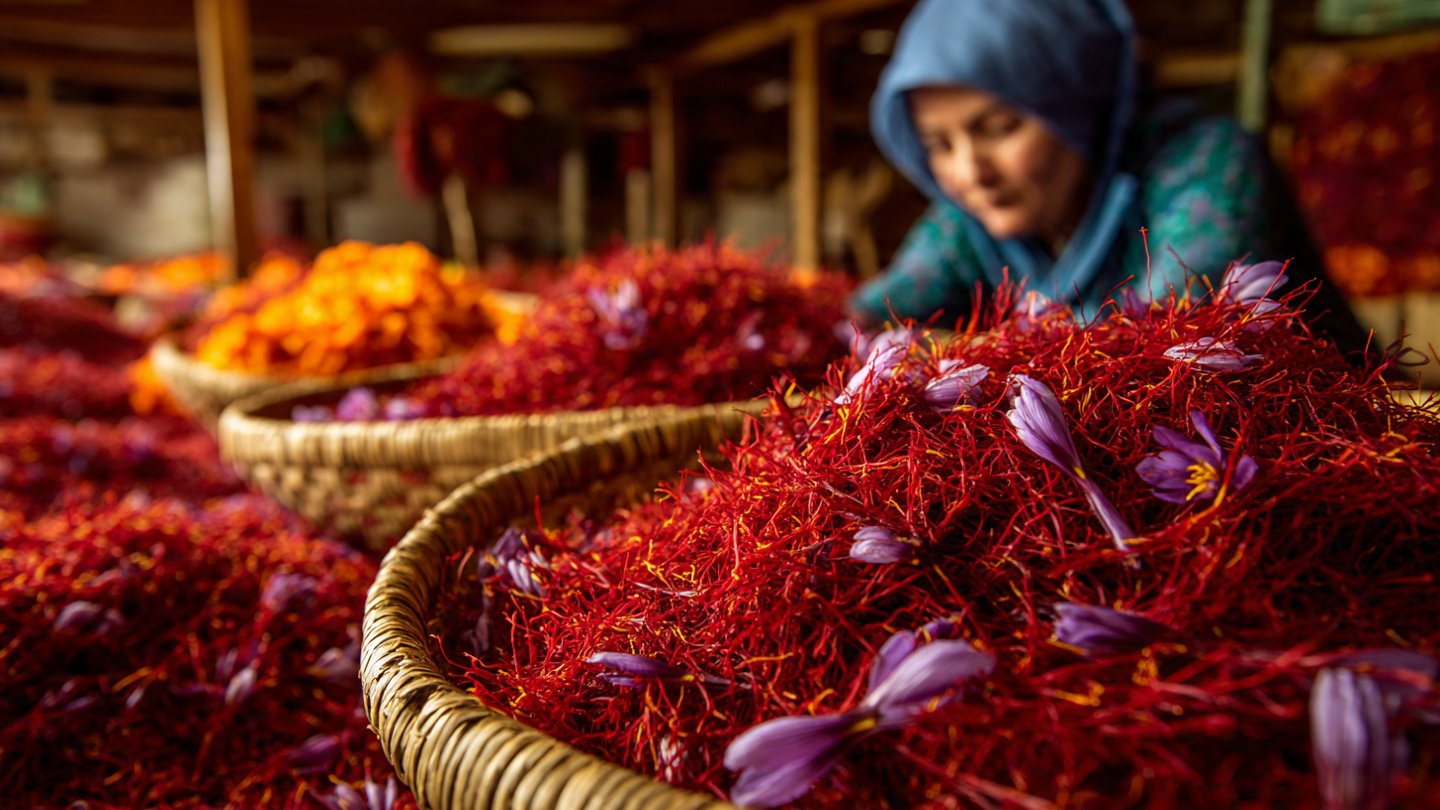
Saffron is often called the most expensive spice in the world, valued for its deep red threads, intense aroma, and unique flavor. Derived from the dried stigmas of the saffron crocus flower, this spice has been treasured for thousands of years in cooking, medicine, dyeing, and cultural traditions. Because saffron production is extremely labor intensive and highly dependent on climate and geography, only a few countries dominate global supply. Among them, one country clearly stands above all others in terms of volume, influence, and history.
Globally, the largest producer of saffron is Iran. Iran accounts for the overwhelming majority of the world’s saffron production, supplying approximately eighty to ninety percent of total global output. This dominance is not recent but the result of centuries of agricultural knowledge, favorable climate conditions, skilled labor, and deep cultural ties to saffron cultivation. When discussing saffron on a global scale, Iran is the central reference point for both quantity and quality.
To understand why Iran leads saffron production, it is important to look at the unique requirements of the saffron crocus. The plant thrives in regions with hot dry summers and cold winters, well drained soil, and low humidity. Iran’s northeastern provinces, particularly in arid and semi arid zones, provide near perfect conditions for saffron farming. These regions experience long sunny days, limited rainfall during harvest season, and soil compositions that allow saffron corms to flourish.
The heart of Iranian saffron production lies in the province of Khorasan, especially areas such as Mashhad and surrounding rural districts. For generations, families in this region have cultivated saffron using traditional methods passed down over centuries. Planting, harvesting, and processing are still largely done by hand, ensuring careful handling of each delicate flower. This labor intensive process contributes to saffron’s high market value and reinforces Iran’s position as the world leader.
Harvesting saffron is an especially demanding task. Each saffron flower produces only three red stigmas, and thousands of flowers are required to produce a single kilogram of dried saffron. Flowers must be picked early in the morning before sunlight damages their quality. The stigmas are then carefully separated by hand and dried under controlled conditions. Iran’s vast agricultural workforce and long standing expertise allow it to manage this demanding process at a scale unmatched by other countries.
While Iran leads globally, several other countries also produce saffron on a smaller scale. India is one of the most historically significant producers, particularly in the Kashmir region. Kashmiri saffron is renowned for its strong aroma and deep color, often considered among the finest in quality. However, due to limited land area, climate challenges, and declining production, India contributes only a small fraction to global output compared to Iran.
Another notable producer is Spain, which has played an important role in saffron’s global reputation. Spanish saffron, especially from the La Mancha region, is highly prized in international markets and protected by designation of origin labels. Despite its strong branding and premium pricing, Spain produces relatively small quantities and often acts more as a trader and exporter than a large scale grower.
Countries such as Afghanistan, Greece, and Morocco have also increased saffron production in recent years. Afghanistan in particular has gained attention for producing high quality saffron as an alternative crop to replace illicit agriculture. However, even when combined, these countries do not come close to matching Iran’s total output.
Iran’s dominance is not only about quantity but also about global influence. Iranian saffron shapes international prices, supply chains, and availability. Much of the saffron sold worldwide, even when packaged or branded elsewhere, originates in Iran. In some cases, Iranian saffron is exported in bulk and rebranded by other countries before reaching consumers. This means Iran’s role in the saffron market extends far beyond what is visible on retail labels.
Economically, saffron is a vital crop for many rural Iranian communities. It provides income for thousands of farmers and seasonal workers and plays a key role in agricultural exports. Because saffron requires relatively little water compared to other crops, it is particularly valuable in arid regions facing water scarcity. This makes saffron cultivation both economically and environmentally significant for Iran’s agricultural strategy.
Culturally, saffron holds deep meaning in Iranian cuisine and tradition. It is used in rice dishes desserts beverages and ceremonial foods. Its presence in daily life reinforces the importance of maintaining high production standards and preserving traditional knowledge. This cultural integration further strengthens Iran’s long term commitment to saffron farming.
Despite its leadership, Iran faces challenges in the global saffron market. Climate change threatens traditional growing patterns, while international sanctions and trade restrictions can complicate exports. Additionally, counterfeit and adulterated saffron products in global markets can undermine trust and reduce fair pricing. To address these issues, efforts are underway to improve quality certification, traceability, and direct branding of Iranian saffron.
Technological advancements are also slowly being introduced. While traditional hand harvesting remains essential, improved drying methods, storage practices, and packaging technologies help preserve quality and extend shelf life. These developments aim to protect Iran’s competitive edge while maintaining the authenticity that defines its saffron.
In summary, when asking which country is the largest saffron producer in the world globally, the answer is clear. Iran stands unrivaled in both production volume and historical significance. Its ideal climate, skilled labor force, cultural heritage, and vast cultivation areas allow it to supply the majority of the world’s saffron. While other countries contribute valuable varieties and niche products, none approach Iran’s scale or influence. As global demand for natural flavors and traditional spices continues to grow, Iran’s role as the world’s leading saffron producer is likely to remain central for years to come.