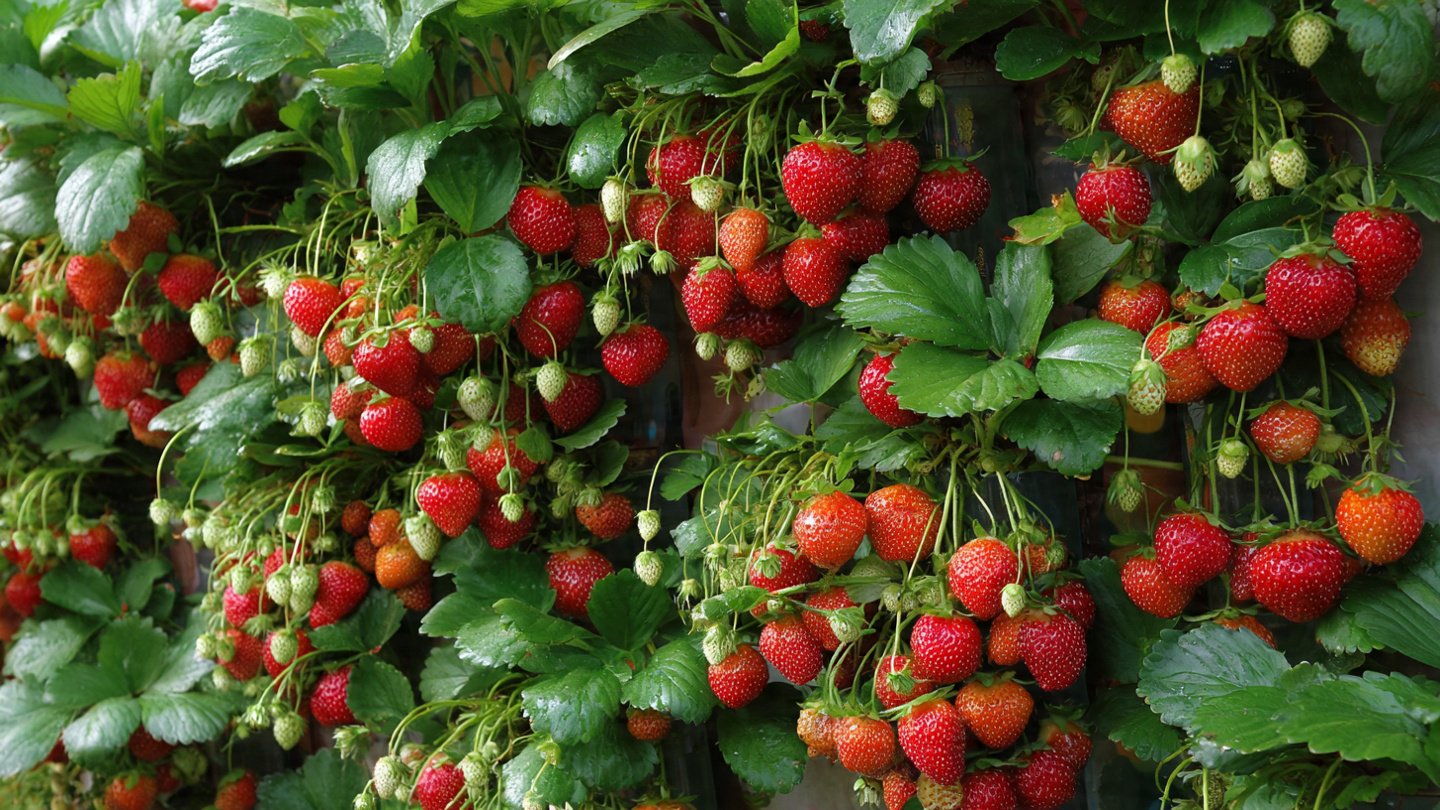
Urban spaces are often defined by limitations. Old walls, narrow courtyards, balconies, and compact backyards can feel like barriers to gardening rather than opportunities. Yet with a little creativity, even the most overlooked surfaces can become productive, beautiful, and sustainable growing areas. One of the most effective and accessible ways to achieve this is by growing strawberries vertically using recycled plastic bottles. This approach transforms unused vertical space into a living fruit garden while reducing waste and bringing fresh food closer to home.
Strawberries are particularly well suited for vertical gardening. They have shallow root systems, compact growth habits, and trailing runners that naturally adapt to hanging or stacked arrangements. When grown off the ground, strawberries are also less prone to soil borne diseases, rot, and pest damage. Using plastic bottles as planters adds another layer of efficiency, making this method affordable, lightweight, and ideal for mounting on old walls.
The concept is simple but powerful. Empty plastic bottles are cleaned, cut, filled with soil, and mounted vertically or horizontally on a wall. Each bottle becomes an individual planting unit, and together they form a modular system that can expand or change as needed. This flexibility allows gardeners to adapt the design to the shape and condition of the wall, whether it is concrete, brick, wood, or fencing.
Preparing the bottles is the first step. Most gardeners use one and a half or two liter bottles because they provide enough depth for strawberry roots. A planting opening is cut into the side, leaving enough structure to hold soil securely. Small drainage holes are added to prevent waterlogging, which is essential for strawberry health. The caps can be loosened or punctured to allow excess water to escape slowly, helping maintain balanced moisture.
Choosing the right soil mix is crucial for success. Strawberries thrive in loose, well draining soil rich in organic matter. A blend of potting soil, compost, and a small amount of sand or coco coir works well. Because plastic bottles have limited volume, the soil must provide both nutrients and good aeration. Adding compost ensures steady feeding, while light materials prevent compaction over time.
Mounting the bottles requires careful planning. Bottles can be attached using wire, rope, hooks, or brackets, depending on the wall surface. Vertical alignment allows water to trickle down from top bottles to lower ones, maximizing efficiency, but spacing is important to ensure each plant receives adequate light and airflow. Leaving enough distance between rows prevents overcrowding and reduces disease risk.
Sunlight is one of the most important factors in a vertical strawberry garden. Strawberries need at least six hours of direct sunlight per day to produce sweet, abundant fruit. South or west facing walls are ideal, but east facing walls can also work well. The vertical layout often improves sun exposure compared to ground level gardens, especially in tight spaces where shadows are common.
Watering a bottle based vertical garden requires consistency rather than volume. The small soil capacity means bottles dry out faster than traditional beds. Regular watering keeps roots evenly moist without saturating them. Drip irrigation systems or simple gravity fed setups using perforated tubing can make maintenance easier, especially for larger installations. Hand watering is also effective if done carefully and frequently.
Feeding strawberries in vertical systems is essential because nutrients are quickly depleted. Liquid fertilizers, compost tea, or diluted organic feeds can be applied every two to three weeks during the growing season. Balanced nutrition supports flowering, fruit development, and healthy foliage. Because bottles are isolated units, feeding is efficient and targeted, reducing waste.
One of the major advantages of growing strawberries on walls is pest reduction. Slugs, snails, and soil dwelling insects have limited access to elevated plants. Fruits hang freely, staying clean and dry, which improves quality and reduces rot. Birds may still be attracted, but netting or reflective materials can deter them without harming the plants.
Strawberry varieties also matter. Ever bearing or day neutral varieties are excellent choices for vertical gardens because they produce fruit continuously rather than all at once. This provides a steady harvest and makes better use of limited space. Compact or alpine varieties are particularly suitable because they focus energy on fruit rather than excessive runners.
Runner management is another benefit of vertical growing. Runners can be trained into nearby bottles, creating new plants without additional cost. This allows the garden to expand organically over time. Alternatively, runners can be trimmed to direct energy toward fruit production. The gardener has full control over how the system develops.
Old walls gain new life through this method. What was once a dull, unused surface becomes a vibrant green feature that changes with the seasons. Flowering strawberry plants add visual appeal with white blossoms and bright red fruit, turning functional gardening into living decor. This combination of beauty and productivity makes vertical strawberry gardens especially appealing in urban environments.
Maintenance remains relatively simple. Occasional pruning, consistent watering, and periodic feeding keep plants healthy. At the end of the season, bottles can be refreshed with new soil, and plants can be replaced or divided. Because the system is modular, damaged or underperforming units are easy to swap out without disturbing the entire garden.
Beyond practicality, this method encourages a more mindful relationship with space and resources. Reusing plastic bottles reduces waste, while growing food vertically minimizes land use. It demonstrates that food production does not require large plots or expensive materials, only thoughtful design and care.
A vertical strawberry garden on an old wall is more than a gardening technique. It is a statement about adaptability and creativity. It shows how overlooked spaces can become sources of nourishment, beauty, and satisfaction. With a few recycled bottles, some soil, and patience, any wall can be transformed into a productive fruit garden that rewards both effort and imagination.