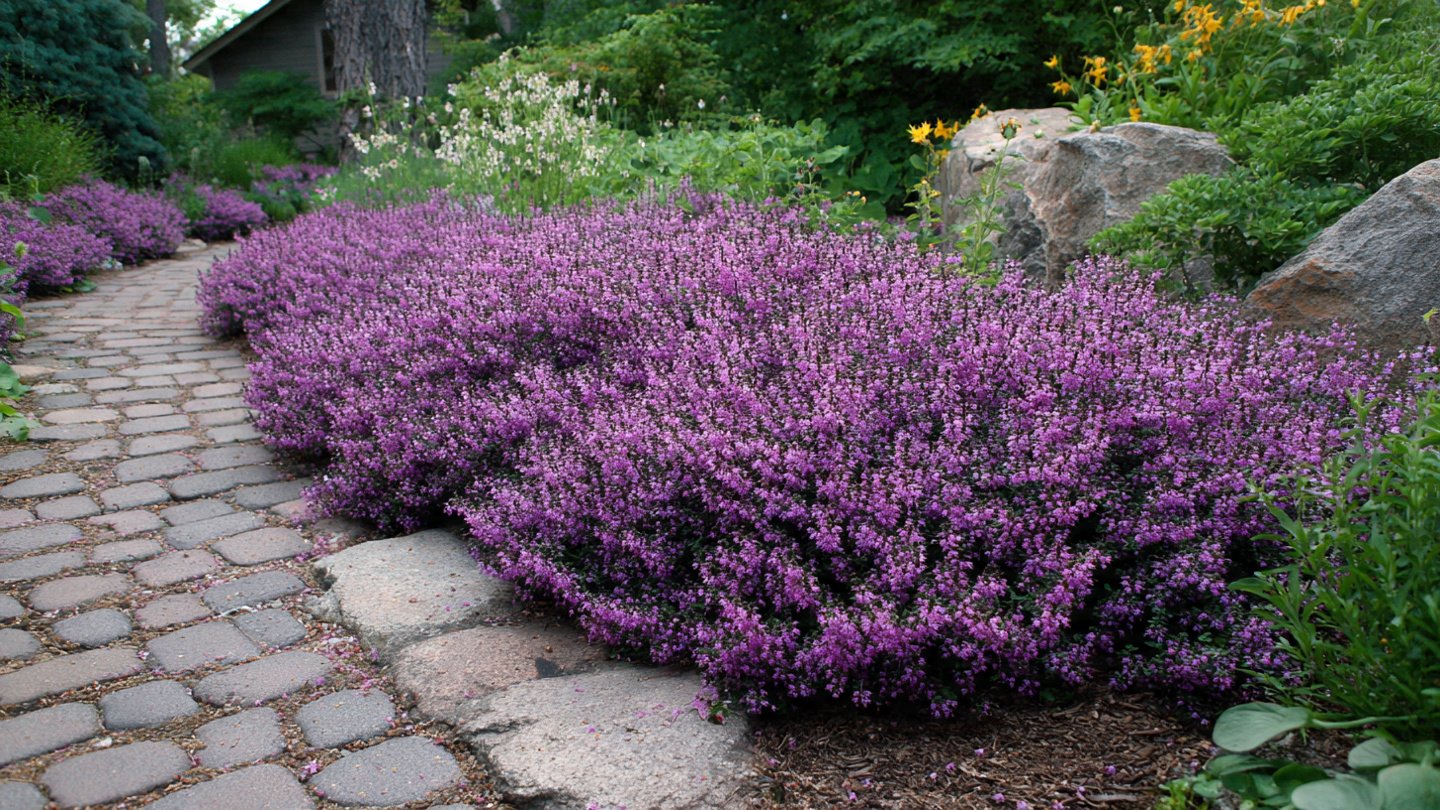
Ground cover plants are an essential component of any well-designed garden. They provide aesthetic appeal, suppress weeds, reduce soil erosion, and help retain moisture, all while requiring minimal maintenance. Perennial ground cover plants, in particular, are highly valuable because they return year after year, saving gardeners time and effort. Incorporating unique, low-maintenance ground covers can transform your landscape into a vibrant, lush, and effortless oasis. This guide highlights five exceptional ground cover plants that provide color, texture, and reliability in every season.
1. Creeping Thyme (Thymus serpyllum)
Creeping thyme is a versatile, fragrant, and hardy ground cover that thrives in full sun and well-drained soil. Known for its dense, mat-forming growth, creeping thyme spreads quickly and produces delicate, purple-pink flowers during the summer months.
Benefits:
- Fragrance: Releases a pleasant aroma when walked on or brushed against.
- Pollinator-Friendly: Attracts bees and butterflies, enhancing garden biodiversity.
- Drought-Tolerant: Once established, it requires minimal watering, making it ideal for xeriscaping.
- Low Maintenance: Minimal pruning is needed, and it rarely requires fertilization.
Planting Tips:
- Space plants about 12 inches apart to allow them to fill in over time.
- Ideal for pathways, rock gardens, or between stepping stones.
- Trim lightly after flowering to encourage compact growth and prevent legginess.
Creeping thyme is perfect for gardeners looking for a fragrant, colorful ground cover that requires little attention. Its evergreen foliage and summer blooms make it a standout in mixed plantings.
2. Ajuga (Ajuga reptans)
Ajuga, also known as bugleweed, is a low-growing perennial prized for its glossy foliage and vibrant flower spikes. It forms a dense carpet that effectively suppresses weeds, making it a practical and decorative choice for shaded or partially shaded areas.
Benefits:
- Variegated Leaves: Many varieties feature bronze, purple, or variegated leaves, adding year-round interest.
- Fast-Spreading: Produces runners that quickly fill in bare spots.
- Shade Tolerant: Thrives in areas with limited sunlight where grass may struggle.
- Seasonal Flowers: Blue or purple flower spikes bloom in spring, attracting pollinators.
Planting Tips:
- Space plants 6–12 inches apart to allow for spreading.
- Works well under trees, along borders, or in shaded garden beds.
- Prune flower spikes after blooming to maintain neat foliage and encourage further growth.
Ajuga’s versatility, combined with its bold foliage and colorful flowers, makes it an excellent choice for gardeners seeking both function and visual appeal.
3. Creeping Jenny (Lysimachia nummularia)
Creeping Jenny is a vigorous ground cover known for its striking golden-green leaves and trailing habit. It performs well in full sun to partial shade and is especially effective near water features, garden edges, or hanging baskets.
Benefits:
- Vibrant Foliage: Provides bright, golden color that contrasts beautifully with darker shrubs and perennials.
- Rapid Growth: Quickly covers bare ground and fills in gaps.
- Low Maintenance: Requires occasional trimming to control spread, but generally self-sustaining.
- Versatility: Tolerates a range of soil types and light conditions.
Planting Tips:
- Space plants 12 inches apart for initial planting.
- Ideal for slopes, containers, or areas that benefit from trailing plants.
- Trim back overgrown stems in late spring to promote bushier growth and maintain shape.
Creeping Jenny adds brightness and visual interest to gardens while offering reliable coverage year after year. Its trailing habit also makes it an excellent choice for cascading over walls or raised beds.
4. Sweet Woodruff (Galium odoratum)
Sweet woodruff is a shade-loving perennial that thrives in woodland gardens or under trees. It produces small, star-shaped white flowers in spring and emits a sweet fragrance reminiscent of vanilla or freshly cut hay.
Benefits:
- Shade Tolerant: Flourishes in low-light areas where other plants struggle.
- Fragrant: Pleasant scent enhances outdoor spaces and indoor floral arrangements.
- Evergreen Foliage: Maintains green leaves throughout the growing season in temperate climates.
- Low Maintenance: Minimal care required once established, spreads slowly and reliably.
Planting Tips:
- Space plants 6–12 inches apart to allow gradual spread.
- Best suited for woodland gardens, shaded borders, or under shrubs.
- After flowering, cut back blooms to maintain tidy foliage and encourage dense growth.
Sweet woodruff is ideal for gardeners seeking a delicate, fragrant ground cover that thrives in shady conditions and provides an elegant carpet of greenery.
5. Ice Plant (Delosperma cooperi)
Ice plant is a succulent ground cover that thrives in sunny, dry locations. It produces vibrant, daisy-like flowers that bloom profusely in late spring and summer, making it both drought-tolerant and highly decorative.
Benefits:
- Drought-Resistant: Ideal for arid climates or low-water gardens.
- Colorful Blooms: Flowers in shades of pink, purple, or white add bright accents to the landscape.
- Low Maintenance: Requires little watering and thrives in poor soils.
- Erosion Control: Its dense, spreading habit helps stabilize slopes and prevent soil erosion.
Planting Tips:
- Space plants 8–12 inches apart to allow them to spread naturally.
- Ideal for rock gardens, slopes, or sandy soils where drainage is excellent.
- Remove spent blooms occasionally to encourage continued flowering.
Ice plant is a hardy, colorful option that provides year-after-year coverage in sunny, low-maintenance landscapes. Its succulent foliage also adds texture and interest to garden beds.
Tips for Maintaining Perennial Ground Covers
Even though perennial ground cover plants are low-maintenance, a few care practices ensure they thrive year after year:
- Watering: Establishing plants need regular watering. Once established, most ground covers tolerate drought.
- Pruning and Trimming: Regularly trim overgrown areas to maintain shape, prevent invasiveness, and encourage dense growth.
- Fertilizing: Apply balanced, slow-release fertilizer in spring to promote healthy growth and vibrant flowers.
- Weed Control: Mulch around young plants to suppress weeds and retain soil moisture. Once ground covers mature, they naturally outcompete weeds.
- Pest Monitoring: Check for common pests such as slugs, snails, or aphids and treat promptly with organic or chemical solutions.
Consistent, minimal maintenance ensures that your ground cover plants provide continuous beauty and functional benefits.
Designing with Multiple Ground Covers
Combining different ground covers can enhance the visual appeal of your landscape:
- Mix Colors and Textures: Combine bright foliage like Creeping Jenny with dark-leaved Ajuga for contrast.
- Layer Heights: Use taller ground covers at the back and shorter varieties in the front to create depth.
- Seasonal Interest: Choose plants with staggered bloom times to ensure continuous color.
- Functional Planting: Place creeping plants along pathways or slopes for practical coverage.
Thoughtful combinations create visually dynamic landscapes while maintaining the benefits of low maintenance.
Benefits of Using Perennial Ground Covers
In addition to aesthetic appeal, perennial ground covers offer practical advantages:
- Erosion Control: Dense mats stabilize soil on slopes and prevent runoff.
- Weed Suppression: Competing ground covers reduce weed growth naturally.
- Moisture Retention: Shade the soil, keeping it cool and reducing evaporation.
- Wildlife Support: Flowers attract pollinators, enhancing the garden ecosystem.
- Sustainability: Require less water, fertilizer, and effort than annuals, making them eco-friendly.
These benefits make perennial ground covers an excellent investment for long-term landscaping.
Final Thoughts
Perennial ground cover plants are a smart choice for gardeners who want beautiful, low-maintenance landscapes that return year after year. Creeping thyme, Ajuga, Creeping Jenny, Sweet Woodruff, and Ice Plant offer unique textures, colors, and flowering habits that can transform garden beds, slopes, and shaded areas.
By selecting the right plants for your climate, soil, and sunlight conditions, and providing minimal but consistent care, you can create lush, weed-suppressing carpets of greenery and color. Combining different species in complementary designs further enhances the visual appeal while maintaining functional benefits like erosion control and moisture retention.
Whether you are designing a full landscape or filling in garden borders, these perennial ground covers provide effortless beauty and long-lasting results, giving gardeners more time to enjoy their outdoor spaces without constant maintenance.